Cast your mind back to late August last year. The rate of unemployment is just over 4 per cent, and annual inflation looks like it is heading below 3 per cent. The Reserve Bank has kindly made three cuts to the cash rate, the last one at its meeting earlier in the month.
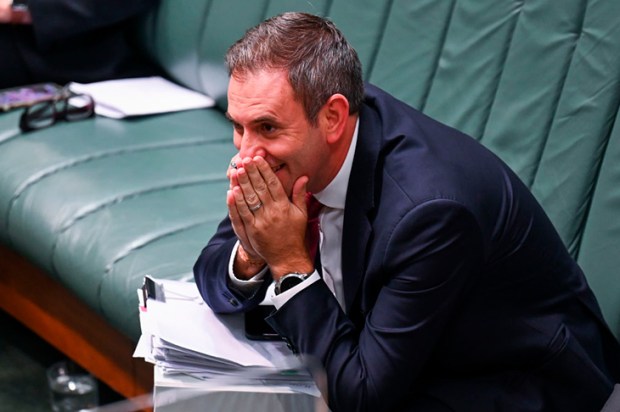
The Albanese government is basking in the glory of a convincing electoral win, but there is still work for the ebullient Treasurer, Jim Chalmers, to do. He vaguely understands that lifting the growth of productivity is important, although he is always quick to point out that this takes time and many other advanced economies are also suffering from low productivity growth.
He dreams up the idea of a productivity roundtable, with carefully selected attendees providing commentary and advice to the government. In the end, the shindig is called the Economic Reform Roundtable – the Prime Minister preferred that title – but the event goes ahead as planned. Participants are required to sign a non-disclosure agreement to the effect that certain topics would not be mentioned; in particular, industrial relations and energy prices. Held over three days in Parliament House, the get-together is basically pointless, but it does allow Chalmers to tick the box: roundtable conducted.
It was likely at this point that Chalmers decided that he should aim to be a seriously ‘reforming’ treasurer along the lines of his hero, Paul Keating. There had been plenty of discussion at the roundtable, and at other times, of the pressing need to alter the tax system – it was a favourite topic of the progressive crowd. You know the sort of thing: remove negative gearing, increase the capital gains tax, eliminate the tax benefits of discretionary trusts, increase the rate and coverage of the GST. Except for the last item, it looked like a compelling to-do list for Jimbo. It was in effect a reheated version of the Shorten 2019 election package apart from the elimination of cash refunds for franking credits.
Jimbo wouldn’t touch franking credits, but on the other topics he set the Treasury officials to work. They were sworn to strict secrecy and prevented from undertaking useful consultations with knowledgeable persons in the private sector, in order to prevent any leaks.
He included changing the taxation of discretionary trusts even though he didn’t have a clue about how trusts operate. But his hunch, backed by another naive dogmatist, Assistant Treasurer Andrew Leigh, was that serious revenue could be secured by attacking trusts.
In the months leading up to the 2026 budget, both the Treasurer and the Prime Minister continued to deny any plans to change negative gearing or increase the capital gains tax. Albo even claimed that he had made the denial fifty times. But, hey, these two men reserved the right to change the government’s position – not renege on a firm promise or indeed lie, you must understand. And thus, the full catastrophe of tax changes was revealed in May on budget night.
Had Jimbo been humble and guarded in his approach, he might have implemented only one or two of the radical tax changes. He could have got away with the simple act of removing negative gearing for existing properties while grandfathering those with existing loans. His sappy line about giving young people a ‘fair crack’ in the property market might have even made sense.
But the changes were much more extensive. The calculation of capital gains tax was to be completely revolutionised, with the simple 50-per-cent discount rule ditched for a much more complicated formula based on indexation. There was to be no grandfathering, and the CGT change would apply to all assets, not just property.
What was he thinking? Was he influenced by the woefully underqualified Treasury Secretary, Jenny Wilkinson, and her dictum that ‘the revenue has to come from somewhere’. Lacking any real-world commercial experience, Jimbo ploughed on, not realising the massive compliance costs he was imposing on all asset owners. According to the modelling nerds at Treasury, the net impact of the tax changes on property prices would be to slow the rate of growth by two percentage points. That’s right, property prices would continue to grow; they would just grow slightly more slowly.
As events unfolded, the collapsing property market, starting in Melbourne and Sydney, but now fanning out to nearly every city in the country, has seen price falls of between 10 and 20 per cent, on average.
Further reductions are entirely possible in the coming months. The auction clearance rates have hovered around the 50 per cent mark in the second half of 2026, an indication that house prices will continue to fall. The supply of houses for sale has also dried up.
Last week’s release from the Australian Bureau of Statistics on home loans underscored how desperate things have become in the property market. To be sure, the five cash rate increases imposed by the Reserve Bank this year have not helped, but the impact of the tax changes is clearly bearing down on the number and value of transactions.
In the September quarter, the number of new home loans fell by 15 per cent. ‘The value of new home loans fell 15.5 per cent, the largest quarterly fall since the commencement of the series in September quarter 2002.’ That’s right, Jimbo, the largest quarterly fall since 2002 – that’s some sort of record, just not one to be proud of.
Over the quarter, the number of investor loans collapsed, falling by over 30 per cent. But get this: the number of loans to first home buyers fell by nearly 9 per cent. The hapless Housing Minister, Clare O’Neil, tried to spin this outcome as a good thing: owner-occupier loans as a share of the shrinking loan book rose.
Give us a break, honey, this is a disaster. Does she really think it’s a good idea for cash-constrained first home buyers to be getting into a falling market? What’s the advice? Live in a badly built dog box apartment and look forward to negative equity. I’m not sure the politics will work out well in the end.
It’s turned out that the economic conditions of August last year were too good to be true; they were never going to last. It’s just that neither Jimbo nor Treasury realised this. With effectively zero productivity growth and ongoing excessive government spending, a surge in inflation was always likely. And indeed, this occurred before President Trump decided to attack Iran and the Strait of Hormuz was effectively closed.
This year we have experienced high inflation – the latest headline figure was 4.3 per cent – and the rate of unemployment is creeping towards 5 per cent. Announcements of substantial job cuts at Canva, Qantas, David Jones and some of the big banks add to the sense of uncertainty in the community.
Jimbo has now taken up a form of witness protection, unwilling to spin every piece of economic news according to his upbeat predisposition. He has lost confidence; he seems less certain about where the economy is heading, although he remains a past master at blaming every factor other than his own performance.
Even so, it’s hard to see how Albo could throw him under the bus because it’s the Albo/Jimbo defective approach to economic policy that’s the problem. Albo could never admit that. It’s likely therefore we will have to put up with a chastened Jimbo who will be too stubborn to fix what he has broken.
Got something to add? Join the discussion and comment below.
You might disagree with half of it, but you’ll enjoy reading all of it. Try your first month for free, then just $2 a week for the remainder of your first year.