Jean-Baptiste Colbert, finance minister to Louis XIV, is said to have described the art of taxation as plucking the goose to get the most feathers with the least hissing. Colbert understood something today’s wealth tax crusaders have forgotten. You pluck a goose so that it lives to grow more feathers. You do not wring its neck.
The starting point is the difference between income and wealth. Wealth is what you own. It is your shares, your business, your farm, your rental flat and your savings. It includes your skills, built up over years of study and work. Income is what that wealth earns you each year. Income is the increment. Wealth is the stock.
This is why governments like income taxes. An income tax confiscates part of the increment and leaves the stock alone. The goose loses some feathers but keeps the rest, and it grows more next year. The taxpayer may hiss, but he still ends the year richer than he began.
A wealth tax is a different animal. It is levied on the stock, whether or not the stock has earned a cent. In a bad year, when shares fall and the business loses money, the bill still arrives. It must be paid by selling assets. A wealth tax does not share in your gains. It makes you absolutely worse off.
The arithmetic is unforgiving. Suppose a well-run portfolio earns a real return of 4 per cent a year. A 2-per-cent annual wealth tax takes half of that. It is a 50-per-cent income tax, on top of the income tax already paid. A 4-per-cent wealth tax takes the lot. A 5-per-cent levy takes more than the entire year’s return. It is an income tax rate above 100 per cent.
That is exactly the rate now before Californian voters. Counting started last Wednesday on the Billionaire Tax Act, a levy of 5 per cent on the worldwide net worth of residents worth more than $US1 billion. Its union backers promise $US100 billion for health care. They call it a one-time tax. No tax in history has stayed one-time once a government has tasted the revenue.
The design is a confession. Residency was fixed retrospectively at 1 January 2026, months before the measure even qualified for the ballot. The authors knew the rich would run, so they tried to bolt the door in advance. It did not work. Several of the state’s best-known founders left before the cut-off. Estate agents around Lake Tahoe report a rush of very rich Californians crossing the line into Nevada.
The loss does not stop at the one-off base. A billionaire who leaves takes all his future income tax with him. California’s income tax already leans heavily on a few thousand top earners. Lose them and the state loses a stream of revenue far larger than any one-off grab. The founders who stay face a nasty choice. Their wealth is mostly in their own companies’ shares. To pay, they must sell large blocks of stock and dilute their control. The Tax Foundation warns that the rules for dual-class shares could push their effective rate well above 5 per cent.
Sweden ran this experiment half a century ago. In 1976, Astrid Lindgren, author of Pippi Longstocking and the country’s best-loved writer, discovered that her marginal tax rate had reached 102 per cent. As a self-employed author she paid both income tax and the employer’s social charges. For every extra krona she earned, the state took more than a krona. She paid the difference out of her savings. Without passing any law to say so, Sweden had turned an income tax into a wealth tax.
Lindgren replied with a fairy tale, Pomperipossa in Monismania, in the newspaper Expressen. The Social Democrats, in power for 44 years, lost the election that autumn. Lindgren herself stayed loyal to the party. Even she could see that a tax which takes more than you earn is not a tax on income at all. IKEA’s founder, Ingvar Kamprad, had already left the country. Sweden finally abolished its wealth tax in 2007.
Some will reply that Western countries once taxed top incomes at punitive rates and survived. They did. In the 1950s America’s top marginal rate was at least 91 per cent. In 1970s Britain the top rate on earnings was 83 per cent, and a surcharge lifted the rate on investment income to 98 per cent. These rates were foolish and drove talent abroad. But they were not wealth taxes. They bit only at the margin, above high thresholds. Income could be deferred, converted into lightly taxed capital gains or simply not earned. Nobody paid more than they made. The goose was badly plucked, but it lived.
Australia is not immune. Victoria already imposes a partial wealth tax on one class of asset. Its land tax falls on almost every holding except the family home, from a threshold now cut to just $50,000. The top general rate is 2.65 per cent of land value, every year. Absentee owners pay a further 4 per cent, or 6.65 per cent in all. Melbourne homes return perhaps 3.5 to 4 per cent of their value in gross rent, before rates, repairs and interest. For investors with large holdings the land tax eats a big slice of the rent. For absentee owners it can eat all of it. Other states tax land too, but at lower rates and with far higher thresholds.
Why land? Because land cannot get on a plane. A billionaire can move to Nevada. A Melbourne block stays in Melbourne. The only escape is to sell and invest elsewhere, and that is just what investors are doing. They are buying in Brisbane, Adelaide and Perth instead. Those left to bear the cost are tenants, who face fewer rental homes and higher rents. A tax sold as a charge on wealthy landlords ends up on the people who rent from them.
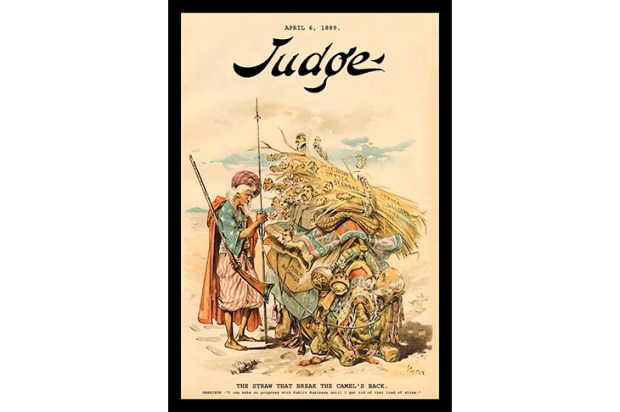
The lesson from Sacramento, Stockholm and Spring Street is the same. Tax income and the state shares in growth. Tax wealth and the state shrinks the very base it lives on. Colbert’s goose can fly. Pluck it with care and it stays. Try to cook it and it leaves, taking its golden eggs with it.
Got something to add? Join the discussion and comment below.
Peter Swan AO is Emeritus Professor of Finance at the UNSW-Sydney Business School
You might disagree with half of it, but you’ll enjoy reading all of it. Try your first month for free, then just $2 a week for the remainder of your first year.