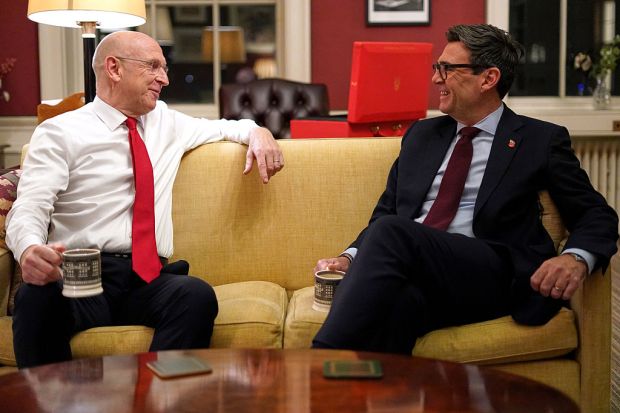
It’s Budget day. The run-up to Andy Burnham and John Healey’s first fiscal event has been rather less eventful than last year. There’ve been no daily leaks, no pitch-rolling press conferences and no hysteria. Everything that’s trickled out to the papers over the last few days has been small beer.
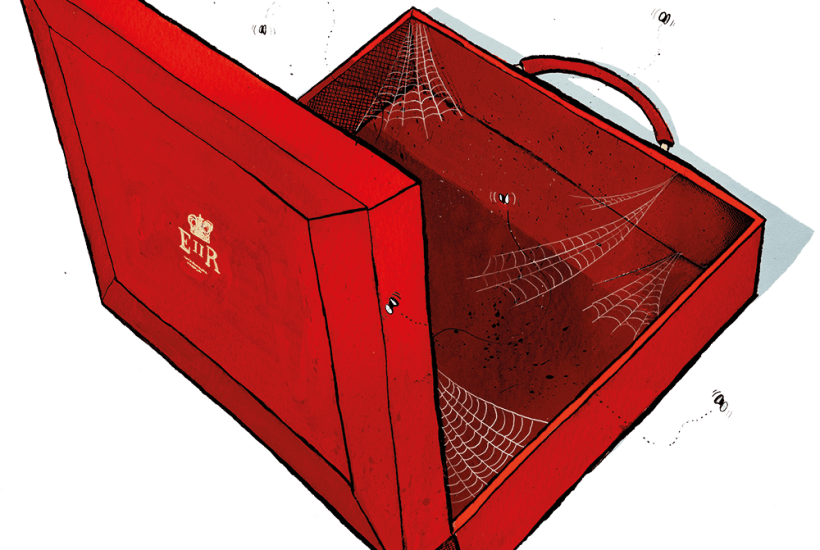
So we have a mystery: will this Budget be trick, treat, both or neither? If what Healey unveils to the House of Commons just after 12.30 today proves small in terms of spending and revenue, the Treasury team will be briefing that this was prudence rather than boring. With economic growth tentatively coming back to life so far this year, and following two Reeves Budgets which hiked taxes by a record £75 billion, they know there is little room for anything big.
Healey’s overall aim is for his Budget to give ‘breathing space for businesses and households’. What that is likely to mean is small measures paid for by small tax rises on banks, bookies and big businesses. One such measure was already announced this morning: the scrapping of standing charges on gas bills. That will be paid for by increasing the unit charge on gas charges but it brings bills down because it rewards efficiency in gas usage. Expect more of that.
Otherwise here are ten things I’ll be watching out for in the Budget statement and the Office for Budget Responsibility (OBR)’s report:
1. What’s actually happening with headroom?
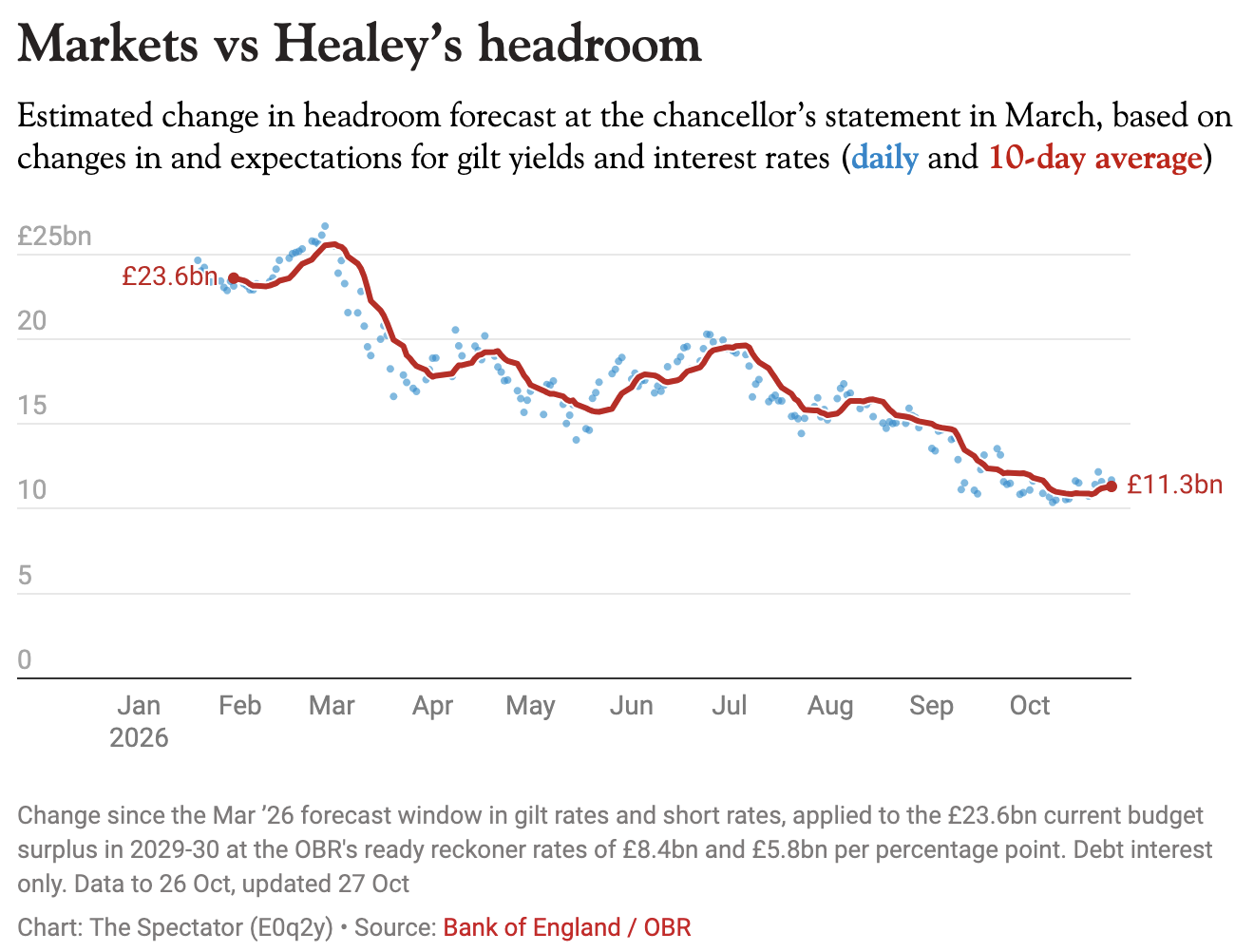
When Rachel Reeves sat down after last November’s Budget she was, rightly, chuffed at having doubled her fiscal headroom to £22 billion and reassured jittery markets. By this spring it had barely changed to £23.6 billion.
If you believe what has been widely speculated, or indeed The Spectator’s headroom tracker, increased government borrowing costs and expectations of interest rises have eroded it down to around £11 billion. If that proves true then will Healey use tax hikes and spending cuts to return it to more than £20 billion – or, as we’ve reported, might he think that a figure closer to £15 billion is enough?
2. Could unemployment and wages prove an upside surprise?
The big surprise at the last Budget was that the ‘black hole’ never materialised and that headroom was a lot better than had been leaked. I think that could happen again. If it does it will be because wage growth and unemployment forecasts have been revised in a positive direction. Look out for them.
3. Is the ‘fiscal consolidation’ credible?
The other week the IMF gave Britain a pat on the back for being one of the only countries with serious plans to get rid of its deficit. But that assessment was based on tax and spending plans left by Rachel Reeves that no one considers credible. If they’re maintained they imply massive spending cuts right when the next election is due. Surely that’s not something any Labour government is actually going to deliver. If there is any extra money Healey will surely be tempted to address that.
4. A possible rabbit on defence
Healey will also feel pressure to use any spare cash to get the ball rolling on defence spending given he resigned over our failure to do anything about reaching the new GDP target.
5. PuFins taking flight
We already know one way Healey plans to increase defence spending is through capital investment in defence infrastructure. He hopes to achieve this while sticking to the fiscal rules. One wheeze that he will attempt to use are these so-called public financial institutions (PuFins) such as the national wealth fund and British business bank. The idea is that because the state takes on an asset as well as a liability then overall debt levels don’t change as judged by the rules. But I’m not convinced that’s true given that he’ll still need to go to the gilt markets for the initial outlay at a time when gilt yields remain very high.
6. How do markets react?
I’ll of course have one eye on the gilt market. They’ll want to see credible plans that reduce borrowing but also tackle our baked-in inflation problem. If anything goes against that then Healey can expect an expensive reaction.
7. State pension
One leak we have had out of No. 11 is some sort of change to the income tax threshold so that the latest increase to the state pension does not drag pensioners whose sole income is the state pension into paying income tax. But how exactly will he achieve that? Will it be an age-based policy? Or a new threshold for everyone on low incomes?
8. Fiscal drag
The freezing of those thresholds has dragged lots more people – not just pensioners – into paying tax and they’ve dragged millions further up the tax bands too. These stealth taxes make up a huge part of the record high tax burden kicked off by the Tories and continued by this government. We’ll get new figures on just how much money that has raked in and how many of us it has affected.
9. Immigration
The OBR has been repeatedly criticised for taking a too positive view of migration in terms of its fiscal costs and contributions. Will those assumptions be revised further today? Even if they’re not I expect a fall in their near-term forecasts for migration as the Boriswave reverses. That could also have an impact on headroom though it would likely improve GDP per capita.
10. Are we back to economic growth?
The big economic surprise this year has been our GDP growth. The fastest in the G7 it has beaten most forecasts. Historically British growth tends to outperform in the first half of the year and then peter out as the year goes on. Do the OBR think that will happen again? Or, like the ONS, do they see the early shoots of AI boosting productivity and growth and what will that mean for their overall forecasts?