Wangaratta is a busy regional town in northern Victoria. It’s a place to stop and take a break on the day-long drive between Melbourne and Sydney. For locals, ‘Wang’ serves the region’s agricultural and cattle-farming communities, a town where produce is bought and sold, and families come from miles around to shop and catch up with each other.
The Wangaratta outrage highlights how vitriolic Australia’s political discourse is
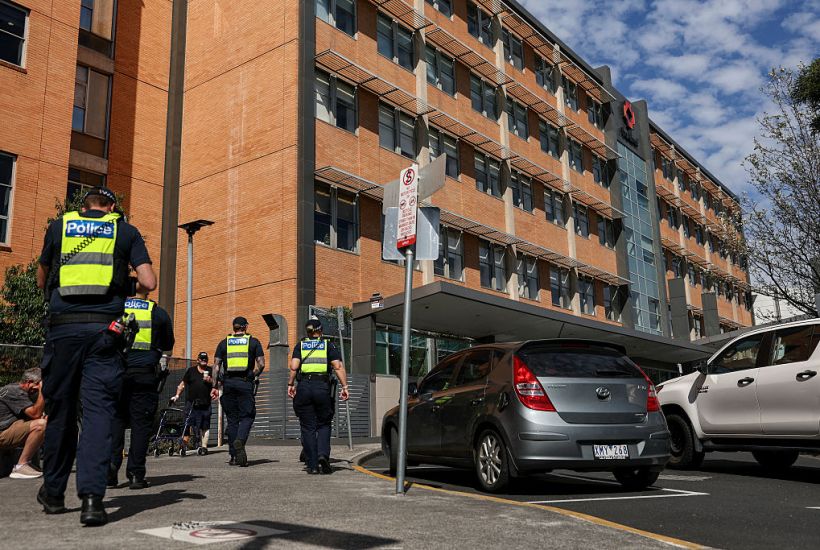
Monday, sadly, was different. Wangaratta witnessed an act of brutal violence against the local member of Australia’s parliament, Helen Haines, run down by a man in a Toyota four-wheel drive vehicle. Victoria Police have confirmed the driver rammed Haines, and then U-turned to strike her again.
Haines, a local independent, has been in parliament since 2019. She is respected across the political divide and regarded with genuine respect and affection by other MPs. A grandmother and nurse by profession, 65-year-old Haines is a gentle politician whose style and language is consultation and persuasion, not anger and aggression. She is the last person anyone would expect to be the target of a violent and brutal attack while going about her business as a diligent local MP.
Haines’s legs were severely crushed. Airlifted to Melbourne, she underwent emergency surgery on Monday night. Devastatingly, she lost one leg, surgeons are fighting to save the other, and at the time of writing her condition remains critical.
The alleged driver, a local man named today as Brendan Nugent, was apprehended and restrained by a barber whose shop adjoined Haines’s office. Nugent is reportedly deemed unfit for police interview: his actual motive, and whether the attack was opportunistic or planned, remain unclear. It has, however, emerged Nugent was known both to police and the Australian Security Intelligence Organisation, Australia’s MI5.
Ironically, self-described ‘plant person’ Nugent and Haines share climate action and environmentalist views. But Nugent’s social media accounts also reveal that he is fanatically pro-Palestine and anti-Israel. Haines, by contrast, deplored October 7 yet was vocal in supporting a Gaza ceasefire. Why Nugent allegedly rammed and gravely injured Haines is hard to fathom: she shares more of his views than not.
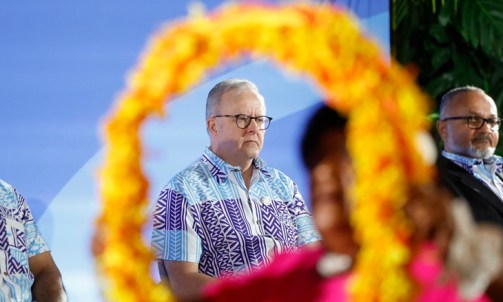
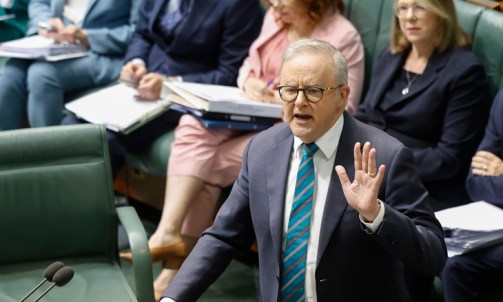
Prime minister Anthony Albanese made it clear that he deems it a ‘politically-motivated’ act, as he told the Australian Broadcasting Corporation hours after Haines was run down.
‘I wasn’t personally aware of any threats to her personally. What we do know is that the temperature has increased. There is no place for political violence in a democracy,’ he said.
Australians assume attacks like this only happen in other countries, not their own. They see the murders of Jo Cox, David Amess and Ann Widdecombe, and attempts on the lives of Donald Trump and other foreign politicians, as something alien and un-Australian. Then again, until last December and the carnage of Bondi, they also saw Islamist terrorist acts as something that happened to other people.
Sadly, Australians are wrong. Home affairs minister Tony Burke reported on Monday night there have been over 1,000 threats of death and violence against Australian politicians so far this year – already over 60 more than the whole of 2025.
The Wangaratta outrage highlights how vitriolic Australia’s political discourse is, and Australia’s media swooped on Nugent’s increasingly unhinged social media posts. Blaming the cowardly keyboard warriors dishing out hate-filled political polemic is on thing, but Australian MPs themselves rhetorically fuelling the fires of hatred against their own is another.
Hours before Haines was attacked yesterday, the populist One Nation party, which like Reform UK, has surged in opinion polls, ridiculed another independent MP, Tasmanian senator Jacqui Lambie. Lambie lambasted fiery One Nation leader, Pauline Hanson, for authorising a satirical One Nation video cartoon which mocked Lambie’s serious gynaecological condition that forced her to take five months’ leave from parliament.
‘I’ve seen commentary saying that because I spoke publicly about my health, it’s now “fair game”’, Lambie said on Monday. ‘Decent leaders don’t stir up hatred, pushing us towards bloody anarchy, because that’s exactly what [Hanson’s] doing.’
Hanson’s response? ‘Take a chill pill,’ she tweeted. The video’s producer, currently standing as a candidate in Victoria’s state election, insulted and ridiculed Lambie while demanding she lighten up. ‘It’s only satire,’ he said dismissively. In another episode former SAS officer turned MP, Liberal Andrew Hastie, was called a ‘traitor.’
The Lambie ‘satire’ is just the latest instance of Australia’s coarse political discourse, but Hanson is not alone in denigrating and verbally attacking other MPs, nor in being similarly attacked herself. Just last week, a little-known conservative backbencher, Angie Bell, chose to criticise Albanese and his multicultural affairs minister in violently inflammatory terms.
‘This minister and this Prime Minister should be absolutely shamed and stoned in the square,’ Bell railed. Although she withdrew the very unparliamentary remark, the damage was done. Perhaps Bell did not know the minister, Anne Aly, has already received 19 death threats this year.
Before Monday afternoon in Wangaratta, ugly and vicious comments by MPs were too readily seen as part of the normal rough-and-tumble of Australian political discourse. What has befallen Helen Haines, however, is a brutal warning that elected representatives who attack each other with violent words effectively give permission to deluded characters, outside the political bubble, who may think violence and actual harm to a MP makes a point or settles a grievance.
Australia’s political leaders and MPs have been all over mainstream and social media since the attack on Haines, highlighting what a wonderful person she is and, by their public expressions of support, they are. They instead should reflect how much their own ugly words and conduct, aimed at their parliamentary colleagues, may give licence to the likes of the alleged perpetrator Nugent to contemplate hideous violence.