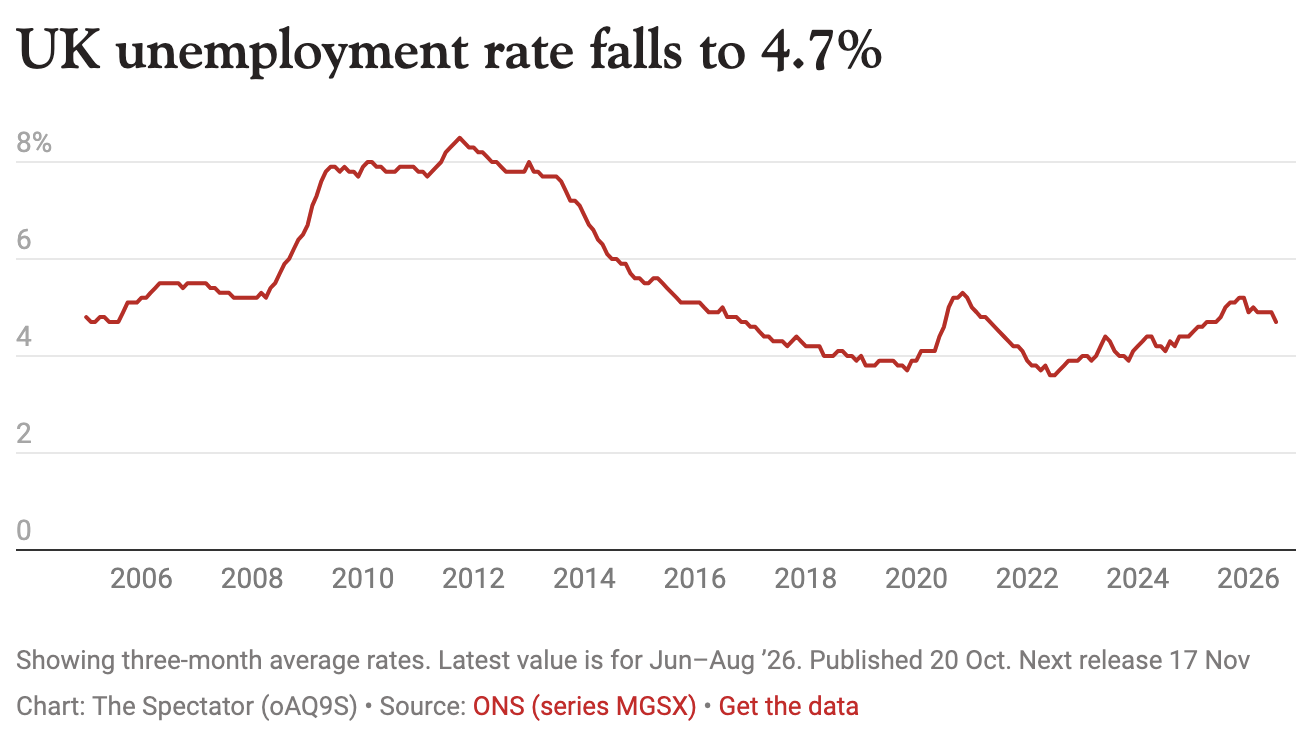
Has the jobs market bottomed out? Figures just released by the Office for National Statistics (ONS) show that, unexpectedly, the unemployment rate fell to 4.7 per cent, with the employment rate ticking up too.
That said, more accurate HMRC estimates for payrolled employees fell by 111,000 in the year to August. But there were signs that this jobs collapse is finally starting to slow, with a previous 26,000 fall between July and August revised to an increase of 1,000. A ‘flash’ estimate for September also saw an increase of 13,000 from the month before. Forecasts had expected jobs to keep falling.
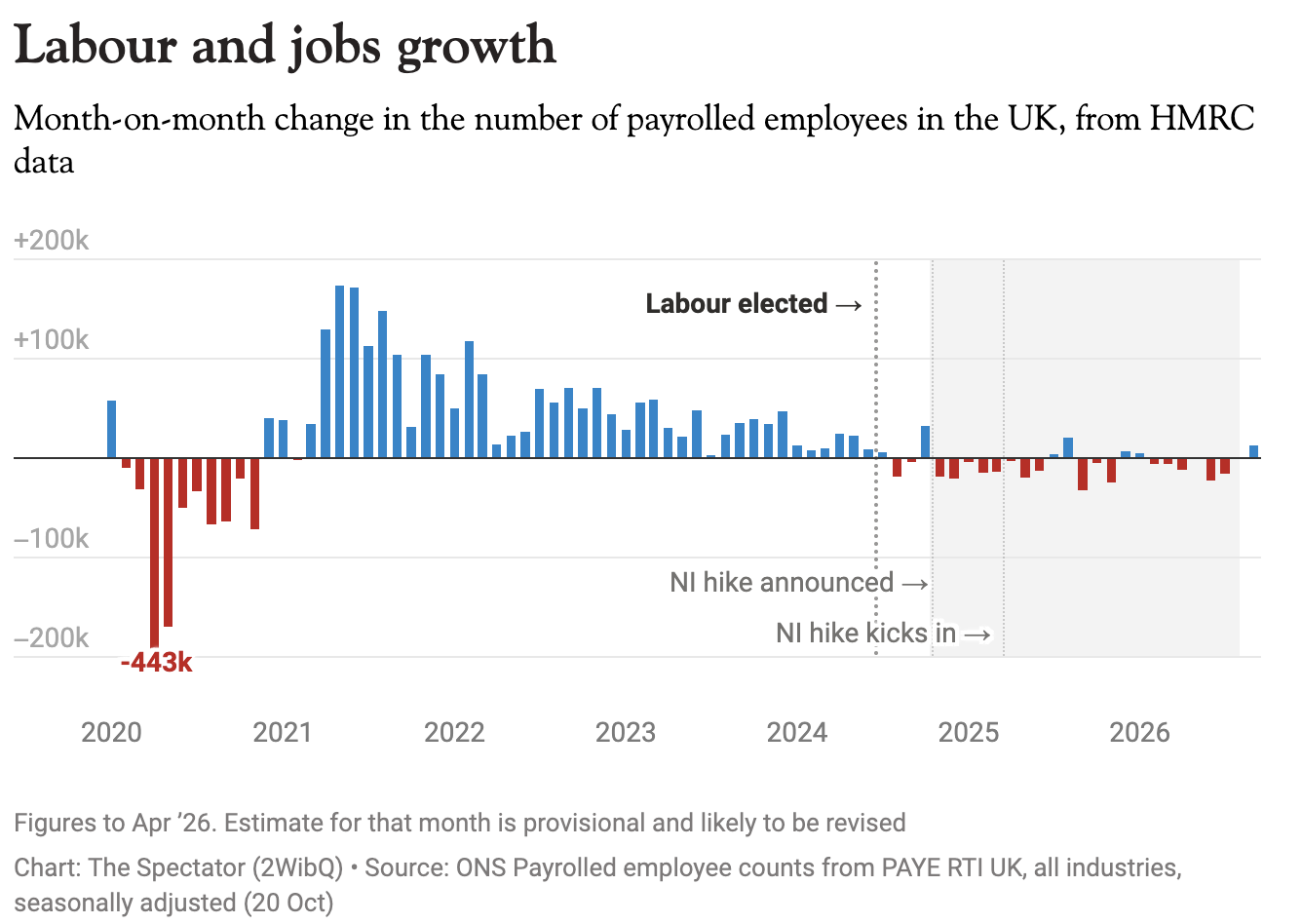
There was no good news to be found in the vacancy figures, though, which show a fall in advertised jobs of 21,000 in the last three months. That’s the largest fall in vacancies this year and takes the level to its lowest outside the pandemic for 12 years. The ONS said that smaller businesses have told them that increased labour costs – Rachel Reeves’s £25 billion raid on national insurance and minimum wage rises – have stopped them from hiring.
Andrew Griffith, the shadow chancellor, said: ‘Labour’s Jobs Tax, endless red tape and John Healey’s refusal to rule out yet another tax grab in his Budget are having devastating consequences for anyone who needs a job.’
For those in a job, though, there was another surprise in the wage figures. On average, British workers received a pay rise of 3.7 per cent, up from 3.6 per cent in the last set of figures. The gap between private and public sector pay remained too, with the average private sector employee seeing their wages increase by 3 per cent compared with 6.3 per cent in the public sector.
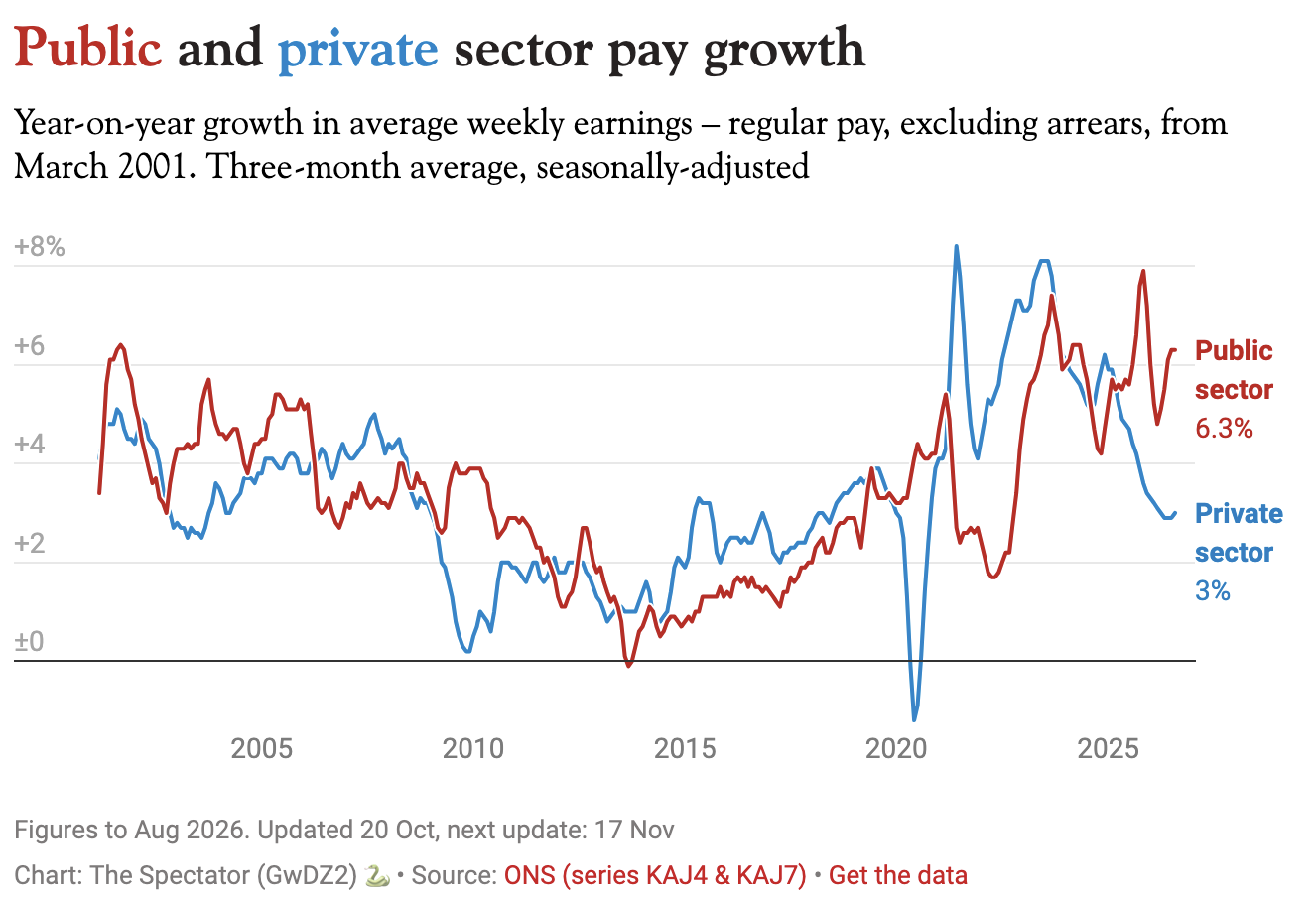
This unexpected speeding up of wages across the economy will worry the Bank of England’s rate setters. It also comes on the back of unexpected economic growth. Though both data points are good news in general, given inflation is expected to pick up from tomorrow they will play into fears that rising prices are leading to so-called ‘second round’ effects whereby wages are increased to keep up with prices in a never-ending spiral. That’s likely to increase the chances that the Bank goes for a rate hike when it next meets.
A note of caution, though: as always with the ONS, take all of the above with a pinch of coarse salt. The unexpected fall in unemployment rate to 4.7 per cent covers a three-month window and includes a 4.2 per cent reading for August alone. Deutsche Bank’s chief UK economist Sanjay Raja calls this ‘unexplainable’ and is highly likely to be revised.
Nevertheless, this morning’s jobs data is broadly good news for John Healey, with wages rising and unemployment seeming to have bottomed out – including youth unemployment – there are going to be more jobs in the economy as the OBR finalises their budget sums. And more jobs paying higher salaries means more revenue for HMRC.