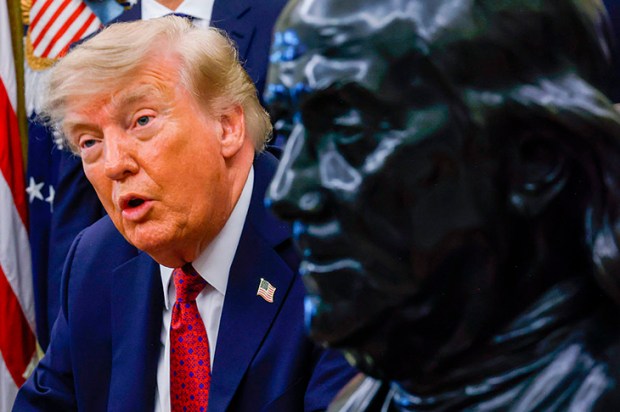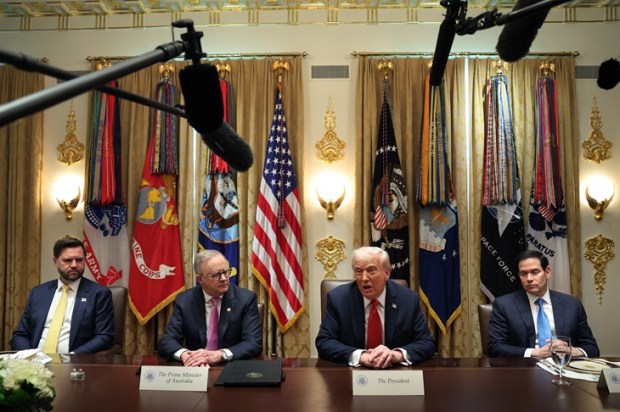
Donald Trump has written the finest political satire of the decade. He did it in one sentence in Dallas this month. ‘If the Republicans win, you win with us and you get $5,000.’
Every adult American would get the cheque. The condition is that Republicans hold both houses of Congress in November. There are about 270 million adults, so the bill comes to roughly US$1.35 trillion. America’s net debt is already $32 trillion. The money will be borrowed from people who are too young to vote or who are not yet born.
The respectable classes are appalled. They should be grateful. Mr Trump has done what no politician before him dared to do. He has quoted a price.
Consider the terms. Payment is strictly on delivery. No win, no cash in the mail. Every other politician spends your money and your children’s up front and hopes you remember on polling day. Mr Trump has brought performance pay to vote buying. This finance professor can only admire the contract design.
He needs it. Americans are free to stay home, and in midterm elections about half of them do. Mr Trump must get his supporters off the couch. Five thousand dollars is an appearance fee. It beats the $20 fine we pay for failing to vote.
There is one more flourish. The money must be spent in America. Nobody has explained how. Money is fungible. A voter who puts his dividend towards the rent can put his wages towards a Korean television. Still, the clause completes the joke. The tariffs that supposedly fund the dividend are paid by American shoppers. Voters will be bribed with their own money, topped up with their children’s, and told where to spend it.
H.L. Mencken saw it coming a century ago. He called every election ‘a sort of advance auction sale of stolen goods’. Mr Trump has hired an honest auctioneer. He will enforce it as keenly as he fights the war against Iran.
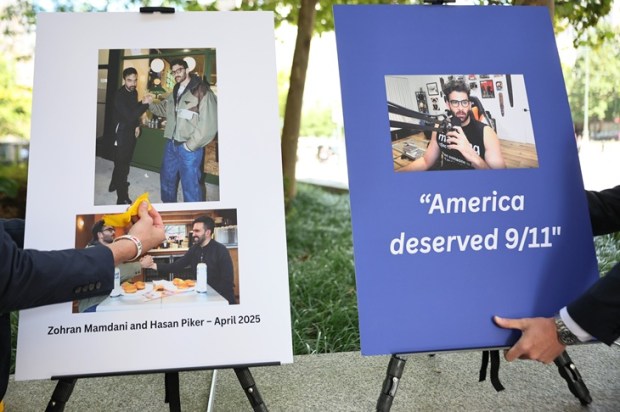
His critics are poorly placed to complain. New York has just shown that the traditional bribe works beautifully. Zohran Mamdani won the mayoralty promising city-owned grocery stores. He has now named the discount. Fresh produce, meat and seafood will sell at 30 per cent below market prices. The city will cover the rent, the fit-out and the property taxes. Supermarkets earn a cent or two in the dollar. Nobody sells at 30 per cent off without a subsidy. The taxpayer is the silent partner in every trolley. There will be five stores for eight million people. A lucky few will shop cheaply and everyone else will pay. No matter. The votes have been counted. This is socialism as it has evolved since the Soviet Union fell.
Australians should not feel superior. We are the masters of this game. Voting here is compulsory, so our politicians need not pay anyone to turn up. The whole bribe can go to changing minds. It is a far more efficient market. Our legislators, the chief beneficiaries, designed it that way in 1924.
Anthony Albanese understands it well. Before the 2022 election he promised that household power bills would fall by $275 a year by 2025. He said it nearly a hundred times. Bills rose by about 40 per cent instead. His solution was pure genius. He sent every household an energy rebate, paid for by taxpayers and more borrowed money. A second bribe covered the failure of the first.
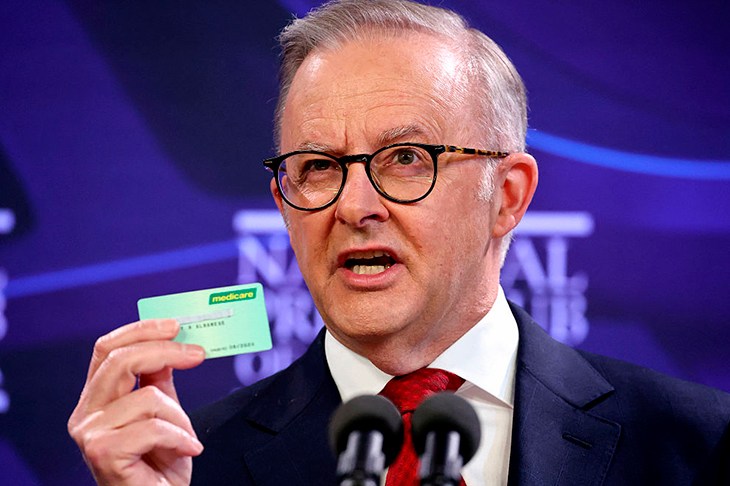
In 2025 he went one better. He held up his Medicare card at every stop. All you will need to see a doctor, he said, is your Medicare card and not your credit card. It was the cheapest prop in political history and it won a landslide. Millions of patients still reach for both cards. The green one works best as a campaign souvenir.
Victoria shows where the road leads. Labor has governed there since 2014. It inherited net debt of a little over $20 billion. The latest budget puts it at $175.6 billion by next June and $199.3 billion by 2030. By then interest alone will cost $32 million a day. The money bought level crossing removals, tunnels and a suburban rail loop to nowhere. Each came with a ribbon, a hard hat and a marginal seat. Labor has won three elections this way and in November it will ask for a fourth. Debt has not hurt Victorian Labor. Debt is how Victorian Labor wins. One day the federal taxpayer will have to bail Victoria out.
The saddest lesson comes from Queensland. Voters there elected a Liberal National government in 2024 to clean up after a decade of Labor deficits. This month S&P Global cut the state’s credit rating from AA+ to AA. It was the first downgrade in 17 years. The new government had walked away from its own savings targets. It forecasts more deficits and debt of $216 billion by 2030. The Treasurer said the agency wanted him to raise taxes, cut services and stop building. ‘That’s not going to happen,’ he said.
He is being perfectly rational. Campbell Newman won the biggest majority in Queensland history in 2012. He set about repairing the budget. Voters threw him out after a single term. Every conservative in the country took note. Thrift loses. So the conservatives have stopped fighting Labor’s strategy and started copying it. Covid was just the opening round. We now have two parties of borrowed money. They differ only in the colour of the hard hat.
Why does it work? The economist James Buchanan gave the answer fifty years ago. Borrowing lets politicians spend without taxing. The voters who enjoy the spending are here today. The taxpayers who will repay it are in primary school or not yet born. They have no vote and no lobby. It is taxation without representation, the very thing Americans once went to war over.
So let us thank Mr Trump. Our leaders dress their bribes as Medicare cards, power bill relief and transport projects. He has dressed his plainly as a bribe. He has named the price, the condition and the day. If Americans take the money, the satire becomes a business model and every treasurer in Australia will take note. If they refuse it, there is hope for the rest of us.
Either way, the children get the bill.
Got something to add? Join the discussion and comment below.
You might disagree with half of it, but you’ll enjoy reading all of it. Try your first month for free, then just $2 a week for the remainder of your first year.