All tunnels face geotechnical problems from unknown unknowns. In the Channel Tunnel, huge water pressure opened fractures; there were swelling clays, wall and roof failures; and lateral changes in rock types requiring tunnel vertical realignments, rock bolting and grouting. Unsurprisingly, the French side was more chaotic with faults, folded rocks and increased fracturing.
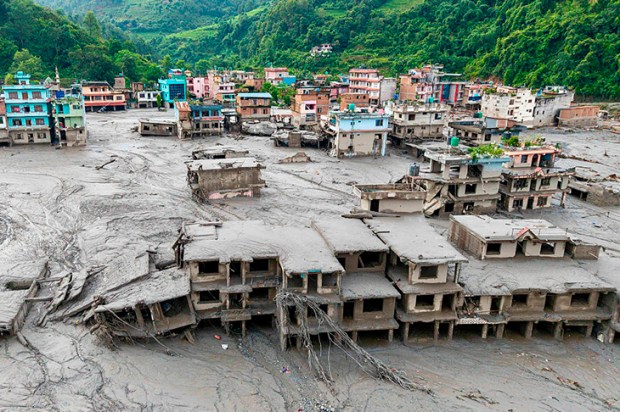
Many tunnels collapsed during construction such as Silkyara Bend, Chamoli and Srisailam (India), Chilime (Nepal), Hanekleiv (Norway), Heathrow Airport and Gerrards Cross (UK), Toulon (France), M6/West Connex and Snowy 2 (Australia). Fatalities were common. Melbourne’s Burnley tunnel constructed in Yarra River alluvial sediments had floor heave due to the high-pressure underground water and wall leakage due to thin concrete tunnel walls.
‘Snowy 2.0’ was a brain fart by Malcolm Turnbull who knew he was the smartest person in the room. However, the room was full of green blood-sucking blowflies, oleaceous sycophants, activist bureaucrats and ill-educated idealogues. The Snowy 2 due diligence process took less than two years for a 27-kilometre-long tunnel 10 metres in diameter underneath Kosciuszko National Park.
The Australian Renewable Energy Agency partially funded the feasibility study, and independent advisors stress-tested the business case against future National Electricity Market scenarios and modelled how Snowy 2 would generate revenue from pumping water uphill when solar and wind electricity prices were low and generating hydroelectricity from gravitational flow when electricity prices were high.
Fulfilling the green dream took precedence over basic geotechnical work. The project due diligence was rushed to fulfil the L-NP and ALP government ideological uniparty priority to produce uncosted ‘clean’ green renewable energy saving the planet from God knows what. The first fatal flaw was rushing a major project without adequate geotechnical data which was insufficient because regulatory restrictions prevented timely drilling at Kosciuszko.
Primary drill core data on the physics, fracturing and rock types of the material to be tunnelled is essential. The project should have been abandoned when it was not possible to obtain these data. However, to make a quick investment decision for the green dream, engineers were required to use outdated surface geological maps of the wrong scale, limited subsurface drill data, conceptual desktop models and perhaps even clairvoyance to blindly predict the details of what was a kilometre below.
Geotechnical studies cost $100 million, did not provide the necessary data and could have been undertaken more effectively and cheaply using a bent coat hanger divining rod. The due diligence process was later criticised by the audit office, government reviews and even Minister Chris Bowen for inadequate geotechnical studies resulting in early design failures, trapping of tunnel boring machines and, at that time, a $12-billion cost blow-out. The federal government had its second chance to cut their losses and run. The blowout is now more than triple this figure because the project continued.
The second fatal flaw was that the economic modelling failed to account for transmission line costs, destruction of fertile farmland, drought, supply chain disruptions and the change from a pre-construction fixed price contract to a cost-plus contract during construction. Who were the clowns who agreed to this lethal contractual change? Were any sacked?
Snowy 2 used three tunnel-boring machines and had to purchase a fourth tunnel-boring machine for a mere $75 million to bypass jammed boring machines. The tunnel bored into the unknown. It is no surprise that there were collapses of altered, highly fractured and weathered rock; changes in rock hardness, type and strength; shears and faults filled with high pressure water and clays creating flooding, mud inundation and rock collapse; changes in tunnel direction due to variable rock types; and flow of compressed soft rock into the tunnel triggering rock collapses because the rock physics and fracture patterns were unknown.
Between 1949 and 1974, 145 kilometres of tunnels were cut using primitive hand-held drill-and-blast techniques in the Snowy Mountains Hydroelectric Scheme by inexperienced immigrant workers. There were 121 fatalities. All the conditions that bogged tunnel boring machines in Snowy 2 and killed workers in the original Snowy scheme are overcome daily in dozens of deep Australian mines.
Modern drill-and-blast underground mines cut a 5.5 by 5.5 metre tunnel with a Roman arch to buttress and prevent collapse. A remote-controlled multi-boom drill jumbo is used up to 20 metres from the face. After numerous holes are drilled in the face, explosive charges are loaded, the mine is evacuated, charges are remotely blasted, ventilation removes dust and fumes, and remote-controlled front-end loaders drop broken rock into trucks to carry to the surface.
The jumbo then simultaneously drills a swarm of holes. Grouted steel and cable bolts are tensioned in the holes to prevent rock falls. These rock bolts are attached to strong protective steel mesh sealed onto the exposed rocks with concrete that contains long fibres of steel or synthetics (shotcrete) for strength and safety. No rocks are left exposed hence fatalities by a fall of rock are now extremely rare.
Near each jumbo is a survival capsule with communications and provisions in case there is a rock collapse preventing egress. Above the capsule is a ladderway to a higher inactive area of the mine. In an underground mine, tunnel advance is 4 to 8 metres per day whereas the Snowy 2 boring machine Florence has only averaged 4.6 metres per day.
At a Broken Hill mine with which I have a long association, 155 kilometres of underground rock-bolted meshed tunnels lined with shotcrete have been cut since 2007. The costs were initially $4,500 per metre and are now $12,000 per metre. These costs include all services such as ventilation, electricity and water.
Using these figures, if 27 kilometres of a 5.5 by 5.5 metre Snowy 2 tunnel was constructed by drill-and-blast cutting from both ends, the costs would have been $324 million. No bogging and associated costly delays of tunnel-boring machines would occur, construction would have been quicker and drill holes into the face would show ground conditions ahead of the next cut. If a ten-metre diameter tunnel was necessary, then two parallel 5.5 by 5.5 metre tunnels could have been cut as was done in the longest road tunnel in the world, the 14-kilometre-long Arlberg road and rail tunnels in Austria.
Snowy 2 gave politicians the chance for photo ops in front of Florence, rewarded incompetent elites with egos incommensurate with their achievements and allowed grandiose announcements about building new infrastructure while established infrastructure fell apart. Known fatal flaws were ignored during a blind frantic rush to a green nirvana. The project was an uncosted ideological dream with no checks and balances resulting in a massive waste of taxpayer and consumer money. Wilful wanton waste is the never-ending story of renewables.
Australians once had pride in the Snowy scheme which cost today the equivalent of $8.5 billion. Does anyone feel proud about wasting over $40 billion in order to push water uphill? Coal provides NSW with 40,000,000 MWh of electricity 24/7/365 whereas Snowy 2 will provide 350,000 MWh for 175 hours.
Cut the losses, abandon Snowy 2 now.
Got something to add? Join the discussion and comment below.
You might disagree with half of it, but you’ll enjoy reading all of it. Try your first month for free, then just $2 a week for the remainder of your first year.