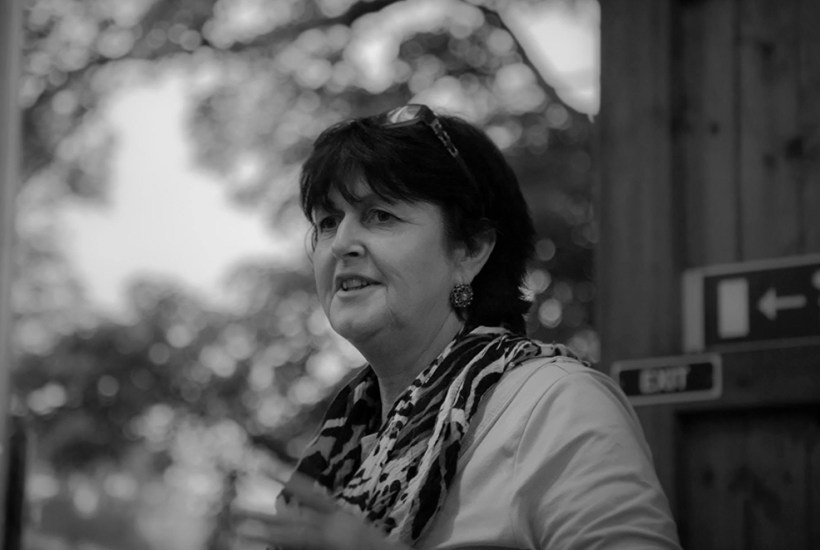
Nicola Wilding is a documentary film producer, whose family was originally rural working class. Aged 60, her mother, Sandra, prompted by the hacking to death of the soldier Lee Rigby, unexpectedly joined the English Defence League (EDL) and went on marches headed by Tommy Robinson. During a series of disappointing liaisons with men, including two marriages, she had brought up four children, lived in two different countries, moved often within the UK, got into debt, worked in several low-paid jobs, including one at an Omagh army camp pub, and, despite early heart trouble, ended up as a dedicated employee in care homes throughout Covid. She told her daughter she’d got tired of ‘the bloody lefty media’ which only told one side of a story.
In These Wild English, Wilding sets out to examine her mother’s life: ‘Home for my grandparents was a place called the Eden Valley, in the old county of Westmorland.’ Grandad was a labourer for a tenant farmer named ‘Slackie’, who rented land off ‘a wealthy big-house family’. Nana was a Catholic, whose father had come from Northern Ireland to work in the Whitehaven mines. After a stint in domestic service, Nana had married young, and in 12 years raised seven children in a tiny labourer’s cottage, then at Ash Hill farmhouse, where Grandad still looked after the livestock and crops. Sandra, the second-born, spent much of her childhood and teenage years caring for her younger siblings, since Nana would often disappear, eventually leaving them all for good.
Wilding seamlessly weaves hard historical facts into the narrative with vivid portraits of family members. She notes that before the Enclosure Acts – a series of laws between 1750 and 1850 privatising land – her grandfather, instead of working for a tenant farmer, would have owned three acres and a cow. She shows how Margaret Thatcher’s policy of encouraging people to buy their council houses could put them into crippling debt, as happened to her mother. ‘I remember thinking as a 12-year-old, “OK we’ve bought our house but it isn’t actually our house”.’
Wilding is disgusted by Labour’s incompetence over Foot and Mouth in 2001 – ‘the horror that killed six million animals and cost £3 billion’. Her brother, Michael, who’d taken over running the farm when Grandad died in 1982, had to witness the last 40 cows loaded up to be killed. Foot and Mouth never even reached Ash Hill. But she gives credit where it’s due:
The House of Lords doubled down its scrutiny. There were peers who knew about and cared deeply for farming, and recognised a cock-up when it was happening. ‘It is not acceptable,’ the Countess of Mar stated, ‘that those who have cared all their lives for cows, sheep, pigs or goats that have had to be slaughtered must endure the sight of those animals’ bodies abandoned… in the fields that they used to graze.’ Michael went to a flat in Penrith, a turnip tattoo his only memento of years on the farm.
Animals are important. There’s a wonderful vignette of Grandad winning yet again at the Penrith show with his Hereford bull. Rex, the family dog, saved the life of Wilding’s uncle when he was a toddler by barking as he struggled in the sheep dip. As a girl, Sandra loved her father’s mare, Beauty, riding her to escape the household drudgery that worsened after Nana scarpered and was replaced by a lazy stepmother. She taught Beauty to jump, as she demonstrated proudly to her father. But he was disappointed when she ducked out of grammar school, leaving at 15. Later she defied him again, getting an early skinhead haircut and going wild in Blackpool.
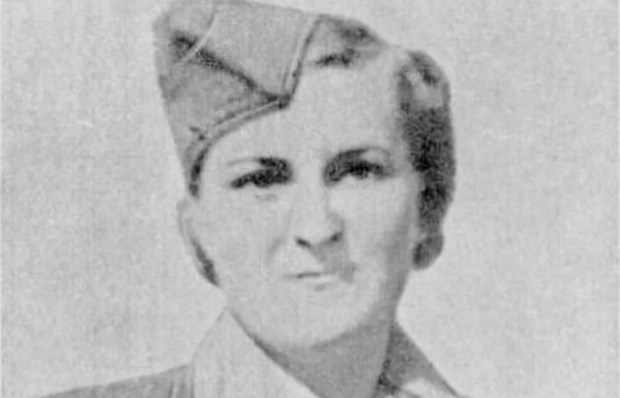
Aged 60, Wilding’s mother unexpectedly joined the EDL and went marching with Tommy Robinson
She showed the same reckless courage when she arrived in Omagh as an army wife. Driving towards the camp, she was followed by young men who, spotting her British number plate, yelled threats and abuse. She replied: ‘Aren’t you the big men mouthing off at a lone woman? Aren’t you the fucking heroes?’ ‘She had absolutely no fear,’ Wilding writes, ‘only disgust and rage.’
Years later, Sandra expressed similar rage marching with the EDL in Dover, arguing with ‘a pink-haired anti-fascist called George’ distributing ‘STOP THE NAZI RALLY’ leaflets. She explained that she was marching ‘in support of Calais truckers being attacked by migrants trying to board their trucks’. (A refugee was living in her spare room.) Everyone, especially those who readily dismiss people who display the St George’s flag or who voted Brexit, should read this defiant, lively, terrific book.
Got something to add? Join the discussion and comment below.
You might disagree with half of it, but you’ll enjoy reading all of it. Try your first month for free, then just $2 a week for the remainder of your first year.