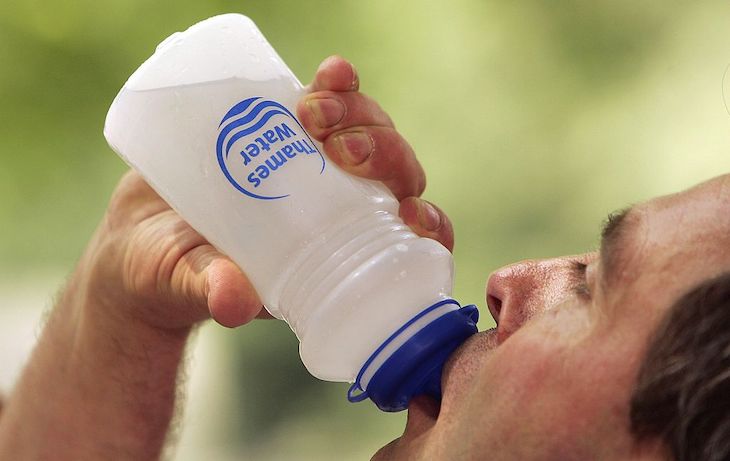
Why does everyone in Britain carry water bottles these days? On a dog walk in London a few days ago, a friend asked – with genuine concern – whether I had left mine behind. She could not comprehend that I might have ventured out without one. The very next day I bumped into a well-respected man in his forties – a councillor, no less – who breezed past with the words: ‘Sorry, can’t stop. Just popping out to get a water bottle. I’ve lost mine.’
The water bottle is the perfect modern accessory: faintly virtuous, mildly performative and entirely unnecessary
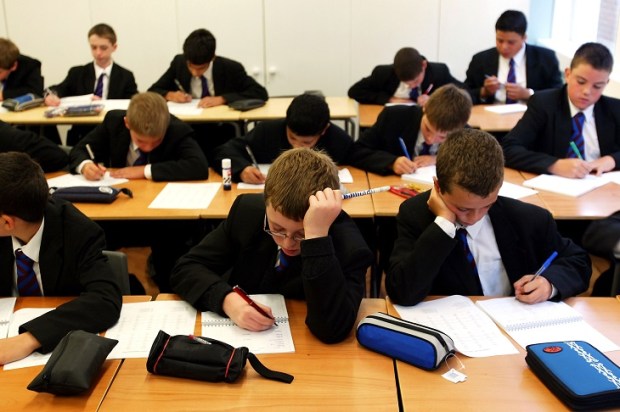
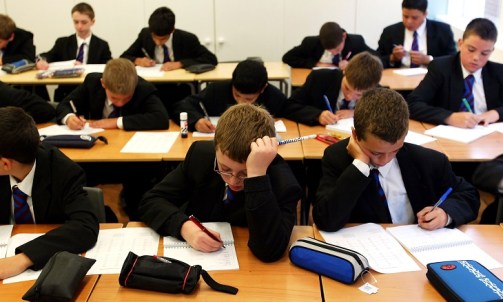
I cannot pinpoint when these Chinese cylinders became a necessity. As a child, we simply…went outside. Occasionally, we became thirsty. Eventually we encountered water. It was all very straightforward. But nowadays, it seems that no one travels anywhere without one. Children are packed off to school each day clutching their bottles. Grown ups take them to work with them. Why?
Does anyone actually know someone who has keeled over from dehydration in Britain? Were these people so far from a tap, a fridge, a fountain – or a loch – that salvation lay only in a vacuum-sealed flask? Perhaps this might be the case in the Lake District or the Highlands. But in central London? I’m not convinced.
I have never owned a water bottle. Why would I? I am almost always within striking distance of water. Civilisation, for all its faults, remains admirably well supplied with it.
Perhaps I should have invited my TK Maxx-bound councillor acquaintance to stop by. I have an entire cupboard of the wretched things. None of them are mine of course; all were abandoned by well hydrated guests who discard them the moment they are offered something more compelling, such as a stiff gin.
The curious thing is that the rise of the water bottle seems to track the disappearance of the public lavatory. Consumption rises; opportunities for ‘disposal’ vanish. It is an unsustainable model. Where does it go? Perhaps we should all be monitoring the share price of adult nappies.
In childhood, when car companies advertised some gleaming new feature, my father’s eyes would roll. ‘Another thing to go wrong,’ he’d mutter. I thought him churlish at the time (and perhaps he was), but I begin to see his point. A water bottle is, after all, nothing more than an unnecessary burden: it fits into no pocket, is a hassle to carry around and is remarkably easy to lose. The modern family car has become a mobile skip for them, contents spewing into the footwells. These water bottles don’t even fit the cup holders. I am beginning to suspect their ubiquity is a petrol station conspiracy. It’s a way of forcing us to use the facilities and emerge with overpriced Haribo.
An April stroll through Battersea is now treated like an Arabian crossing (admittedly, parts of Knightsbridge come close) as the Safety-First generation clutches its metallic security blanket. Come Summer, the London Underground’s tannoy announcements feed the hysteria by gravely urging us to ‘bring a bottle’. It’s the nanny state in overdrive given that the average tube journey lasts little longer than an episode of Friends.
The UK has never needed risk takers more. We need to celebrate our disruptors, innovators and entrepreneurs, but instead we feed a culture of low level anxiety. Every clanking bottle feels like a small surrender to caution, a portable insurance policy against the horror of momentary discomfort. It is ‘Keir Culture’ in a canister; over-engineered, tentative, pathologically risk-averse and – dare I say it – beige. Or have I, at last, become the curmudgeon?
Urgent research is required. How many spinal columns are being quietly warped by unevenly distributed tote bags? Is the human body even designed for such relentless saturation?
The water bottle is, in its way, the perfect modern accessory: faintly virtuous, mildly performative and entirely unnecessary. One doesn’t so much drink from a bottle as signal with it.
And until I witness a single Brit felled mid-pavement for want of Evian, I shall continue to regard it not as a necessity but as a curious emblem of our age: well-meaning, ubiquitous – and completely absurd.