There I was, relaxing one evening, when my phone burbled with a text. It was our distinguished editor with a question: ‘Who first came up with the brilliant expression “kick the can down the road”?’ The Wise One is right – it is a brilliant phrase that captures the sole political tactic of many or our esteemed leaders. As you probably know ‘kick the can down the road’ (or ‘down the street’ – both versions exist) means ‘to delay dealing with a difficult situation’. There are many methods of ‘kicking the can down the road’ – ordering an inquiry (preferably a long, slow inquiry) or saying ‘we can’t consider this until after the budget’ are but two of many. It’s an American expression first recorded in 1984 – in the United States Senate. (This phrase, with this meaning, has always lived in the world of politics!)
The expression is recorded in the proceedings of the Senate from 1984 – specifically in The First Concurrent Resolution on the Budget for the Fiscal Year 1984: Hearings before U.S. Senate Budget Committee: National Security. That’s a snappy title, isn’t it? Sounds like perfect bedtime reading.
The immortal words were uttered by United States Air Force General David C. Jones (giving evidence to the Senate) when he said: ‘The key question is whether we are going to face up to that problem today, or kick the can down the street.’ But for General Jones to have used ‘kick the can down the road / street’ without explanation (and without inverted commas in the official papers) must mean it was already well known, and part of the spoken language.
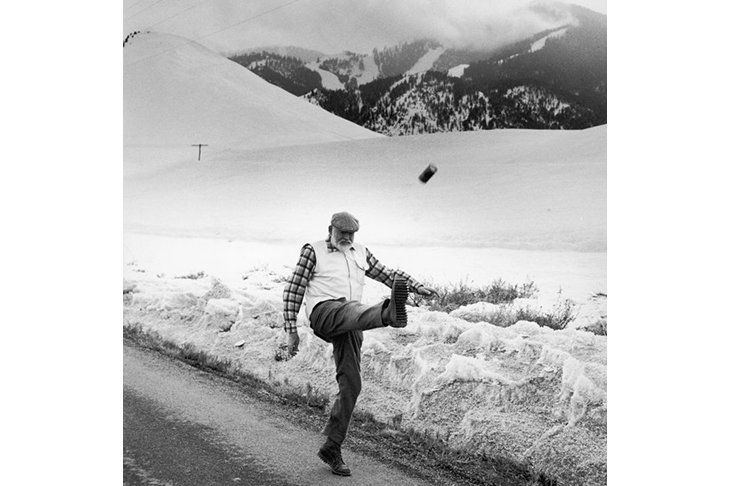
The image behind the words is clear enough. When we were small boys it was fun to find an empty tin can (perhaps fallen out of a rubbish bin) and taking turns kicking it down the street as we walked along with our hands in our pockets yarning to each other. There was no goal and no purpose in our activity. It just filled a bit of time. Which is exactly what our political masterminds intend when they nod sagely, agree that the problem is serious, and find a way to ‘kick the can down the road’ – there’s no goal, and no purpose, except to fill in some time. During which time they hope we’ll forget all about it. (But we won’t! We’ll remember it when we hold that pencil in our hand in the polling booth!)
Peter writes: ‘Yesterday I was playing Scrabble with my wife and wanted to use the word “abo”. I doubted the official Scrabble dictionary would allow it, but I checked anyway. And blow me down, it was allowed. So, I thought I’d check the word “coon”. It is allowed in two contexts, the first as a contraction of “raccoon”. The second is as an eccentric or undignified rustic. We would never use the “N” word so why are these allowed?’
The short answer is: they shouldn’t be! The Oxford has a helpful usage note on the word ‘abo’. They say that when it was coined (around 1900) it was just used as an abbreviation of ‘Aboriginal’ with no hostile intent, but that over the intervening years it has become associated with racial hostility and is now an offensive word and a term of abuse and as such should not be used.
As for ‘coon’ being acceptable in certain contexts, the problem is that on a Scrabble board there is no context – it’s an isolated word. Perhaps (in the interests of a calm game of Scrabble with no shouting) it would be best to avoid these words.
Got something to add? Join the discussion and comment below.
Contact Kel at ozwords.com.au
You might disagree with half of it, but you’ll enjoy reading all of it. Try your first month for free, then just $2 a week for the remainder of your first year.