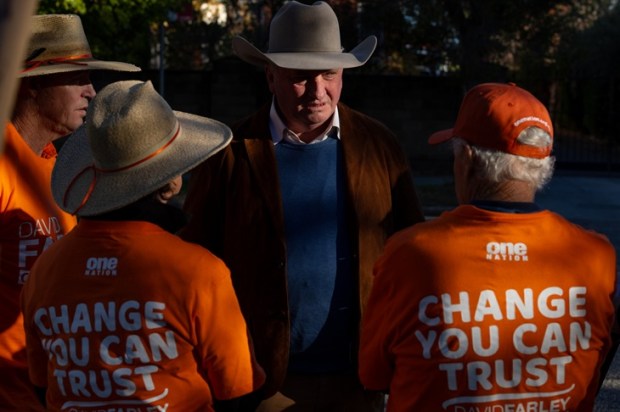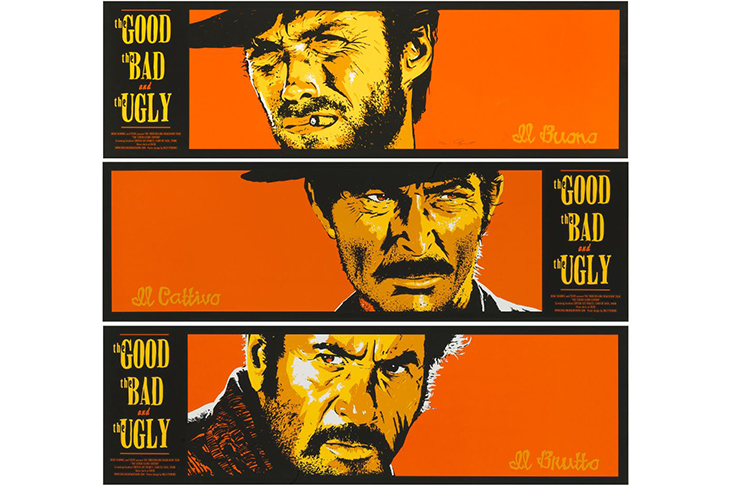
For the Liberal party, 1996 and 2026 are, depressingly, much further apart than just in years. Survival, let alone a return to anything like the 11 good years of the John Howard government, depends on more than the party’s ability to correct the basic errors that resulted not only in the bad times of last year’s record election defeat. The leaked, controversial, but incisive, internal review accurately reflected much of what went wrong in what has been described as one of the worst Liberal campaigns ever. This has ben followed by the ugliness of the SA state election debacle. One Nation’s crushing assault on the Liberal vote resulted in the Labor state government increasing its majority of seats despite its lower primary vote as our voting system ensures that an increased vote for One Nation inevitably brings better results for Labor.
The main reason the Liberals are currently in deep trouble is their abandoning the John Howard approach that gave him the second-longest term as prime minister of Australia – and for doubling the offence by ignoring the lessons of Tony Abbott’s landslide win 17 years later. In both cases, skilful reinforcing of the electorate’s already negative perceptions of the Labor government were backed by a coherent, timely set of positive reasons to vote for the Coalition. But in 2025?
Nostalgia for the Howard years was only the entrée at the 30th anniversary celebration dinner of the March 1996 election victory that marked the beginning of the 11-year ,remarkably successful Howard government. These good times were recaptured temporarily by Tony Abbott in 2013 before being shattered by the Turnbull aberration that started the rot. The unstated main course for the otherwise celebratory dinner was the demoralising humble-pie difference between the highs of the Howard-Costello years and the Coalition’s current dismal lows. Not even an inspiring set of speeches from the old heroes of those days (along with a strong contribution from Angus Taylor) could cloud the present disastrous state of party support.
For the current newly minted Coalition leadership of Taylor and Matt Canavan, the large and heavy-hitting attendance was a welcome indication of support after yet another round of the instability that has blighted the Coalition in recent years. But in 1995 Howard faced a similar problem in picking up the pieces after years of leadership instability and factional bastardry – and succeeding. Stability of the new Taylor-Canavan team will be a prerequisite for recovery. But the real benefit of the 30th celebratory dinner was to focus minds on what were the reasons for Howard’s triumph and Dutton’s demise. The key lies beyond the nevertheless instructive official Nick Minchin-Pru Goward review of last May’s election disaster; it resides in a simple comparison between how Howard and Dutton conducted their time in leadership and how they handled their election campaigns.
As Howard wrote in his autobiographical Lazarus Rising: ‘Unlike other opposition leaders before me and since, my principles, policies and values were already well known. I could never be a small target’. So by mid-year he had pre-empted Labor’s inevitable Mediscare campaign by guaranteeing the retention of Medicare and bulk billing and helping people with their private health insurance costs. ‘On industrial relations we provided a “rock-solid guarantee” that in negotiating a contract outside the award system no worker would be worse off… the “no disadvantage test”.’ That year he resisted continual pressure that the Coalition should release more details of its policies. But, unlike the Dutton campaign at least the electorate knew what Howard’s way meant. ‘Specific additional policies released during the campaign [followed] five headland speeches which dealt in general and philosophical terms with the way in which the Coalition would govern.’ Compare this with the last federal campaign’s haphazard and incoherent approach to policy.
Another crucial difference (as revealed in the Minchin-Goward review) was the disastrous reversal of what had been Howard’s close link with the party’s administration: ‘From the moment I returned to the leadership I had established a good relationship between my office and the federal secretariat of the Liberal party which meant that a smooth Liberal election campaign was in prospect’. The review’s revelation of the dysfunctional 2025 Leader-Secretariat relationship has at least led to the federal executive agreeing to the Minchin-Goward recommendation on fixing it.
Howard’s way was also to make his ‘broad church’ a pragmatic reality in unifying after what had been years of internal conflict: ‘From the moment of my return to the leadership on January 30 1995, the Coalition presented as a united cohesive force.’ Taylor’s broadly based shadow ministry appointments indicate he is on a similar path. Howard said, ‘I was also determined that the ‘small-l’ liberal section of the party felt fully included’ (largely via Liberal Senate opposition leader Robert Hill) who was included in all policy issues’. As an example, Howard saw the need ‘to work a little harder on our environmental credentials and announced a $1-billion national heritage trust out of the proceeds of our proposed sale of Telstra… to secure a better preference deal with various environmental groups come the poll’. Unfortunately for Dutton, the need for fiscal restraint at a time of governmental largesse severely limited prospects for any policies involving spending promises.
Concerns about inadequate candidates in winnable seats (another area botched in 2025) meant Howard ‘set out to overturn some original candidate selections to ensure we had the best possible people.’ So when on 27 January, 1996 Keating announced a 2 March election, Howard wrote: ‘We were well prepared. Over previous weeks we had put together a detailed economic manifesto in which we had carefully costed all of our individual commitments… with taxation assistance for families as the popular centrepiece of my campaign launch.’ Compare this with the theoretically but uncosted 2025 nuclear policy that had to wear a ludicrously expensive $600-billion Labor-ascribed price tag and became an election negative.
Howard concedes that ‘Paul Keating had contributed very directly to his government’s defeat. On the economic front his scorecard was dismal… his preoccupation with turning Australia into a republic… his indigenous Australians policies, and his total preoccupation with Asia were discordant priorities and completely removed from the needs of (Australians’) daily lives…. It had become time for a change.’ Prime Minister Albanese also provided plenty of meat for the opposition to chew on, with his obsession with the Voice referendum while voters worried about the cost of living, matched Keating’s unpopular priorities. And there were Albanese’s broken 2022 election promises to lower the cost of living and cut power bills. But the Dutton campaign’s negative messages on these were submerged in Labor’s negatives on Dutton, whose consistently poor personal rating reflected another campaigning failure; Abbott had still triumphed despite pre-election unpopularity.
So what of the future for the Liberals? Any lasting recovery from its present malaise will be made more difficult by the increasingly unfavourable political environment; populism, a growing disillusion (particularly among the young) with democracy and disdain for political parties and politicians, and an increasing acceptance of state authoritarianism will all combine to bring declining support for the principles of individual freedom that are the basis of Liberalism. We face ugly times.
Got something to add? Join the discussion and comment below.
You might disagree with half of it, but you’ll enjoy reading all of it. Try your first month for free, then just $2 a week for the remainder of your first year.