Open the first page of any British passport and you will be met by a request on behalf of the King to give its ‘bearer such assistance and protection as may be necessary’. These words are a great source of pride: they symbolise the privilege any Brit abroad has to approach a British embassy and ask the government for help, be that with a lost passport, trouble with foreign law or even being evacuated from a warzone.
At the moment, that privilege is essentially universal: whether or not you live in the UK permanently or pay taxes to the Treasury, as long as you remain a British citizen, you can demand that the government help you in your hour of need. But should this really remain the case?
The fallout across the Middle East from the sudden outbreak of war between the US, Israel and Iran at the start of the month saw thousands of Western holidaymakers and expats scrabble to return home. According to government figures, more than 176,000 British citizens located in the Middle East had registered their presence with the Foreign Office in the first half of March; over 100,000 have now returned to the UK.
Few people would feel sorry to see expat influencers finally forced to cough up for the Exchequer
Disappointingly, the government doesn’t track how many of those returning to the UK are tourists versus those who live in the Middle East permanently. There have already been reports of wealthy expats itching to leave the UK again so as to avoid being lumped with huge tax bills for overstaying their allotted number of tax-free days in the country.
Approximately 240,000 British citizens live in the United Arab Emirates (UAE) alone. Many will have been attracted to the country due to its essentially non-existent tax regime: residents of the UAE are not required to pay any income tax, national insurance-equivalent or inheritance tax; VAT in the country is just 5 per cent. This, combined with higher average salaries than the UK, has proved hugely attractive to a large number of Britons looking for an escape from the UK’s record-high tax burden and the soaring cost of living.
While the government expects passengers to pay for seats on chartered evacuation flights themselves, the majority of emergency consular services are provided by British embassies for free. So if even a fraction of these expats are leaning on their privilege as British citizens to request the help of the Foreign Office – or indeed the British armed forces – for protection from the Iranian Shahed drones haunting the Emirati skies, how reasonable is their demand for help funded by taxpayer pounds to which they have not contributed a single penny in however many years?
The Iran crisis – and Keir Starmer’s reluctance to provide America with military support for its campaign except in a ‘defensive’ capacity – has once again shone a spotlight on Britain’s military preparedness and defence spending, or rather lack thereof. It is increasingly clear that the British armed forces lack the resources to send enough troops and equipment to the Middle East at the same time as sustaining their commitments to Ukraine and Nato in eastern Europe and the Arctic.
As things stand, the Ministry of Defence believes it will need an extra £28 billion over the next four years to meet projected costs – an increasing source of panic for the country’s military chiefs. And that’s before Britain’s Nato commitment to raise defence spending to 5 per cent of GDP by 2035 is factored into the sums. Last year, our military expenditure was just over £70 billion – equivalent to just 2.4 per cent of GDP.
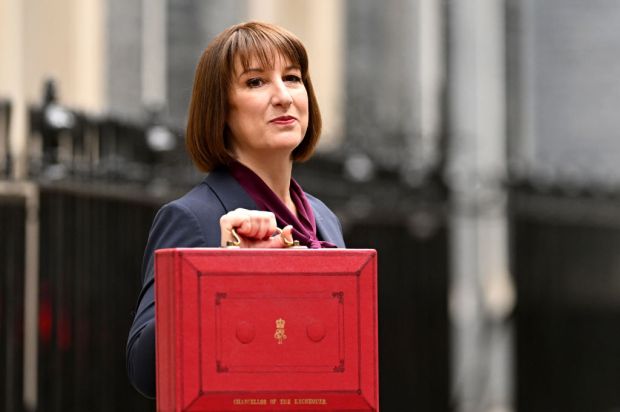
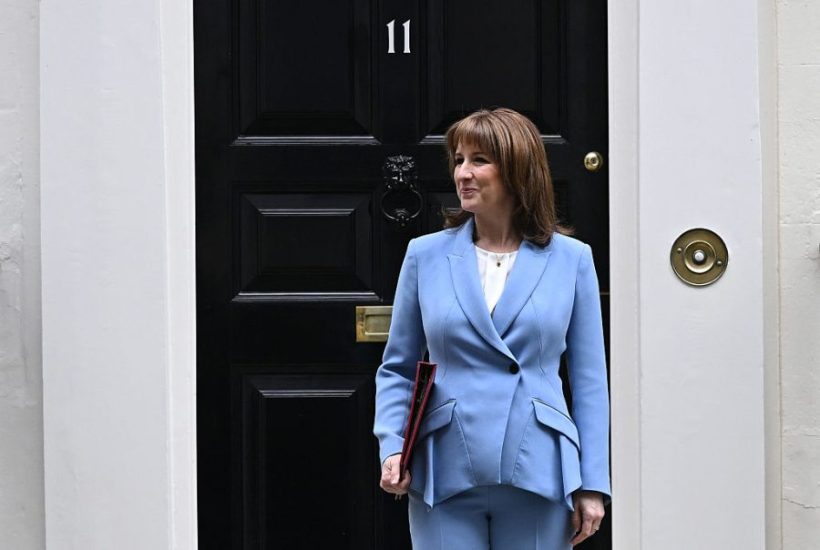
And yet at the same time, the public finances look distinctly unhealthy and inflation is likely to increase thanks to Iran. Meanwhile, Rachel Reeves has boxed herself into a corner with her self-imposed fiscal rules and refusal to raise taxes on as-yet poorly defined ‘working people’. The ‘guns versus butter’ debate over whether to take money away from public services to fund defence has always been one that politicians have been keen to avoid. But now, in particular, there are few palatable options available for Keir Starmer’s government to raise defence spending with the speed and urgency that is required.
Could taxing expats living in the Middle East and elsewhere on their income tax – similar to America – hold one potential answer, then, for how to fund the much-needed boost in Britain’s defence spending?
The US levies a worldwide income tax on its citizens, no matter where they live in the world. Taxpayers are able to offset what they owe to the Internal Revenue Service against income tax they have paid to their host countries to avoid double taxation. Nevertheless, the only way Americans living abroad can get out of paying any tax into US coffers entirely is to renounce their citizenship.
Figures suggest that there are approximately 5 million British citizens living abroad. The Office for National Statistics estimates that approximately 250,000 British citizens emigrate from the UK every year. Of these, three-quarters are believed to be under 35 – and therefore of working (and taxpaying) age.
The current average UK salary is currently £39,039 a year. Assuming that, as a baseline, every British person in the UAE earns at least this much – which, given the higher salaries in the Emirates, is very likely – this quite conservative estimate alone would bring in approximately £1.2 billion in income tax each year.
In reality, the revenue for the Treasury would quite probably be much higher than this: Britons are, for example, believed to make up the majority of Dubai’s 50,000-strong influencer community. The so-called ‘Green’ freelancer visas many of these content creators live on require applicants to prove earnings of approximately £73,000 per year for the previous two years. While no concrete statistics on the nationalities of influencers living in Dubai exist, if we were to assume that even half of the content creators living there were British, they alone would generate around £338 million for the Exchequer back in London.
These sums are just for the UAE. Roughly a further 55,000 British citizens live in other countries which also don’t collect income tax, such as Qatar, Saudi Arabia and Monaco. Then there are those Brits who live in tax havens with lower income tax thresholds than the UK, such as Singapore.
Of course, it’s unlikely that a British expat tax would fund the required increase in defence spending on its own. But raking in a few extra billions of consistent yearly income in this way is not something the Treasury should sniff at.
I’d also wager that would be a popular policy for Labour to implement. After all, few people would feel sorry to see influencers and wealth managers who escaped the taxman for sunnier climes finally forced to cough up for the Exchequer. Given it’s difficult to call such expats ‘ordinary working people’, Reeves wouldn’t be breaking her own rules by taxing them. Better yet, even fewer here in Britain could dispute such a tax being introduced in the name of patriotic national defence.