Less near
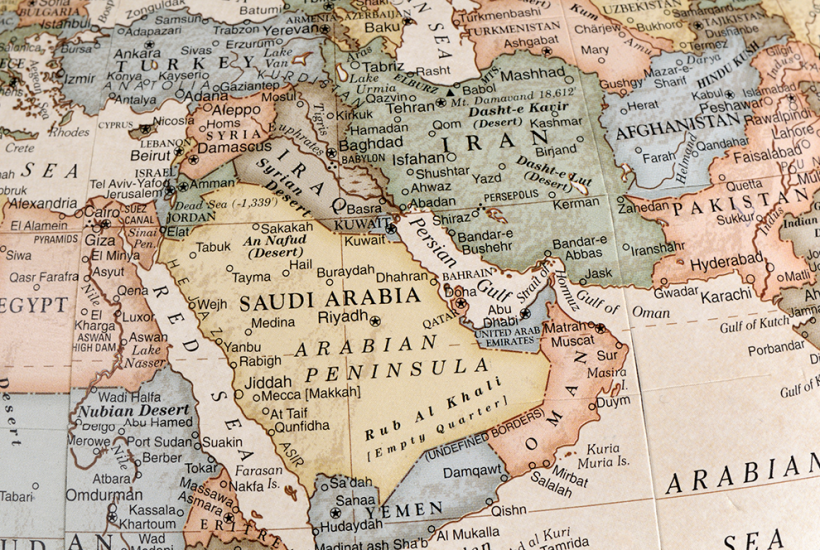
Where exactly is the Middle East?
– The term was first popularised in an article by Alfred Thayer Mahan, a US academic on naval strategy, published in the National Review in 1902, proposing that western powers would need outposts like Gibraltar to serve their interests in the region, which he defined as the countries bordering the Persian Gulf. This distinguished it from the Near East, a now largely defunct term for the countries surrounding the eastern Mediterranean, including Turkey and the Balkans. Over the first half of the 20th century, the Middle East gradually consumed the Near East.
– By the late 1950s the US state department defined the terms ‘Near East’ and ‘Middle East’ as interchangeable – only now Turkey and the Balkans were excluded.
Low on gas
The UK was reduced to having just two days’ worth of gas in storage. How does UK gas storage capacity compare with other European countries?
Terawatt-hours worth of gas
Germany 251
Italy 203
Netherlands 144
France 126
Austria 101
Hungary 68
UK 47
All other countries have a lower capacity than the UK.
Source: European Council
Prison violence
The Soham murderer Ian Huntley died after being attacked in prison. How much violence is there in prisons?
– In the year to September 2025 there were 31,555 assaults in prisons in England and Wales, 364 for every 1,000 inmates. This was an increase of 6% on the previous year.
– 21,489 were prisoners assaulting other prisoners. 10,326 involved attacks on staff.
– Of the above, 3,544 were classified as serious assaults, 41 for every 1,000 inmates, a rise of 8% on the previous year.
– There were 74,521 incidents of self-harm, 859 for every 1,000 prisoners.
Source: Ministry of Justice
Planning time
How long does it take to get planning permission for a ‘nationally significant infrastructure project’?
Pre-application 2.03 years
Pre-examination 4.68 months
Examination 5.78 months
Recommendation 2.85 months
Source: Planning Inspectorate
Got something to add? Join the discussion and comment below.
You might disagree with half of it, but you’ll enjoy reading all of it. Try your first month for free, then just $2 a week for the remainder of your first year.