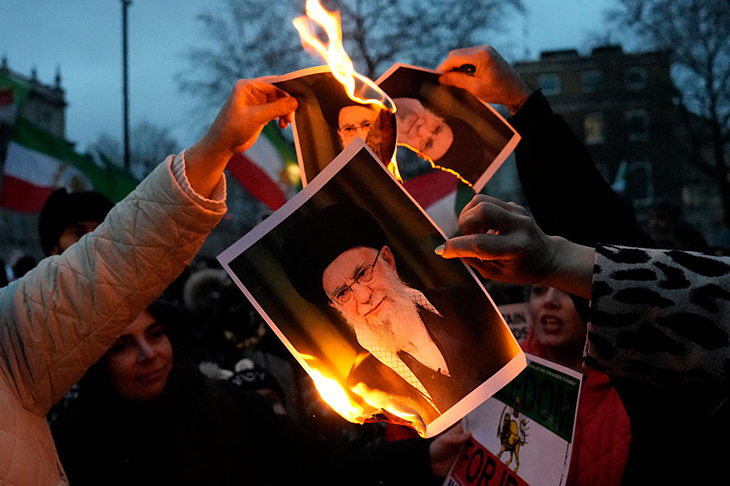
When the Iranian regime was struck and the death of the Supreme Leader confirmed, one might have expected a straightforward reaction in much of the Western commentariat. The Islamic Republic has ruled Iran for nearly half a century through repression, religious coercion and the imprisonment of dissenters. Millions of Iranians have lived under its authority without the freedoms most Western societies take for granted.
Yet the immediate response in many Western outlets was not relief but anxiety. The first instinct was to warn of escalation, illegality and imperial overreach. Only afterwards, often as a kind of ritual disclaimer, did many commentators add that the regime itself was indeed oppressive and brutal. The order was revealing. Procedural alarm appeared before moral clarity.
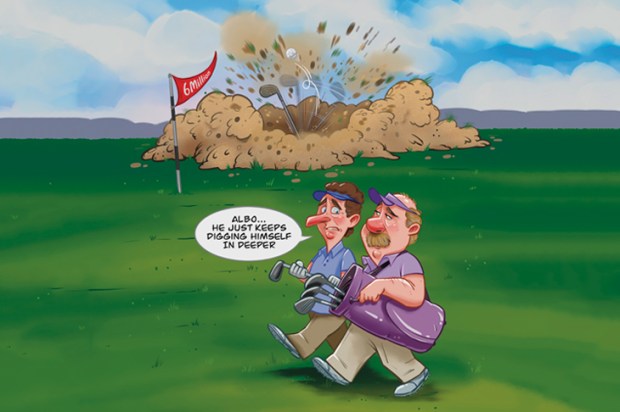
In Australia the pattern was easy to observe. Greens Senator David Shoebridge quickly condemned the strikes as illegal and criticised the government for backing what he called another American ‘forever war’.
Meanwhile commentators such as Crikey’s Bernard Keane framed the conflict primarily through the lens of Western imperial aggression and the economic risks of war. The nature of the regime itself, a theocracy that jails dissidents, suppresses women and enforces religious authority through violence, appeared only as a secondary concern.
Sydney business personality Amanda Rose, on Seven’s Sunrise program, defended mosques mourning the ayatollah as their ‘spiritual leader’, calling it arrogant for politicians to dictate grief. Notably, Jim Jones and the Bhagwan were also spiritual leaders.
The difference is that this ‘spiritual leader’ actually directed terrorist attacks on Australian soil. Rose’s remark was extraordinary, but it captured something familiar: a reluctance in parts of Western commentary to treat the Islamic Republic simply as an enemy.
The invocation of ‘international law’ deserves some scrutiny.
International law is not a sovereign legal system capable of enforcing judgement against powerful states. It is a diplomatic framework shaped by power and consent. That does not make it meaningless, but it does mean that appeals to it often function less as legal analysis than as moral signalling. In this case, the language appeared almost immediately, as if the procedural legitimacy of removing a tyrant mattered more than the tyranny itself. This hesitation reflects a deeper historical pattern. Across modern history the educated middle classes have often cast themselves as the moral conscience of politics. They diagnose decadence, demand renewal and speak confidently in the language of virtue. Yet the revolutions and moral crusades they celebrate frequently produce outcomes harsher than the systems they replace.
Iran offers one of the clearest examples of this pattern. When the Shah fell in 1979, the revolution that toppled him drew enormous energy from Iran’s urban middle classes: students, professionals, intellectuals and activists who believed they were overthrowing corruption and foreign domination. They imagined themselves as the conscience of the nation. Instead, they delivered power to a clerical regime that proved far more severe than the monarchy it replaced.
Many of the revolution’s early supporters would later discover that the moral revolution they had helped ignite had no place for them. Some were purged, imprisoned or driven into exile. Others fled abroad and watched from afar as the system they had helped legitimise hardened into one of the most durable theocracies of the modern world. The revolution devoured its authors.
Across history the educated middle classes have often overthrown worlds they themselves helped create. The pattern appears not only in culture but in politics. The Bolshevik revolution was long mythologised as a rising of the industrial proletariat. In reality its leadership emerged overwhelmingly from the educated intelligentsia: lawyers, journalists, teachers, students and administrators who believed they were acting as the moral conscience of a decaying society. Lenin himself was the son of a state education official; Trotsky the product of a prosperous farming family. They promised liberation from autocracy. Instead they constructed a system far more centralised and coercive than the regime it replaced.
The same rhythm can be seen even in the cultural revolutions of Europe. In 18th-century France the rising bourgeoisie created the world of Rococo art, a style that reflected its own sociability, comfort and cultivated pleasures. Rococo flourished in the salons and interiors of a class discovering its cultural authority. It celebrated intimacy, ornament, gardens and the small luxuries of conversation and leisure. Yet when the political revolution arrived, another faction of that same class condemned the aesthetic it had created as decadent and corrupt. Under painters such as Jacques-Louis David and the moral language of Neoclassicism, art was reorganised into a sermon of civic virtue and discipline. Roman sacrifice replaced salon elegance. Pleasure gave way to instruction. The same class that had invented Rococo destroyed it in the name of virtue.
Revolutions often follow this rhythm. A cultural or political world is condemned as decadent. A new moral order is proclaimed. The result is rarely what the revolutionaries themselves imagined. The Iranian revolution followed the same logic. Educated activists believed they were overthrowing corruption and tyranny. Instead they helped construct a regime in which clerical authority fused with political repression.
Today that regime faces unprecedented pressure, and the reactions across the Iranian diaspora have been striking. In cities from London to Los Angeles many expatriate communities gathered in celebration at the death of the Supreme Leader and the possibility that the Islamic Republic might finally weaken or collapse. Others expressed understandable anxiety about the violence and the safety of relatives still inside the country.
But the contrast with much Western commentary has been unmistakable. Many of the people who would actually have to live with the consequences reacted with relief or cautious hope. Thousands of kilometres away, the dominant response among parts of the professional commentariat was moral unease about the possibility that the regime might fall through force. The distance is revealing. Those who have lived under the Islamic Republic see the possibility of liberation. Those watching from comfortable democracies worry first about the moral implications of its removal.
That contrast exposes something deeper than a disagreement about foreign policy. It reveals the enduring habits of a class that has long imagined itself as the conscience of civilisation while remaining insulated from the consequences of the revolutions it applauds.
The middle class has always dreamed of saving the world from corruption and decay. Yet its revolutions have a curious habit of destroying things that were imperfect but human, replacing them with systems colder and more severe than what came before.
From Paris in 1793 to Petrograd in 1917 and Tehran in 1979, the pattern has repeated with striking regularity. The language of virtue rises first. The architecture of power follows later. The unlearned lesson of the twentieth century is that moral outrage often clears the path for systems far harsher than the ones it condemns. Many of those who help unleash them are later imprisoned, exiled or killed, leaving few witnesses to warn the next generation.
And so the bourgeois revolution begins again.
Got something to add? Join the discussion and comment below.
You might disagree with half of it, but you’ll enjoy reading all of it. Try your first month for free, then just $2 a week for the remainder of your first year.