
After leaving the Woke world of academia, I’ve been living in the real world again. It’s been great. Riding motorbikes in the Southern Tablelands of NSW and driving a school bus. Not one of those dinky little buses, a 12-metre-long, 58-passenger, proper bus. After more than a decade studying transport policy, I’ve been living it.
We’ve lost something of late, but I think AI might just bring it back. Let me explain.
I started out as a chainman (now known as a surveyor’s assistant) in Far North Queensland. An axe, a brush hook, and a chainsaw were tools of the (non)trade. My maternal grandfather advised me to carry a piece of lamb fat in my tool bag to save my hands from the hickory. He taught me to drive at age eight in his Allis-Chalmers Model D grader, just before he sold it and retired.
I remember trying to drive the Chamberlain backhoe, but I needed two feet for the brake pedal with two hands doing pull-ups on the steering wheel. With no appendage left to depress the clutch or put the gear lever into neutral, the paling fence was no match for the Chamberlain’s enormous bucket. It was a good thing my paternal grandfather, his father and uncle were specialists in building paling fences in Western Sydney.
I wonder if any kids these days know what an adze is? I did, and they kept theirs sharpened and inside an old leather shoe. One swing to cut a rail. The shoe was to protect the blade, not the unfortunate soul who mishandled it.
My maternal grandfather started out as a truck driver and later started an earthmoving business. I learned quickly the difference between a Whitworth and an Imperial spanner, and a rat’s tail file and a centre punch. Usually through lots of shouting for handing him the wrong tool. In my late teens, I worked in hydraulics and pneumatics spare parts, then with SKF Bearings where I drove a forklift before joining the military at age 20. I’ve had British and Pakistani mates marvel at my knowledge of all things self-reliance. It feels like I’ve gone full circle.
So these days it is easy to spot a faker when I see one.
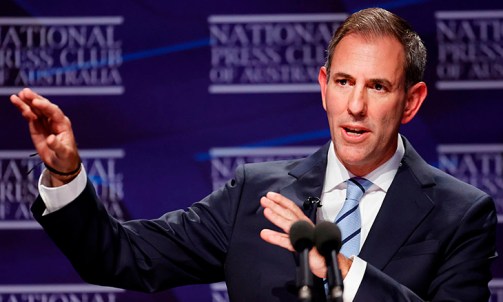
Last month at the National Press Club, Council of the Ageing (COTA) Chair Christopher Pyne laid out the findings of the State of the Older Nation report. Ageism is rife, older Australians feel dismissed, and policy remains stuck in outdated stereotypes. My question to Mr Pyne cut to the heart of it: Why does ageing policy so often feel designed for older people by an elite, progressive bubble rather than with them?
The answer, unfortunately, is that both major parties have lost touch with the lived experience of ageing in modern Australia. They see the grey tsunami coming – the number of Australians aged 65 and over projected to double within decades, the 70-plus cohort up 68 per cent in just 20 years – yet treat it as a budgetary headache or a voting bloc to be placated with press releases, not a profound demographic shift demanding honest, flexible policy.
I think COTA’s work is very important, but it suffers from the same problems that beset the major parties. They just don’t know the people they are dealing with. Working people live in the real world where things are not so easy.
I remember how difficult it was for my parents to adapt to retirement. My father was a working man. He was a roadworks foreman and before that, an earthworks plant operator from age 17. He played rugby league, rugby union, and cricket. Fishing was his hobby. These are great pastimes. But what happens when you are physically incapable of such physical pursuits?
My mother faced less of an issue. Despite qualifying for the pension, she kept working as a chef and only applied for the pension when she was laid off during the pandemic. She’s back working as a casual chef. That’s what she does.
My point is that my parents couldn’t ‘work from home’. But workforce flexibility and participation in ageing policy are all predicated on white collar workers.
Proving my point, Mr Pyne’s response to my question on stereotypes was:
‘One of the only good things that came out of Covid was that people can work from home and prove to be quite productive and stay in the workforce for longer if that’s what they choose to do in the same way as they could stay in the workforce when they had to stay at home because of Covid. So I think that does give us a model of flexible working…’
Again, policy is focused on white collar workers because our politicians have no idea about working people.
Take for instance the arbitrary preservation age to access one’s superannuation. For many now it’s 60, leaving fit 55-year-olds who’ve lost their jobs locked out of their own money. They could pay off their house and then do casual and community work and be happy. Instead, after they’re made redundant (probably because of their age even if employers won’t admit it), they have to reskill and find a new job just to pay off their mortgage until they can access their own money at age 60.
(When Labor tries to use your superannuation money to further their own ‘renewables’ energy debacle in the meantime, it increases the level of indignation.)
But there’s much worse. There are too many physically worn-out 63-year-olds in trades and manual jobs (typically men but in the future more women will join this cohort) who fall into a no-man’s-land between work and the pension. They can’t work because they are physically broken, but they don’t qualify for the pension because they are too young. They don’t qualify for the disability pension unless they choose to lose their dignity. Many of them refuse to do so.
This is where the stereotypes do real damage. Policy assumes a homogenous older person to be comfortably middle-class, happy in a retirement village with activities and ‘social connection’ programs, content to hand over decision-making to professionals. Many are. It’s like they leave the Department of Finance and transfer to the Department of Retirement.
But plenty more, especially the battlers who built this country in factories, on construction sites, or in small businesses, want to age in their own home, with their pets, their families, and their familiar neighbourhood. They don’t want to be ‘co-designed’ by progressive academics or union-linked industry super boards. They want choice, dignity, and the ability to keep some control over their own lives and savings.
The workforce participation gap is particularly cruel. Labour shortages scream for older workers where their experience and mentoring value is undeniable, yet policy settings discourage it. If you work as a pensioner, you get less. Why? Pensioners deserve the pension, if they want to work more, then good on them I say.
The deeper failure is philosophical. Both major parties are run by elites who don’t live in the real world.
I was at Jane Hume’s campaign speech when she said the Liberals would turn back working from home. I cringed. For all the dramas the Labor government was creating, this was the Dutton Opposition’s big election announcement. What were they thinking? And what about the physical workers?
Real reform would look different. Australians don’t work hard and play hard their whole lives and suddenly decide to attend a seminar on Derrida’s philosophy of deconstruction. I daresay they wouldn’t give two hoots about Derrida or his cheese-eating surrender monkey philosophy. These sons and daughters of Anzacs are made of tougher stuff.
My father stumbled upon a compromise and became a cricket umpire. Communities are screaming for cricket umpires. He got to be part of a sport he loved and participate in a meaningful way that supplemented his pension. It was a win-win for a working man.
Where are the cricket umpire incentives? Imagine a policy where cricket umpires (or equivalent roles) are not only exempt from income tax or pension thresholds but are part of a program that promotes such roles to broken working sportsmen and women.
It’s like my school guidance officer in high school. Her career guidance was, ‘So what university will you go to?’ At the time I laughed in her face. It was a four-hour drive to Townsville to go to teacher’s college (I hated school, there’s no way I would be a school teacher), and then another 20-hour drive to Brisbane to go to the Kelvin Grove campus to study more teaching. The truth is I was like the kid on the British Seven-Up series. ‘What’s university?’
As I stated earlier, I think COTA’s work is very important. But how their data is interpreted needs a fresh pair of eyes. I think that is why One Nation is on the rise. For too long, working Australians have been shafted by irrelevant ideas dreamt up by political elites.
Elites in the Uniparty have no idea about social capital. They have no idea about the real world. Until they break free from the Canberra bubble and the progressive echo chamber, older Australians and the younger generations who will one day join them will continue to pay the price.
Let me bring this back to AI. I got my Heavy Rigid (HR) licence after leaving academia because I needed a Medium Rigid licence to drive the big bus. The price difference for the course was relatively minor, so I went for my HR licence. Back in the day after leaving the military, I had accounting as a technical skill. Accounting skills remain in demand, but I hate the work immensely. Now I have a truck licence and in regional NSW, my technical skill is again in demand. (Only this time I actually enjoy the work, even if it isn’t as lucrative as my other skills.)
My point is that AI has destroyed academia. Students use AI to cheat, academics use AI to mark, and so AI writes back and forth to itself, and the people in between are nothing but fakers. To be sure, AI and autonomous vehicles will negate truck drivers soon, but not yet.
Hands-on workers will trump knowledge workers real soon. Indeed, Wisetech and Commbank are the proof in the pudding. I think the AI revolution will bring back the dignity of work to manual labourers. For you can’t work from home when you’re a chef or a truck driver, a cleaner or a labourer. In the meantime, ageing policy is run by people who will be out of a job soon.
What worries me is that AI will be just as out of touch as the Uniparty. In my opinion, it is timely Australians build up their physical skills while looking for ways to continue to spend their leisure time in ways that they enjoy. One might even ask Grok to find interesting pastimes where one can use their wisdom without necessarily needing to be physical.
It’s worth a try, especially with our political class so incapable of understanding the plight of those who live in the real world.
Dr Michael de Percy @FlaneurPolitiq is the Spectator Australia’s Canberra Press Gallery Correspondent. If you would like to support his writing, or read more of Michael, please visit his website.