The Albanese government’s misplaced priorities have left Australia adrift in a sea of diplomatic vanity. By obsessing over the unilateral recognition of a non-existent Palestinian state – achieving nothing but the temporary appeasement of Mr Albanese’s hard-left faction and concerns about how extreme Islamists vote – Canberra is ignoring the slow-motion car crash of our own regional security. While Foreign Minister Wong megaphone-lectures a democratic ally on its defence, she remains a silent passenger as a vital Aukus-linked fortress is gambled away.
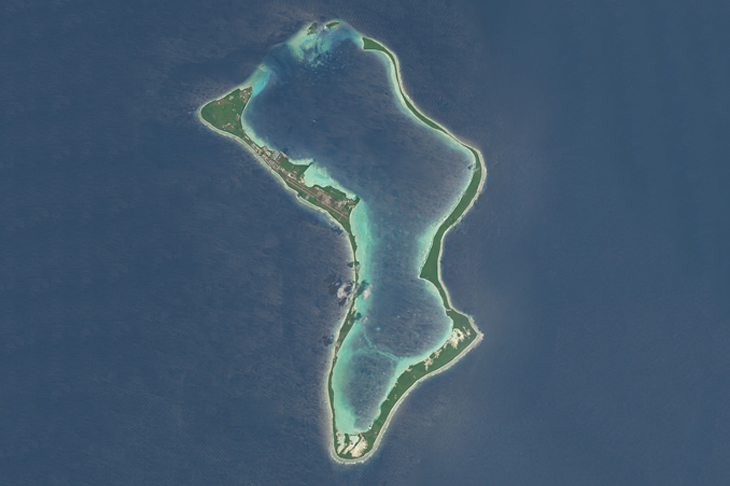
At the heart of this strategic failure is the Chagos Archipelago, home to that ‘unsinkable aircraft carrier’, Diego Garcia. Halfway between Perth and the Persian Gulf, this is the vital pivot point in the Indian Ocean. Recently, President Donald Trump shattered the polite silence of Five Eyes diplomacy, correctly branding the UK decision to cede the islands to Mauritius an act of ‘great stupidity’. While he subsequently tempered the comment, it is clear that underneath, he remains appalled.
The historical parallel is as chilling as it is relevant. In 1942, the ‘impregnable fortress’ of Singapore was lost because Lieutenant-General Percival – defying Churchill’s instructions to fight to the end – surrendered a superior force of British, Indian, and Australian troops to a numerically inferior Japanese army; as Churchill declared, the ‘worst disaster’ in British history. We are seeing a modern echo of that ineptitude. Where Percival failed on the battlefield, Keir Starmer is surrendering in the courtroom – a left-wing prime minister bowing to a ‘pretend’ court’s non-binding advisory opinion to justify a retreat Churchill would have found unthinkable.
In Canberra, our own Prime Minister and Foreign Minister seem more concerned with fake left-wing virtue than hard-power geography. Australia’s response has been one of quiet, almost timid, compliance with what former judge Lord Sumption identifies as a ‘pre-emptive surrender’. Even now, Foreign Minister Wong clings to the wreckage of some ‘rules-based’ fantasy, arguing that legitimacy at the UN is more important than geography – a luxury only afforded to those who have never had to defend a coastline. In the House of Lords, Sumption dismantled the government’s logic, noting that the UK is ‘effectively creating a legal obligation where none exists’, warning the treaty lacked any ‘break clause’ should the base become unusable or under threat.
The legal risks are not merely theoretical; they are a direct threat to the crown jewel of our defence policy: Aukus. Sumption and others have highlighted the fact that Mauritius is a signatory to the African Nuclear-Weapon-Free Zone (Pelindaba) Treaty, and that by handing sovereignty to Mauritius we are inviting a legal ambush. The Treaty strictly prohibits the ‘stationing’ of nuclear explosive devices on a party’s territory. If Diego Garcia became sovereign Mauritian soil, the African Union and its Commission on Nuclear Energy would gain a legal foothold to demand inspections and challenge the presence of nuclear-capable assets.
For Australia, this trap is existential. Our multi-billion-dollar investment in nuclear-powered (SSN-Aukus) submarines relies on absolute certainty of access to the Indian Ocean’s only secure hub. While the Treaty allows for ‘visits’, it bans ‘stationing’. A future Mauritian government, squeezed by African Union obligations or ‘choreographed’ by Beijing’s credit lines, could easily use it as a legal pretext to ban or restrict Australian nuclear-powered vessels. We are exchanging the absolute legal certainty of British sovereignty for a ‘paper shield’ that will be shredded by the first activist lawyer or hostile diplomat to cite the Pelindaba protocols.
Strategist Peter Jennings has been forensic in his condemnation of this passivity, warning that by introducing Mauritius as a sovereign middleman, we have introduced a ‘veto point’ for Beijing to exploit. Jennings argues the handover is an ‘unforced error’ and that the government is ‘sleepwalking’ into a disaster by ‘outsourcing our security’ to a leasehold arrangement. He urged Australia to use Trump’s intervention to lobby London to rescind the deal immediately.
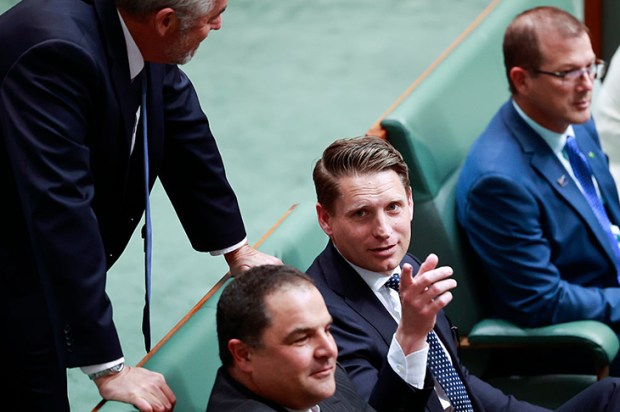
This sentiment is no longer confined to the fringes of think-tankery; it is now the rallying cry of a disruptive force in Australian politics. With One Nation surging in the polls to 26 per cent and overtaking the Coalition, the party could become the opposition’s dominant voice. Senator Malcolm Roberts has already been unsparing in his critique (as incidentally was the LNP’s Andrew Hastie), framing the Chagos handover as a ‘globalist surrender’. In recent Senate proceedings, Roberts attacked the government’s obsession with ‘far-left fashion’ by recognising a state that does not exist. While chasing votes in western Sydney, and for over twenty years indulging a corrosive antisemitism, Labor is ‘letting the back door to the Indian Ocean be left wide open’. The result is a government ‘captive’ to its own fringes, trading away Australia’s international standing to maintain its grip on suburbia.
The path forward is clear. Instead of being a niche diplomat that speaks loudly on matters it cannot influence, we should be the first to demand openly and clearly that the UK rescind this ‘stupid deal’. If the financial burden – a nominal £34.7 billion ($67 billion) over the century – is the excuse, Australia should offer to co-fund the base as a formal Aukus partner, ensuring the UK has no excuse to walk away.
Historically, no former dominion has been closer to the UK than Australia. By rejecting the Keating-Turnbull ‘fake republic’, we stopped a consequentially strengthened elite push for a republic among the other old dominions and the UK itself. Whatever Paul Keating claimed in his gratuitous parliamentary attack on the UK in February 1992, Britain remained a significant power to our north well after 1942; it was only Harold Wilson’s noisy and untrue claims of a 1960s withdrawal ‘east of Suez’ that created the myth of retreat. Today, we are seeing a repeat of that error – a voluntary exit from the territory Britain has every right to and should hold. It is time to stop playing to the gallery of fashionable internationalism and start exercising the hard-headed interest required to keep the Indian Ocean a Western lake. If we cannot find the resolve to defend a base vital to our own survival, we have no business lecturing the rest of the world on theirs.
Got something to add? Join the discussion and comment below.
You might disagree with half of it, but you’ll enjoy reading all of it. Try your first month for free, then just $2 a week for the remainder of your first year.