The invention of the pneumatic tyre sparked an insatiable demand for rubber, turning the Congo’s rainforest – rich in this resource – into a target for exploitation as bicycles and later automobiles became popular.
Congolese people were forced to harvest rubber under the threat of death. Women were held hostage, and men had to meet strict monthly quotas. As rubber prices and demand rose, quotas increased. Those who fell short were executed – often in groups to save ammunition. Historian Adam Hochschild estimates that between 1880 and 1920, about ten million Congolese died, roughly half the population.
Just as the insatiable demand for rubber once drove exploitation and suffering in the Congo, today’s hunger for ‘green’ minerals has unleashed a new wave of devastation.
While the resources have changed, the pattern of exploitation and human suffering remains the same. Today, the drive for ‘clean’ and ‘green’ energy is fuelling the exploitation of the same region. We’re told this transition moves us away from fossil fuel extraction, but that’s misleading – green energy requires unprecedented levels of extraction of rare minerals from the earth.
Much of our electronic equipment relies on tantalum, a mineral extracted from coltan ore. Tantalum is essential for making capacitors, which, like cobalt, are used in a wide range of electronic devices, specifically electric vehicle (EV) batteries. These minerals power lithium-ion batteries. With around eight kilograms of cobalt in a typical EV battery, securing this precious resource has become crucial as the insane race to net zero continues apace.
Seventy per cent of the world’s cobalt and eighty per cent of its coltan come from the Democratic Republic of the Congo (DRC). The Rubaya mining area in the eastern North Kivu province produces over 15 per cent of global tantalum, and nearly half of all the DRC’s coltan deposits are found at this single site.
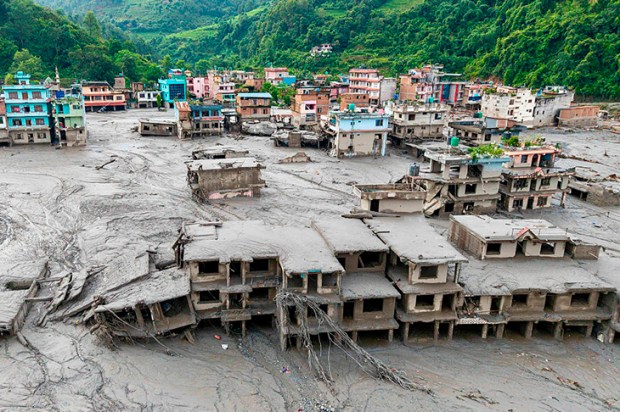
On 1 February, a huge collapse at a coltan mine in Rubaya killed over 200 people. It followed the November 2025 Kalando bridge collapse in Lualaba that killed at least 32 miners searching for cobalt. According to Roy Kaumbe Mayonde, the DRC Interior Minister, miners rushed the makeshift bridge built to cross a flooded trench when overcrowding caused it to collapse.
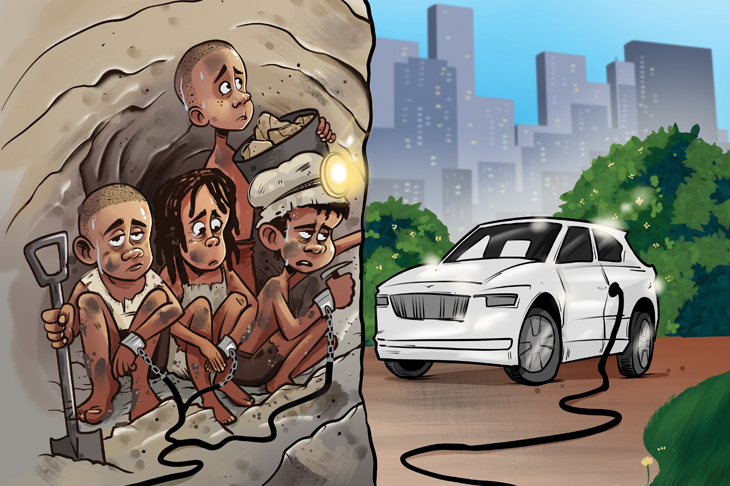
The World Bank estimates global demand for cobalt will increase by 585 per cent by 2050, making the DRC a prime location for exploitation – especially through the extensive use of child labour in the supply chain. In 2016, Amnesty International reported severe human rights abuses and child labour in the DRC’s mining industry, with around 40,000 children working in the country’s cobalt mines.
About three-quarters of the DRC’s cobalt is mined with heavy machinery at industrial sites. The rest comes from artisanal miners who use simple tools to extract higher-quality surface deposits. Cobalt dust is toxic, damaging clothes and lungs, yet most miners have little protection beyond a cloth mask. Armed guards enforce order, and bribery is common. Traders hover near sites, buying artisanal cobalt for a fixed price per sack; miners earn only a few dollars a day. Though depots are meant to be Congolese-run, most are owned and operated by Chinese companies. These depots sell artisanal cobalt to the large Chinese-owned processing factories, where it is mixed with industrially mined cobalt. In reality, there is no such thing as ethically sourced cobalt in the supply chain.
Due to a lack of regulation and safety equipment, fatalities are common. Although official figures are hard to ascertain – since many bodies are never recovered or recorded after tunnel collapses – experts estimate that up to 2,000 adults and children die each year in the DRC’s artisanal cobalt mines.
Green sustainability is rife with hypocrisy. Technology meant to save the planet is instead causing environmental harm. Late last year, a containment dam at a major cobalt mine collapsed, releasing millions of cubic metres of toxic, lead and arsenic-laden water, into the Lubumbashi river and poisoning the water supply for three million residents. In pursuing arbitrary and nonsensical climate targets, we are sacrificing the DRC’s environment under the guise of protecting the global climate.
Oh, and it’s also helping to fund a civil war. The Rwanda-backed M23 rebel group has controlled Rubaya since 2024, launching attacks against the DRC army, UN peacekeepers, and rival factions. M23 imposes a tax on mineral traders for every kilogram of coltan bought from artisanal miners, reportedly earning $800,000 per month. This revenue funds their rebel army and weapons – including mortars and surface-to-air missile systems. Since the second phase of the M23 campaign began in 2021, thousands have been killed. The United Nations reports that over 7,000 people died in just the first two months of 2025 alone as the ethnic Tutsi-led militia advanced on major cities. More than seven million people are now internally displaced. Western demand for these minerals not only fuels technological advancement but also perpetuates violence and instability in the DRC.
Major manufacturers like Tesla and BMW have joined initiatives such as the Global Battery Alliance to eliminate forced child labour. Forgive my cynicism, but these efforts seem as meaningless as a carbon pledge at a Cop summit. Child labour exists in the supply chain because corporations demand low-wage workers. With global EV sales projected to account for two-thirds of all new vehicles by 2040, the profit motive will always override moral considerations. As I’ve already stated, the DRC has a monopoly on these minerals. No other country can meet demand.
Isn’t the exploitation of African people for profit supposed to be wrong? Where’s the outrage from the left? This is a textbook example of imperialism – colonialism 2.0. Revisionists and ideologically motivated race grifters persist with the exclusivist belief that the transatlantic slave trade was history’s greatest evil, even though more people are enslaved today than during its entire 400-year history. So why are they not taking to the streets in protest? Naive? Probably. Ignorant? Almost certainly.
I think it’s simply because they refuse to believe the supposedly virtuous green movement could be corrupted. Until we confront the true cost of this so-called green revolution, the suffering in the Congo will remain hidden beneath the bonnet of every EV we drive.
Got something to add? Join the discussion and comment below.
You might disagree with half of it, but you’ll enjoy reading all of it. Try your first month for free, then just $2 a week for the remainder of your first year.