Since the great Catherine O’Hara’s premature passing, I have been compulsively watching clips of her playing the faded actress Moira Rose in Schitt’s Creek, one of my favourite comedy series.
My algorithm keeps surfacing a clip of Moira’s daughter asking her what her favourite season is. ‘Awards,’ Moira replies.
I confess that I once loved awards season too. I knew who was up for what category, I tried my best to watch the hours-long coverage of the red carpet and the awards ceremony itself, and would scrutinise the reportage of the after-parties.
Over time it started losing its allure. It was already lost when Ricky Gervais delivered his monologue at the 2020 Golden Globes highlighting the hypocrisy and vacuity of Hollywood’s elite, a galvanising speech that immediately went viral and has been viewed tens of millions of times since.
The apogee was his statement, ‘So if you win an award tonight, don’t use it as a platform to make a political speech, all right? You’re in no position to lecture the public about anything. You know nothing about the real world.’ After last week’s Grammys, Gervais shared that statement again on social media, saying, ‘They’re still not listening.’
Presumably this was a response to Billie Eilish’s acceptance speech for Song of the Year, during which she condemned Trump’s Immigration and Customs Enforcement (ICE) deportation policies and declared, ‘No one is illegal on stolen land’.
Judging by the pins and red carpet pronouncements this awards season, the on-trend cause after two all-consuming years of Gaza is ICE. The unspeakably evil massacre of tens of thousands of Iranian protestors is apparently literally unspeakable, not rating one mention. But speaking out against that would impugn the idea that the West (and its exemplar Israel) is the greatest scourge in the world, and entail real courage and risk.
Instead, Eilish would have brandished her bromide to earn plaudits from her peers. She surely didn’t expect anyone to hold her accountable or ask her to make a personal sacrifice, but that is what happened. There were calls for her to hand over her $14-million LA mansion to the Tongva tribe who originally owned the land it is built on. (A spokesperson for the tribe noted she had not reached out.) There were questions about why she denies entry to her shows to those who have not purchased a ticket. I wondered about the enforcement of private property rights inherent in the restraining orders she has obtained against people breaking into her family home.
Of course, entertainers are entitled to express stupid and ill-informed opinions like everyone else. This is what Hugh Bonne-ville meant when he grumbled recently that, ‘I’m often told to shut up and stay in my lane because I’m just an actor,’ as he yet again denounced Israel.
But the problem with performers’ political pontifications is that they do not see themselves, or expect to be treated, like everyone else. They speak out because they are not like everyone else. They consciously leverage their platforms to persuade, raise awareness and mobilise the masses, just as Bonneville did when he interrupted a live interview at the premiere of the latest Downton Abbey movie last year to highlight the ‘indefensible’ situation in Gaza.
If actors and musicians possess any special knowledge, experience, insight or moral weight about a cause (Bonneville patently does not), they should be judged on their merits. But usually, those who ‘speak out’ do so because they ostensibly feel it is their duty – that the plebs need to know, and should care about, their opinions for no other reason than that they are famous. That misunderstands and disrespects their social contract with the public, under which outsized financial rewards and social status are conferred on them in return for the delivery of their art, not for foisting their unrelated opinions on us. The more they do so, the more fragile that social contract becomes, and the more difficult it becomes to separate the art from the artist. Mark Ruffalo, who advocates for a myriad of causes (including, of course, against Israel), is not a good enough actor for me to suspend disbelief, so I won’t be watching Crime 101.
Entertainers who exercise their right to share their political opinions cannot expect to be protected by a shield of impunity and infallibility. If there is any hint of hypocrisy in their hectoring, any scent of sanctimony or reek of recklessness, they risk the kind of backlash Eilish endured.
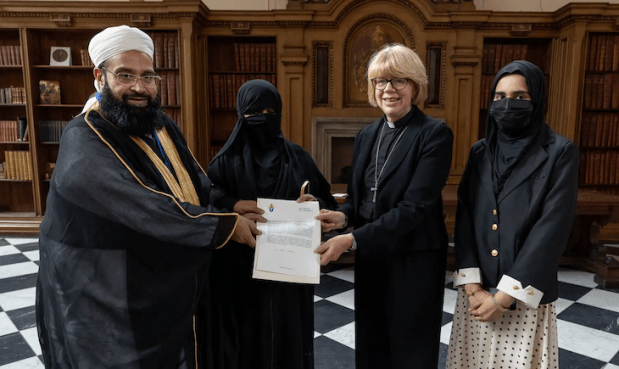
A backlash also ensued at the end of last year when the Egyptian ‘democracy campaigner’ Alaa Abd El-Fattah was released following almost 12 years of imprisonment in Egypt and reunited with family in the UK. After old social media posts emerged, where he declared that colonialists and Zionists should be killed, called for police to be murdered, said he didn’t like white people, and described British people as dogs and monkeys, there were demands for the actors and actresses who had advocated for his release to apologise. They included Britain’s best, some names more surprising than others – Dame Judi Dench, Stephen Fry, Bill Nighy, Olivia Colman, Brian Cox, Harriet Walter, Joseph Fiennes, Emma Thompson, Carey Mulligan and Emily Watson.
Several MPs who had championed his release, including Prime Minister Starmer, condemned his posts or apologised. As far as I know, nothing materialised from the thespian campaigners, safely ensconced in the rarefied air of their moral high ground. Are they impervious to the abuse of trust implicit in their celebrity endorsement of a faulty product? Do they regret their inadequate due diligence? We may never know.
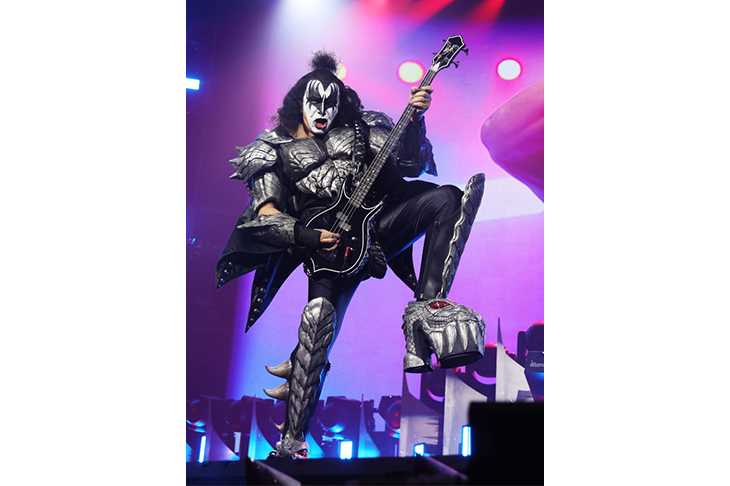
But some celebrities do get it. In November last year, Billy Bob Thornton endorsed Ricky Gervais’ speech while on the Joe Rogan show. In December, rock group Kiss’s frontman Gene Simmons, when asked about his views on Trump on a red carpet, said: ‘Why do you care? I stick my tongue out for a living,’ and accused the interviewer of wanting clickbait. And in this month’s Harper’s Bazaar UK, Claire Foy, who played the younger Queen in The Crown and has previously signed a letter about Gaza, said, ‘What I believe and who I am and where I stand on things is constantly in flux, as much as it is for everyone else, and I have absolutely no authority to discuss or proclaim about anything other than what I do as an actor.’
Bravo! I nominate Foy as the winner of my inaugural award for self-awareness and humility.
Got something to add? Join the discussion and comment below.
You might disagree with half of it, but you’ll enjoy reading all of it. Try your first month for free, then just $2 a week for the remainder of your first year.