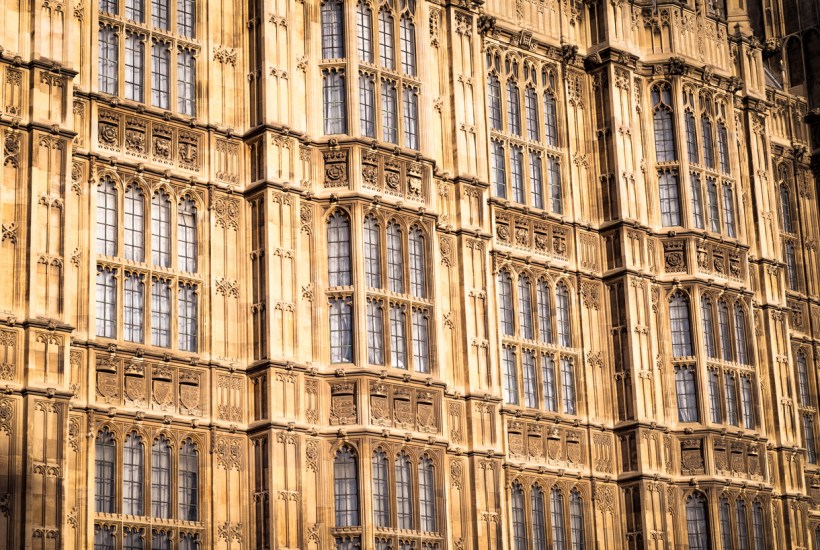
For most of us the term R&R means the promise of rest and relaxation but for anyone associated with the Palace of Westminster it stands for ‘Restoration and Renewal’, a long overdue process that has already been subject to several reports and an Act of Parliament.
Another report, ‘Delivering restoration and renewal of the Palace of Westminster’, was published on 5 February setting out four costed options for reform. The joint client board of both Houses, comprising ten Lords and seven MPs, has sat on the fence by recommending two very different options for further investigation.
Boris Johnson had just succeeded Theresa May when the Parliamentary Buildings (Restoration and Renewal) Act 2019 received Royal Assent. There have been three more prime ministers (as of writing) since then. Why it should have taken over six years to get from establishing the statutory framework for restoration to publishing a report on the options, which is still unable to decide between two recommendations, is baffling. The answer seems to lie in the complex governance of the project, which essentially means running it by committees.
The options still on the table range from 19 to 61 years for project duration and estimate a total budget cost, excluding inflation, of between £8.4 billion and £18.7 billion. Government cost projections for major building and engineering projects are notoriously under-cooked. In 2012, HS2 was estimated at £32.7 billion but, as of today, that cost seems likely to top £100 billion; the initial budget for Crossrail (now the Elizabeth line) was £14.8 billion but the likely total cost will be nearer £19 billion; and the initial cost of Portcullis House, the parliamentary building opened in 2001, was estimated at £165 million but extended to £235 million.
While parliamentarians have dithered, creating committees and writing reports, the state of the palace has deteriorated. It has cost almost £500 million in repairs to keep buildings functional between the passing of the Act giving powers to carry out the work and the publication of this latest report. A final decision on delivery is not expected until mid-2030, by which time the cost of weekly repairs will have risen to almost a billion pounds. The report identifies that the cost of delay will add up to £350 million each year due to inflation.
Every month sees almost 3,000 reactive maintenance jobs, a number that has increased by 70 per cent over two years. There are significant problems with sewerage systems, water leaks, failures of heating, issues with reinforced autoclaved aerated concrete (RAAC) and asbestos, and if these potential chronic harms are not enough there is also scope for catastrophic building safety failure. There have been 36 fires and 19 incidents of falling stonemasonry in the past decade.
Debate among parliamentarians is not drawn on party lines but rather a battle between upholding the tradition of parliamentary processes at all costs and pragmatism about ensuring an urgent makeover as quickly as possible.
Buried within these polarised views lies another controversy about decanting members of both Houses to other places. The QEII conference centre, just a stone’s throw away from the Houses of Parliament (and it seems that there are plenty of stones just falling off the walls), has already been identified as a new temporary home for Peers, for a period ranging from eight to 15 years, although the report notes that this is still subject to negotiation with the centre’s owners (the Ministry of Housing, Communities and Local Government).
Another option would be to move the Commons either next door to the House of Lords or to the ‘Northern Estate’, the collection of buildings that includes Portcullis House, although the report notes that ‘the space available… is not adequate to recreate many of the Commons’ existing facilities.’ These ifs and buts give no confidence about the governance of this process coming to a final decision any time soon.
A source in the Lords who did not want to be identified told me, ‘I have long had concerns about the delays and additional studies deemed necessary to address some relatively poorly informed views. The annual cost of doing nothing is enormous. The House of Commons risks appearing more concerned with its own image, pre-eminence, access to facilities and comfort than the needs of the building. It is decades since this discussion started and the frequency of problems and potential severity of a major breakdown or worse could easily force an emergency decamp and serious attendant fabric damage.’
Another Lord believes that Parliament is likely to vote for the option that allows both Houses to remain in situ with piecemeal work being carried out at weekends and in the recesses. ‘It makes for an entirely unsatisfactory arrangement,’ he told me. ‘But it minimises the shock of announcing a single huge sum at the outset.’
What should be done? Well, first get rid of the committees: ‘too many cooks spoil the broth’ is true of any client demand for building projects. Appoint a supremo – a construction expert – with the backing of both Houses, to take overall charge of a project that must be broken down and procured in sequential zonal packages, with realistic timescales to suit. Minimise any opportunities to change the spec during the works. Provide a more coherent and consistent range of construction solutions and standardisation. Get rid of the ‘bells and whistles’: the cost overruns at Portcullis House included expensive specialised bronze cladding and rented fig trees. And most importantly, decide on the final option much sooner than mid-2030 and don’t allow a fixation upon history and tradition to ride roughshod over the practical needs of restoring a building in use.
Graham Watts is Chief Executive of the Construction Industry Council.