As anyone familiar with Irish folklore knows, it’s a fool’s errand to look for Leprechaun gold at the end of the rainbow. Luckily, in Ulster there is a pot of gold which is far more attainable.
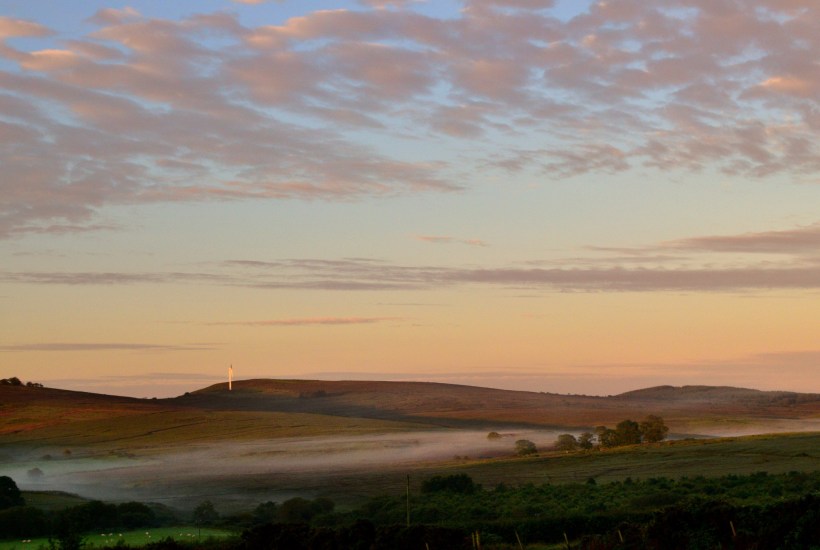
Curraghinalt, in Northern Ireland’s Sperrin mountains, is currently sitting on top of the largest gold deposit ever discovered in the United Kingdom – some 3.5 million ounces. With gold prices at an all-time high, it is worth an estimated £11.5 billion.
Alongside the gold in them hills, there are 1.7 million ounces of silver and 15,000 tonnes of copper. Both metals are in huge demand because of green technologies. Silver is used in solar and high-current electronics while copper is found in every modern battery. A single Tesla, for example, requires a kilo of silver and 50 kilos of copper. Other minerals found in Sperrin include tellurium, antimony and bismuth. All are classified by the government as critical minerals, which most of the world is desperate to get hold of.
Unfortunately, this literal treasure trove is untapped. Why? Not because of a lack of will. Dalradian, an American-backed mining company, started exploring Sperrin in 2009, spending $400 million and drilling 190,000 metres to confirm the site was viable. In 2017, it submitted a planning application to extract the gold, which was expected to take 30 weeks. It has now taken over 400 and is barely any closer to being completed.
How did it all end up going so wrong? First of all, the planning application was opened to public consultation. This led to tens of thousands of environmentaland Nimby activists launching a campaign against the mine. Northern Ireland’s Planning Appeals Committee should have just dismissed their complaints – instead they insisted on a public inquiry.
Before the inquiry could even begin, a newt survey had to be completed, the local butterfly population monitored and the area’s local freshwater mussel population consulted (if only these molluscs could comprehend the power they wield over us).
As those surveys took place, community interest groups began to rally. The Feminist Communities for Climate Justice condemned the project, claiming that the mine would damage the beauty of the Sperrin landscape. Quite how this links to women’s liberation remains a mystery. There was no such fuss when a towering 150m high wind farm was approved in the same mountain range in 2023, even though its application was submitted after Dalradian’s.
After eight years, the actual public inquiry began last January. It only took three days before it collapsed – not because of anything Dalradian had done wrong, but because the Northern Irish executive failed to consult the Irish government as it was required to do so under retained EU law. EU directives, which apply in Northern Ireland, require ‘transboundary’ consultation for projects expected to have cross-border impact. Given Dalradian’s proximity to the Irish border, it was deemed within scope.
One year on, the public inquiry is still on hold while a private company that has poured hundreds of millions into Northern Ireland has been forced to tread water.
These kinds of planning delays are not surprising in broken Britain. The Americans seem to be baffled by them though. Last May, four Congressmen wrote to the Northern Irish executive urging them to make a decision about the mine. More recently the US ambassador to the UK intervened, warning that the delays are damaging Northern Ireland’s reputation. ‘Bureaucracy must not become a barrier to progress,’ he pleaded. Clearly, he doesn’t know how things work in the UK.
The tragedy is that Northern Ireland is stuck in the economic doldrums and desperately needs this kind of investment. One in four people in the region work for the public sector and a similar number are ‘economically inactive’. Private sector wages are consistently lower than the mainland. At present, the only way to get ahead as a young person born there is to either leave or get a good public sector job and wait for your early retirement and pension (the only thing truly gold-plated in Northern Ireland).
Dalradian claim the mine will directly create 350 jobs including many training roles. The average salary would be £45,000, far above the Northern Irish and national average, as is typical for industrial jobs in Britain. Tax receipts would top £2 billion.
In April the public inquiry will reconvene, but it is expected to drag on until at least June. Northern Ireland’s Planning Appeals Commission will then have to prepare a post-inquiry report. It has not been given a hard deadline for this in law, which is concerning given how slowly things have moved so far. Once it is published, Sinn Fein’s Northern Irish infrastructure minister will make the final decision. It could easily be a year before Dalradian have an answer, which might well be a ‘no’. By that point it would have been a decade since it first submitted its planning application.
This is a matter of national importance. The government should not allow a literal mountain of gold to remain untapped because of bureaucracy and a retained EU law that places the environmental concerns of the Irish above Britain’s interests.