Until very recently it was hard to find more stalwart allies of America in Europe than the Poles. Poland was an early supporter of Washington’s policy to expand Nato and actively pushed for a stronger US role in central and eastern Europe. The Poles also stood up as an enthusiastic member of every US-led military coalition, taking leading roles in Afghanistan and Iraq. It was to Warsaw that US President Joe Biden travelled – twice – in the wake of Putin’s invasion of Ukraine to give barnstorming speeches affirming that America would stand by Kyiv.
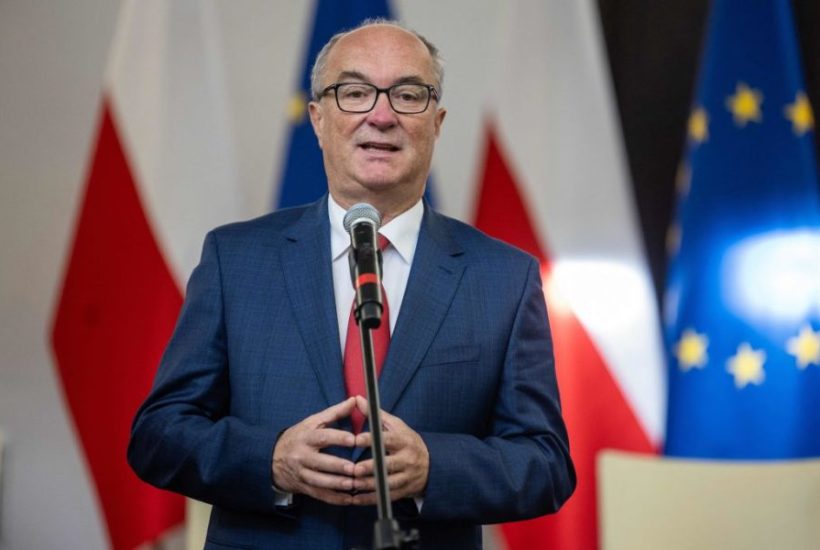
All the more surprising, then, that the recently appointed US ambassador to Warsaw chose to pick a diplomatic fight that threatens to snowball into a profound rupture between the two onetime allies. Earlier this week, ambassador Tom Rose announced that the embassy would have ‘no further dealings, contacts, or communications’ with the speaker of Poland’s parliament – known as the ‘Marshal of the Sejm’ – Włodzimierz Czarzasty. The speaker’s crime? To suggest that Trump did not deserve a Nobel peace prize because, as Czarzasty put it, ‘in my view [Trump] conducts transactional politics through the use of force.’ These comments, according to Ambassador Rose, constituted:
Outrageous and unprovoked insults directed against President Trump … we will not permit anyone to harm U.S.–Polish relations, nor disrespect @realDonaldTrump, who has done so much for Poland and the Polish people.
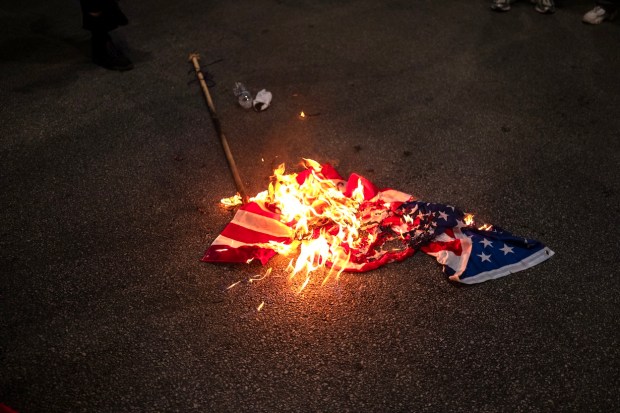
When America becomes more popular in Russia than in Poland, Washington has a problem
As it turns out, the Polish people and their leaders do not take kindly to being spoken down to. Even Czarzasty’s political opponents have spoken out in his support. Former deputy prime minister Roman Giertych blasted Rose’s position as ‘simply insolent … the times when ambassadors dictated to Poles who should be who in Poland are over and will never return.’ For good measure, Giertych also likened Trump’s quest for a Nobel prize to the Emperor Nero’s demand for recognition for his musical talents ‘under threat of punishment’.
Polish prime minister Donald Tusk was equally forthright, if a little more diplomatic. ‘Allies should respect, not lecture, each other,’ said Tusk. ‘At least this is how we, here in Poland, understand partnership.’ Rose’s response was both borderline insulting and grammatically incorrect.
I’m assuming your thoughtful and well-articulated message was sent to me by mistake, because surely you intended it for the Speaker of the Sejm who’s [sic] despicable, disrespectful and insulting comments about President Trump were so potentially damaging to your government.
Rose, Trump’s appointee as Ambassador, used to host a conservative radio broadcast named the Bauer & Rose Show on SiriusXM and has no previous diplomatic experience.
This local spat matters for three reasons. Over the last year the United States has quickly squandered 75 years of accumulated soft power and goodwill across the world, and particularly in Europe. Vice president J.D. Vance’s warning last February that the continent needed to look to its own defence – as well as a lecture on free speech – set the tone. Donald Trump’s threats to annex Greenland by force marked a low point – compounded by his dismissive remarks about the contributions of European allies’ to American-led wars.
None of this has gone unnoticed by the European public. As recently as 2022, Poland recorded some of the highest favorable views of the United States globally, with 93 per cent of Poles expressing a positive opinion and only 3 per cent holding an unfavourable view. But a new survey just this week showed a majority of Poles ‘no longer regard the US as a reliable ally’ and that only 35 per cent had ‘confidence in the US president to do the right thing regarding world affairs’, down from 75 per cent a year earlier. Remarkably, a January poll by the Moscow-based Levada Centre showed that 45 per cent of Russians expressed a negative opinion of the US. As former White House national security adviser Phil Gordon put it, it’s ‘hard to undermine an alliance as solid as US-Poland but Washington seems determined to try.’
When America becomes more popular in Russia than in Poland, Washington has a problem. Poland hosts the US Army’s V Corps forward command post and serves as the framework nation for the Nato enhanced Forward Presence (eFP) battlegroup in the region. Poland has also agreed to host a US Aegis Ashore missile defence site in Redzikowo, a critical component of US efforts to counter regional ballistic missile threats. Poland has also made multi-billion dollar purchases of US defence technology to modernise its forces and ensure interoperability with the US military. Key acquisitions include Patriot missile systems, F-35 fighter jets, Abrams tanks, and HIMARS.
What is most ironic is that Scandinavia and Poland represent the kind of Europe that Maga claims to admire. Denmark spends 2.8 per cent of its GDP on defence and Poland is approaching 5 per cent of its GDP, just like Trump has demanded. Soldiers from both countries have fought side-by-side with the US in every major war and nearly a hundred have been killed. Yet Trump threatened to go to war with the Danes over a territory the US has been free to use for 80 years. And now the American embassy in Warsaw has decided it’s smart to bully the speaker of their parliament when he expresses the opinion that Trump is not worthy of a medal.
In an age that now seems impossibly distant, General Colin Powell – Secretary of State to the most hawkish Republican administration so far this century – said in 2017 that ‘diplomacy is listening to what the other guy needs… developing relationships… so when the tough times come, you can work together.’ The Trump doctrine seems very different: ignore what the other guy needs, blow up the relationships, and in tough times it’s every man for himself.