‘The blue screen of my phone flashed in the gloom. I couldn’t reach my son. I couldn’t reach the world. As I stepped out, the breeze carried the stench of blood. The street still wore it – left there on orders, a warning in red. Blood of the innocent. Blood of my son. My legs shook as I walked – walked anywhere – to find something other than what I thought of my son’s fate. Quick flashes of thought. Ringing gunshots closing around my ears. My son’s last brave screams as his life was snatched away. No. I had to be hopeful.
‘My eyes scanned my surroundings: the few other people, heads lowered, making their way to the same place I was. The morgue – guarded by men who looked like they belonged to fear itself. Black, shiny body bags covered cold, bloody flesh. Parents cried over dead bodies, but the orders kept coming. Unzip. Search. Reseal. Move on. I stared at the rows – tens, just in this one warehouse. Unzip. Search. Reseal. Move on. Body after body passed before I saw my son’s vacant gaze, scrunched into his small plastic prison. Then movement caught my eye in the bag beside him. No guard seemed to notice the ripple as I unzipped it. A man, around my son’s age, lay inside – blood still gushing from a wound in his shoulder. Not a whimper escaped his lips as I rezipped the bag. My son was gone. This man still had a chance.’
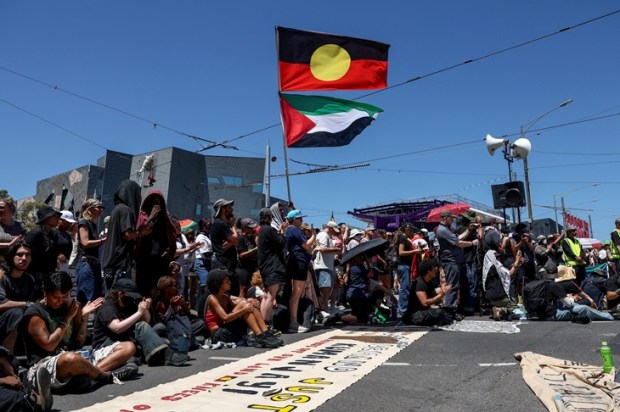
The scene above is drawn from the video clips and voice notes that surfaced after the massive uprising in Iran in the early days of 2026. This was not the first uprising, and not the first time the state answered with bullets. But the regime’s violence escalated into atrocities on an unprecedented scale; thousands were killed in just a couple of days. This leads to the real question: How did a revolution that promised dignity and justice – freedom, independence, a republic, and Islamic values – collapse into a repressive security state built to silence its own people?
To answer that, let’s rewind to the early 20th Century when the country was still widely known as Persia, before asking, where to from here?
From Persia to Iran
In 1925, Reza Shah Pahlavi known as the ‘founder of modern Iran’ seized power and transformed the nation with nationalism, the Trans-Iranian Railway, and thousands of miles of road. Reza crushed the tribal chiefs and ended local autonomy, built a national army, centralised the state, founded the University of Tehran, enforced a Western dress code (including banning the hijab), and in 1935 he renamed the country ‘Iran’.
Mohammad Reza Pahlavi (ruled 1941-79) inherited his father’s vision of turning Iran into a top-tier global power, focusing on industrialisation, infrastructure, and education while consolidating power and strengthening the military.
From Iran to the Islamic Republic of Iran (IRI)
By the late 1970s, many felt the country was racing toward modernisation while leaving behind freedom, democracy, and faith (Islam). Also, Iran’s rising assertiveness (especially around oil policy and strategic autonomy) unsettled Western capitals and oil interests, deepening suspicion on both sides.
The Iranian Revolution of 1979 brought a new power to the centre, promising dignity, justice, and autonomy through four pillars: freedom, independence, the Republic and Islamic values. New power came with a new brand, the Islamic Republic of Iran (IRI) and the lion-and-sun on the flag were replaced with the word ‘Allah’.
The IRI’s Broken Principles
Democracy: on paper, Iran presents to the world with all the garnish of a constitutional republic: elections, a president, parliament, and an Assembly of Experts which can appoint or dismiss the Supreme Leader. In practice, the unelected Guardian Council rigs and rules the system by vetting and disqualifying candidates, so the people grew to understand that elections can’t truly threaten power.
Freedom: freedom, it turned out, would be tolerated until it touched on the interests of ‘the Revolution’, ‘Islam’, or ‘national security’. Those words became a permanent escape hatch for tyranny. At times, that grip briefly loosened but never for long. In 1997, Iranians elected the reformist President Mohammad Khatami in a (70 per cent) landslide on an explicit platform of free speech. For a fleeting moment – the ‘Tehran Spring’ – private newspapers and magazines flourished. But by 2000, hardliners had shut down that irritant and jailed its journalists. Backed by the Supreme Leader, the crackdown exposed the limits of elected power and Khatami himself admitted, ‘In practice, the president is incapable of preventing the violation of the constitution.’
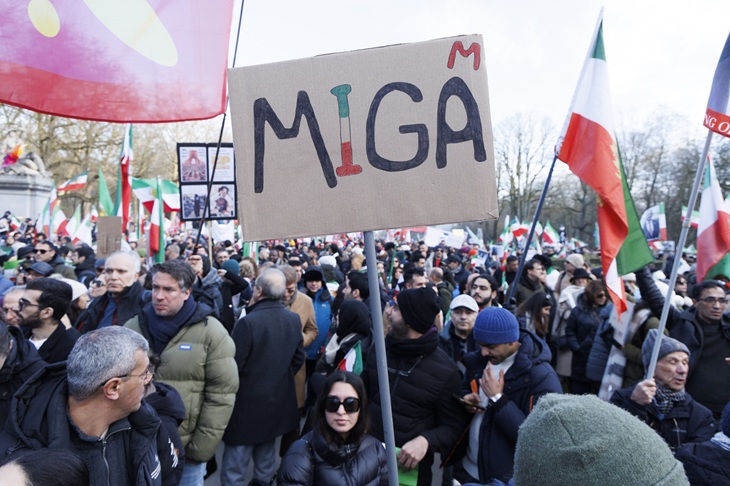
Independence: the revolution may have genuinely hoped to end foreign dependency, in the sanguine slogan: ‘Neither East nor West – [only] the Islamic Republic.’ But the Regime mistook sovereignty for permanent confrontation, treating normal diplomacy and trade as weakness and yoking the country under a sanctions-bound economy. To mask failure, Ayatollah Khamenei promoted the ‘Economy of Resistance’, yet slogans cannot pay bills: in 1979, one US dollar equalled 70 rials; by early 2026, it required 1,500,000. This was not resilience but mass impoverishment – fuelling corruption and turning sanctions into a business model. Even ritual hostility toward the US and Israel has lost its grip: students refused to trample flags, streets chanted, ‘Neither Gaza nor Lebanon – my life only for Iran!’ and in the 2026 uprising, crowds praised Mohammad Reza Pahlavi and rallied around his son Reza Pahlavi’s calls for transition – some protesters abroad carried Iran’s lion-and-sun flag alongside Israel’s Star of David. Independence, redefined as endless conflict, didn’t protect sovereignty – it protected the powerful and sold off sovereignty to the highest bidder.
Islam: I believe the regime set out to build an ethical society through Islam but failed by turning faith from a spiritual guide into a tool of state control. Fusing piety with policing – morality patrols, forced compliance, mass surveillance – turned religion into a cage, piety into performance and mosques into a security apparatus. In 2022, Mahsa Amini (22) was arrested and detained by the morality police for ‘not properly wearing her hijab’, was subject to a beating (according to the UN investigation), fell into a coma and died. This event was some kind of breaking point, sparking mass ‘Woman, Life, Freedom’ protests, and hollowing out the state’s last vestiges of moral authority. Afterwards, officials tried to reimpose hijab but public resistance made enforcement largely symbolic. Today, women walk bareheaded not only in Tehran but in small conservative towns and villages. The laws are intact, but the fear gone. On 15 January 2026, Foreign Minister Abbas Araghchi reported over 350 mosques burned or damaged in unrest – another sign that a segment of protesters reject clerical rule itself and pushing for a state not tethered to the mosque.
A Change in the Regime or A Regime Change is Inevitable
President Trump’s ‘maximum pressure’ campaign – combining economic sanctions and a major military build-up around Iran, following the drama in Venezuela, pushes the country toward a deal (no nuclear development, limits on the missile program, and recognition of Israel). The Supreme Leader has strongly rejected these demands. Some say the deal is designed to be rejected. Accepting would require something between a fundamental shift in the regime’s ideology and complete surrender.
From the perspective of Israel and the United States, leaving the Islamic Republic intact – while it could rebuild its proxy networks in the region – is not in their interest, yet Secretary of State Marco Rubio will frankly admit, there is no clear answer to the question, if regime change is the goal, who or what replaces the current regime?
With this alignment (US and Israeli pressure on the outside, and organic uprising on the inside) regime change is now on the table. Whether these conflicts will lead to a strike on Iran, and whether that would result in regime change, remains uncertain.
But what is clear is this: the Islamic Republic of Iran is no longer defending a revolution; it is defending a machine. When a regime destroys the principles that justified its creation, legitimacy doesn’t ‘fade’. It dies. What remains is force. And force alone has never been enough to survive the long arc of history.