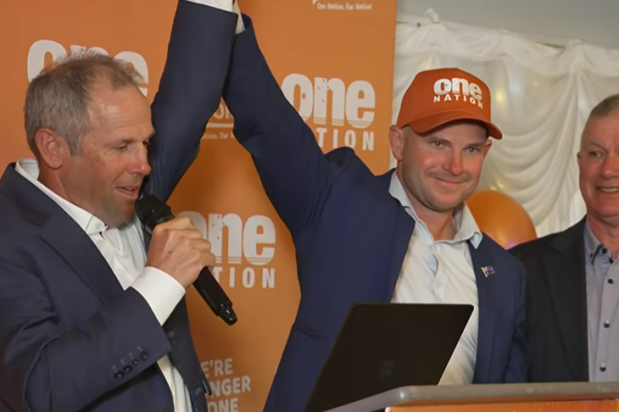
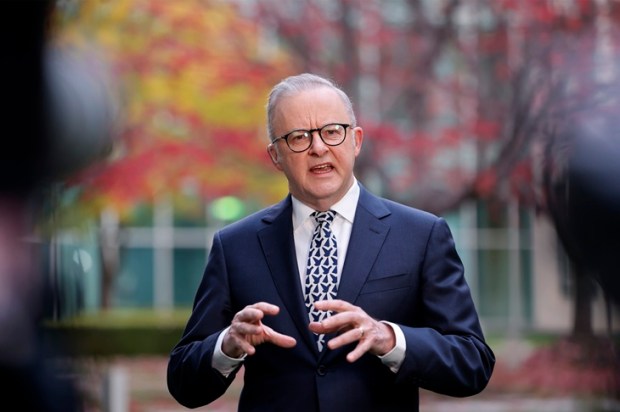
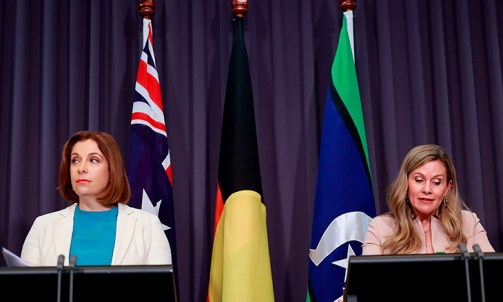
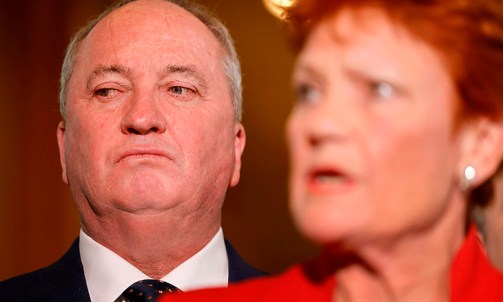
With One Nation in ascendance, comparisons have been inevitable between Anthony Albanese, Sussan Ley, and Pauline Hanson in a way they never were with Labor’s sidekick in Parliament, the Greens.
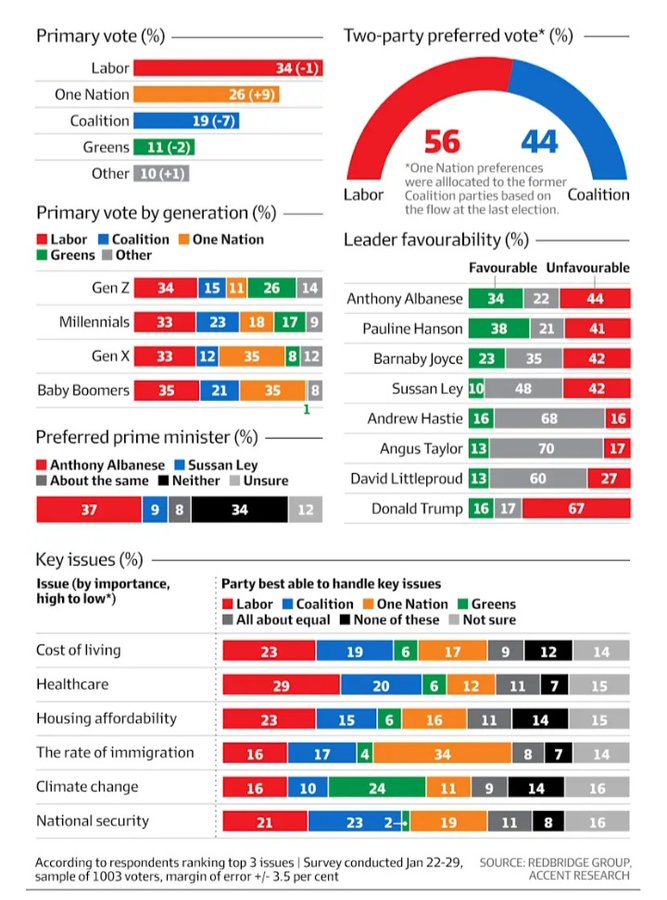
Redbridge polling has become a waking nightmare for the fractured Coalition, which cannot topple One Nation’s opinion growth either separately or together.
It’s a tricky come-down for an aging political force that, even today, looks over its spectacles at One Nation and mutters something about them being a ‘protest party’ and ‘not a serious party of government’.
We may warn the inheritors of the Blue Ribbon about enjoying the false security of generational consensus. Their survival is not etched in stone.
How do the Liberals know they are the natural party of government?
Do the policies and values which founded their power still exist in their rank and file?
Are the leaders on offer (Taylor, Hastie, Wilson, O’Brien, and Ley) truly the most talented conservatives in the whole country?
The Liberal Party have a We believe statement on their website, but do they still live and breathe the words of Menzies when he said:
Just as freedom is not easily beaten out of the heart of man, so is faith not easily beaten out of him. You cannot take thousands, millions, hundreds of millions of people who have a faith of their own, and destroy it, merely by order or command.
Command politics has been the bread-and-butter of the Liberals since they shrank away from the online world and refused to address 18C. They don’t even think they made a mistake creating the eSafety Commissioner.
Can the Liberals look back on their reign … the major cultural stances which drove the last 50 years of Australian politics … and say that these were ‘good’? Or is the Liberal legacy a fairytale former Prime Ministers tell each other while they look around, mystified, by the collapse of living standards?
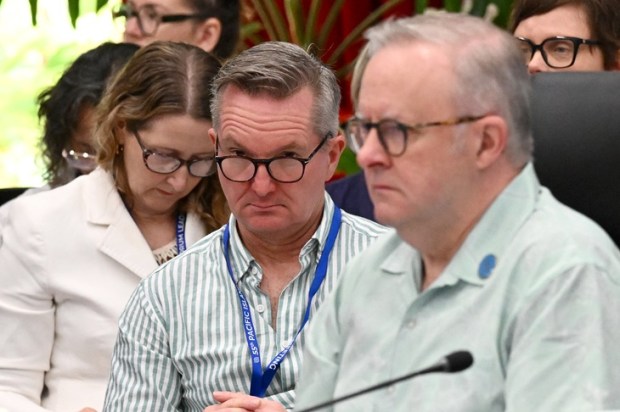
And to the Labor Party we might say, are Chris Bowen, Jim Chalmers, and Anthony Albanese really the men from Chifley’s The Light on the Hill speech in which he said:
We have a great objective – the light on the hill – which we aim to reach by working the betterment of mankind not only here but anywhere we may give a helping hand.
Is that how Australians felt yesterday, as the RBA turned the stomachs of mortgage holders?
Is that how Australians feel when they are pushed to the fringes of their cities, displaced by the Treasury’s Big Australia spreadsheet?
To summarise the Liberal and Labor movements in this country:
There is no light on the hill. They believe in nothing.
Could it be, perhaps, that there is more than a grain of truth in the values of One Nation which has attracted a ‘protest’ against the endless decline created by ‘serious’ politicians?
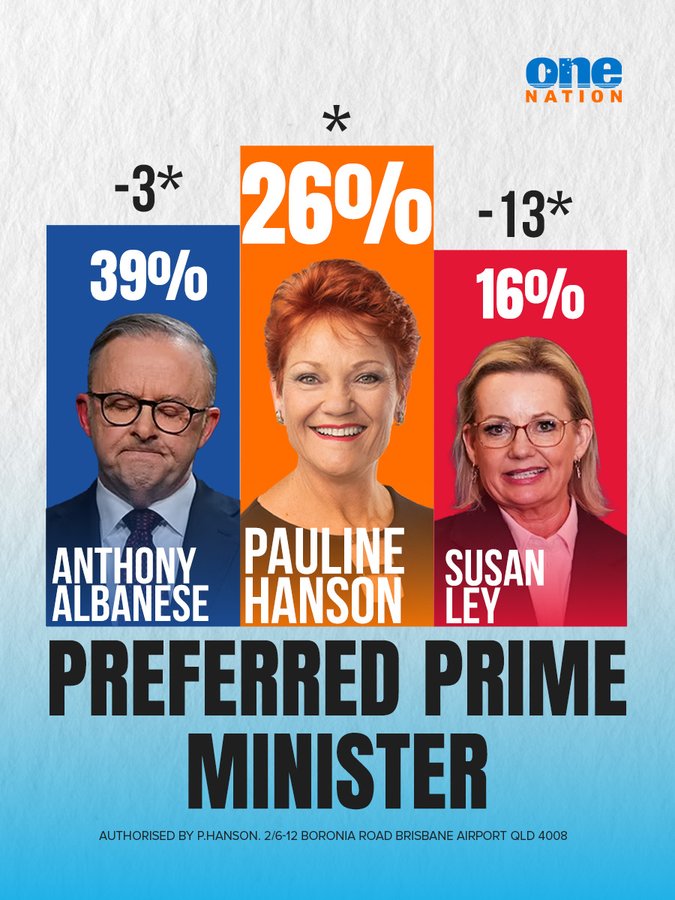
As personal comfort declined across the middle and working classes, Australians have decided to take a closer look at those who have been leading Australia off an economic, social, and cultural cliff.
They did not like what they found in the major parties.
When voters began listening to what MPs and Senators were actually saying (rather than what they assumed they might say), they were appalled.
The cannibalisation of the Liberal and National vote is punishment for decades of disloyalty to the first principles of conservatism. Now, polls show One Nation coming for Labor’s working class as well.
While we may never see Pauline Hanson surrender her Senate spot for a Lower House seat to be Prime Minister, Climate Change and Energy Minister Chris Bowen may not be so lucky.
There are no pollsters creative enough to run the numbers, but how do we think Chris Bowen would fair in merit-based competition with engineer and former coal miner Malcolm Roberts, whose career in the energy industry spans continents?
Of course, Malcolm Roberts would not be the Climate Change and Energy Minister, because no sensible person would oversee competing portfolios.
We will instead assume a One Nation government would put the Climate Change portfolio out to compost and appoint Malcolm Roberts as the Minister for Energy and Infrastructure. Far more sensible.
The legacy press love to chuckle over their lattes at One Nation, but Senator Roberts has more qualifications than most of the Labor Cabinet.
He graduated from the University of Queensland as an engineer with honours, spent three years underground as a coalface miner, worked his way up through the management ranks of coal mines and a coal processing plant before managing an ocean ship loader. Then he led the ‘operational development of Australia’s largest and most complex underground coal project’. This is along with attaining a masters in business administration from the University of Chicago Graduate School of Business. Since sitting in the Senate, he has been the lead investigative voice outing the false and misleading claims put forward regarding Climate Change, Net Zero, and pseudo-environmentalism. He believes in cheap, reliable, Australian-sourced energy, and nation-building infrastructure projects to keep wealth and industry moving between the regions and the cities.
His rival, Chris Bowen, holds his main qualification as a politician. He served on the Fairfield City Council from 1995-2004 where he also completed a term as mayor. He went on to win the seat of Prospect in the Lower House before moving into McMahon. In his political career, we can only commend Bowen for his many successes. He served in Kevin 07’s Shadow Cabinet and then held many roles in the subsequent government. His career was varied: Assistant Treasurer, Minister for Competition Policy and Consumer Affairs, Financial Services, Superannuation and Corporate Law, and Human Services, then he was the Minister for Immigration and Citizenship and the Minister for Tertiary Education, Skills, Science and Research, and Small Business. Bowen even snatched the illustrious role of Treasurer in 2013 … well, for a short time until the election put an end to Labor’s government. Then he was appointed Leader of the Opposition (a role most people have completely forgotten about) before we arrive at his present portfolio as the Minister for Climate Change and Energy.
Bowen’s formal education is in economics, not energy.
He is immensely talented when it comes to attaining high office, but he’s no coal miner.
Between Bowen and Roberts, which man is more qualified to oversee the complex and urgent rescue operation required of Australia’s energy system?
Do you want a man who knows the energy industry from the literal ground up, or a career politician who shuffles ministerial hats around depending on the weather?
It is too often the case in Australian politics that individuals oversee portfolios and make nation-changing decisions without intimate knowledge of their portfolio. They take advice, yes, but the minister is meant to police the advisors in the national interest.
It used to be that we’d expect our Defence Minister to have a detailed military knowledge, our Treasurer to be able to count, and our Prime Minister to be smart enough to negotiate with world leaders.
Portfolios have become prizes and stepping stones to future careers in the private sector.
How many former politicians can you think of who ‘did their time’ in a ministerial position and then quit politics for an incredibly lucrative private sector job in the same industry?
We know the political class are not sending their best into the most sensitive and important portfolios.
The Liberals are guilty of this too, openly advertising Shadow Cabinet as a reward for loyalty to the leadership. If Parliament was run properly, the best possible person would be sitting in each portfolio and they would not be so easily dislodged over bruised pride.
And so let us ask the question, what do you think of Malcolm Roberts as the Minister for Energy and Infrastructure instead of Chris Bowen?
Is this really the post-apocalyptic political future sold to you by the press?