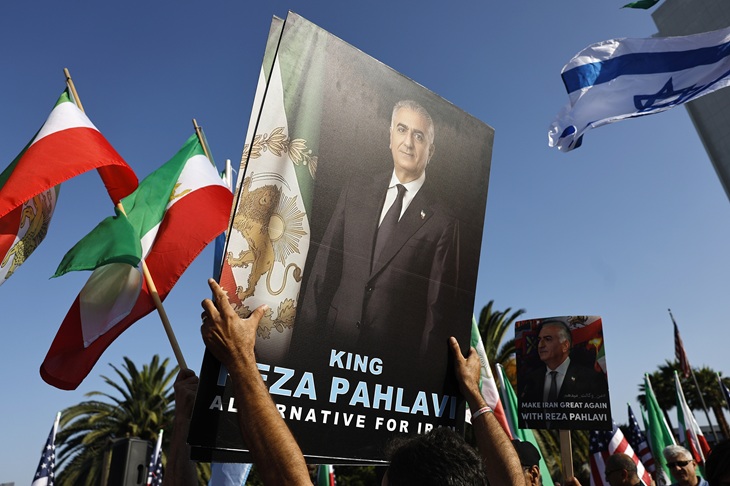
What today concerns many Iranians living in Australia is not only the fate of their wounded homeland, but also the health of public discourse and social security in their host country. The issue is the ‘distortion of the Iranian people’s voice’, a voice that rises from the streets of Iran and is clearly heard by the world, yet, on its way to Australian public opinion, is softened, neutralised, and rendered harmless.
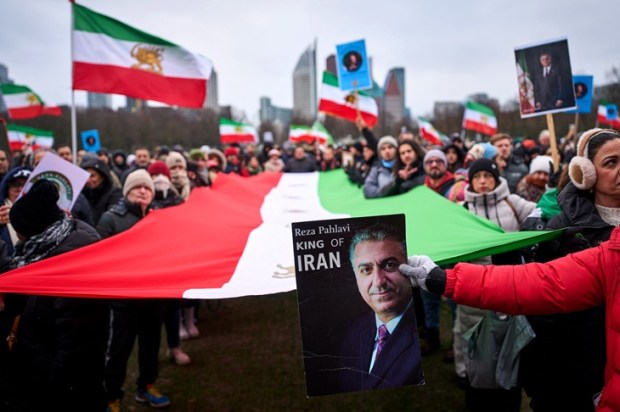
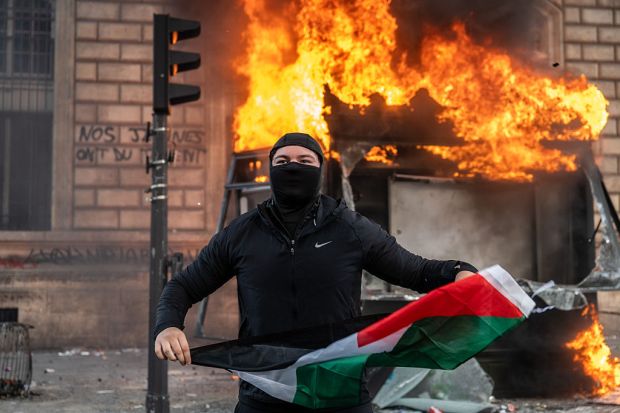
In the dominant narrative of a large segment of Australian media, Iran’s protests are often reduced to ‘economic dissatisfaction’. This is despite the fact that the Iranian people, with full awareness, chanted the name of Reza Shah not only in Persian but deliberately in English, precisely to prevent their demands from being distorted by the media.
This conscious choice is the product of a bitter experience spanning 47 years of struggle, an experience that taught them how their voice has repeatedly been appropriated and neutralised. Such distortion, whether intentional or not, sidelines the most important political component of the protests: the explicit demand for the overthrow of the Islamic Republic in Iran and the open support of a large segment of protesters for a national alternative.
Censoring the name and role of Reza Shah II, as a symbol of opposition unity, is not merely the removal of an individual; it is the removal of the possibility of properly understanding what is happening in Iran today.
This media approach is not without consequences.
When protests are reduced to ‘cost-of-living issues’, the result is the normalisation of the survival of a structure that has decades of repression, imprisonment, executions, and the export of violence on its record. Such a narrative, willingly or unwillingly, serves the interests of the Islamic Republic, a system that derives its legitimacy from repression and uses ideology to export violence beyond its borders.
At the level of policymaking, the government of Anthony Albanese is not exempt from this criticism. A policy toward the occupying regime of the Islamic Republic of Iran that has been largely cautious, low-cost, and devoid of pressure sends a clear message: systematic human-rights violations and ideological support for extremist networks come at no serious cost. Global experience has repeatedly shown that appeasement brings neither peace nor security; it merely expands the operational space of extremism.
It must be stated carefully: no terrorist act can be explained by a single factor. Yet it is equally wrong to deny that normalising violent ideologies and granting uncritical platforms to their proponents makes societies less safe. When victims, whether in Iran or in Australia, pay the price, questions of political responsibility can no longer be ignored.
As an Iranian-Australian, I ask this question of the Albanese government: How long can reality be distorted in defence of a policy that disregards human life?
How long must the people of Australia, alongside the people of Iran, pay the price for flawed calculations?
Respect for the security of Australian citizens is inseparable from taking a clear stand against violent ideology, not through silence and not through censorship. A tangible example is the Bondi terrorist attack, a tragedy that occurred in a climate of political leniency and the normalisation of extremism. Symbolic gestures, including the public display of the image of the leader of the Islamic Republic, Ayatollah Khamenei, at public gatherings, are not only an insult to the memory of the victims but also a willful disregard of 47 years of killing, repression, and violence against the Iranian people, women and children included.
The correct path is transparency, fully reflecting the voices of Iranian protesters, naming their real demands, and aligning foreign policy with the principles Australia prides itself on human rights, accountability, and an uncompromising stand against extremism. History has shown that false neutrality in the face of injustice ultimately benefits injustice itself. Today is the time to choose: life over death, truth over distortion, and the recognition of the only alternative that a large segment of the Iranian people are openly calling for Reza Shah II, as the leader and symbol of Iran’s national will.
By Leila Naseri: Author | Composer | Social Cultural Activist