In the early-1990s, I was looking for wisdom wherever it might be found. I spent time with Sifu Sing, the eccentric Daoist master at the Glebe Chinese Temple. I studied Jewish Kabbalah, I travelled with Black Allan Barker, the Warnman songman and one of the founders of Greenpeace Australia. I was not searching for one truth; I was searching for the shapes that truth could take.
It was in this spirit that I found myself, in 1991, sitting on the floor of a house in Bondi Junction listening to an elderly Turkish-Cypriot man. He was Shaykh Muhammad Nazim al-Haqqani, spiritual head of the Naqshbandi Sufi order, passing through Sydney on his way back to London from the United States. There were three of us: the shaykh, a female assistant translating, and me. As I left, she pressed a book into my hands – 99 Drops: Endless Mercy Oceans – a collection of teachings from Nazim’s own master, Abdullah ad-Daghestani.
I had come to that room because of Idries Shah. Shah – the Afghan-born raconteur who dined with Doris Lessing and Robert Graves – had introduced Sufi teaching stories to Western audiences in the 1960s and 1970s. His books, including Learning How to Learn, were full of tales about Mulla Nasruddin, the ‘holy fool’ of Islamic tradition. Nasruddin rides his donkey backwards. When villagers ask why, he explains that the donkey wanted to go one way and he wanted to go another, and this was the only compromise they could reach. The humour is disarming, but the lesson is sharp. Nasruddin exposes the vanity of certainty by taking it to absurd conclusions. He is a tradition’s internal antibody against fanaticism – a reminder that seriousness is not the same as wisdom, and that certainty is often a mask for ego.
Shah’s Sufism was ironic, psychological, hostile to literalism and deeply suspicious of moral exhibitionism. It treated belief as a discipline, not a badge. Shah and Shaykh Nazim shared the same Naqshbandi lineage – the same tradition, the same inoculation against zealotry. It was not, to put it mildly, the Islam of security briefings.
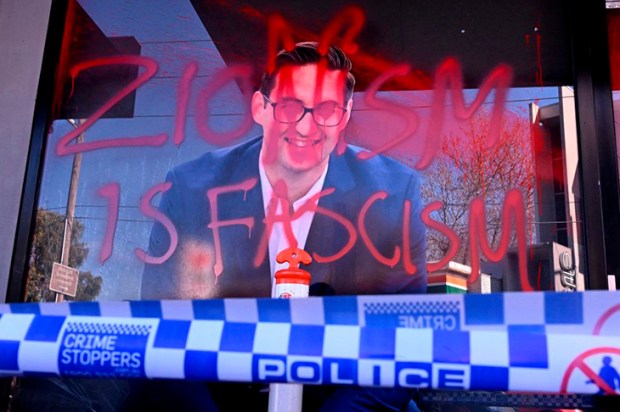
The firestorm that tore through the Chanukah by the Sea celebration thirty years later happened a five-minute walk from where that conversation took place. Fifteen people were murdered at Bondi Beach.
The contrast between the Sufism of Nasruddin and the ideology that animated the attackers is not incidental. It is diagnostic. Political Islam – Islamism – is anathema to the mystical tradition Shah and Shaykh Nazim represented. It is its negation. Where Sufism dissolves the ego, Islamism weaponises it. Where Sufism prizes ambiguity and self-mockery, Islamism demands certainty, obedience, and spectacle. It is the difference between a teaching story and a suicide vest.
This matters because Western commentary on Islamist violence almost always collapses into two equally useless positions. One insists that such violence has ‘nothing to do with Islam’ – a claim so obviously false it insults anyone capable of reading a manifesto. The other treats Islam as a monolithic pathology, erasing internal diversity and ignoring the uncomfortable fact that the overwhelming majority of victims of Islamist violence are Muslims themselves.
Since roughly 1990, Islamist-motivated terrorism has killed something in the order of a quarter of a million people worldwide. The vast majority died not in New York, London or Paris, but in Iraq, Afghanistan, Pakistan, Nigeria, Somalia and Syria. Markets, mosques, schools, buses. The primary victims of Islamism are Muslims who refuse to conform to its demands.
That reality should complicate any simple narrative of civilisational clash. It should also puncture the sentimental claim that Islamism is merely ‘blowback’ from Western foreign policy. Movements that slaughter fellow Muslims on an industrial scale are not defending a civilisation; they are attempting to purify one through coercion.
The warnings about radicalisation in Australia were clear and soberly made. They were simply not acted upon.
Which brings us, inevitably, to leadership – and to a man whose relationship with truth was shaped early, and oddly.
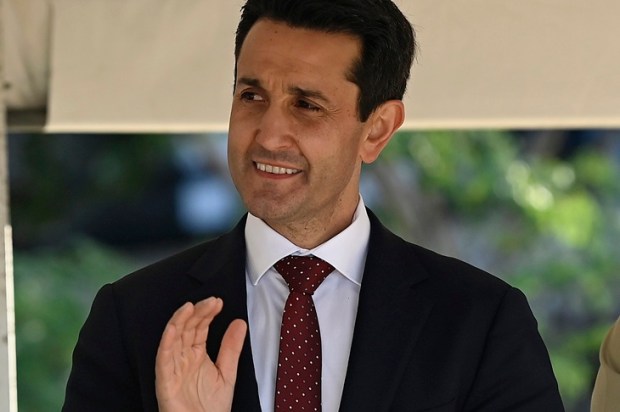
Anthony Albanese grew up with the story that his father, Carlo, had died in a car crash. He did not learn that his family had been perpetuating this lie until he was in his forties. The foundational story of his own life – who he was, where he came from – was a fabrication maintained by those closest to him.
What does that do to a person? One possibility is that it produces an almost obsessive commitment to honesty – a determination never to inflict on others what was inflicted on you. Another is subtler and darker: you learn that truth is instrumental. That protection and deception can be the same thing. That loyalty matters more than accuracy. That some realities are simply too dangerous to share.
Albanese’s career suggests the second path. He did not become an economist or administrator – professions that discipline you to constraint, trade-offs, and stubborn facts. He became a factional warrior. His formative political relationships were not with pragmatists but with ideologues: Tom Uren, the Socialist Left, Labor’s permanent opposition to conservatives, employers, and inherited moral frameworks. His declared purpose, repeated for decades, is to ‘fight Tories’.
In his world, Tories are the clear and present danger, not Islamists.
Warnings about Islamist terror are heard but not integrated. Risks are acknowledged but deprioritised. Prudence gives way to posture. And when the unthinkable happens, the response is sorrow without reckoning.
Australia does not need to become a surveillance state. It does not need collective suspicion of Muslim citizens, most of whom want nothing more than ordinary lives. What it needs is a political culture capable of distinguishing between belief and violence – and a leadership class willing to prioritise operational competence over performative compassion.
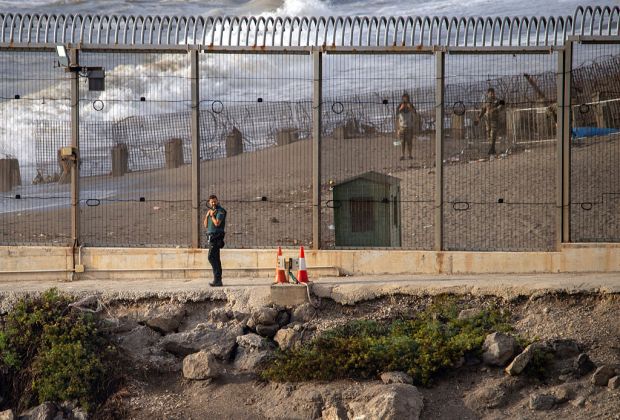
Not all Muslim-majority countries pose equal risk. Screening by country of origin is not irrational prejudice; it reflects observed patterns. Australia could, in principle, maintain migration from Indonesia, Malaysia, Turkey and the Gulf. What is so obvious, Blind Freddy will tell you without so much as a pause, is that placing a 10-year moratorium on intake from the Afghanistan-Pakistan corridor, Somalia, Yemen, and parts of North Africa is what the Australian people really want. It’s not hatred. It is the fundamental self-preservation implied in any reasonable version of statecraft.
Black Allan Barker used to say to me that if you were born here, you were Australian – full stop. That openness and welcoming stance also comes with responsibilities, and it requires leaders willing to draw hard lines elsewhere – at the border, in screening, in risk assessment – so that the promise made to citizens is not hollowed out by negligence. Egalitarianism without statecraft is not virtue. It is abandonment.
Innocent people are dead because that discipline failed. A boy raised on a necessary lie became a man who struggles with inconvenient truths.
Got something to add? Join the discussion and comment below.
You might disagree with half of it, but you’ll enjoy reading all of it. Try your first month for free, then just $2 a week for the remainder of your first year.