The next year will be challenging for Russia. Yes, we’ve heard this for almost four years. We’ve been told that the Russian economy is about to collapse under Western sanctions and the cost of war, yet it stumbles on. There may be no breadlines or toilet paper shortages, but the bill for the Kremlin’s past political and economic decisions has finally landed, and it is ordinary Russians who will foot it.
What a difference a year makes. Economic growth, fuelled by Vladimir Putin’s profligate spending on the defence industry, has virtually evaporated. Oil revenues, which provide a fifth of the government’s income, are down nearly a quarter owing to lower global prices and tighter sanctions. Yet the main cause of Russia’s economic troubles is homegrown; sanctions imposed on the country over the war in Ukraine are merely compounding the misery.
Last December, Putin boasted of the country’s admirable 4.3 per cent economic growth and an equally spectacular 8.5 per cent annual expansion in manufacturing. He also talked about a comfortable fiscal deficit of 1.7 per cent of GDP and 7.4 per cent investment growth, all despite the ever-tightening sanctions.
There are no palatable options for the Kremlin
One year on, the picture is considerably less rosy. The economy registered a modest 0.6 per cent expansion between July and August and manufacturing crawled forward by just 0.5 per cent in the same period. Meanwhile, the budgetary deficit has widened by half and may hit 2.6 per cent of GDP this calendar year; investment has stalled entirely. The outlook for next year is grimmer still.
For almost three years, the Kremlin has used oil revenues to fuel a Keynesian policy of stimulating demand with budgetary largesse. As predicted, this has produced higher inflation, which Moscow’s central bank is now taming with punishing interest rates – which have in turn throttled expansion. And yet Russia’s current near-stagnation is not cyclical but structural.
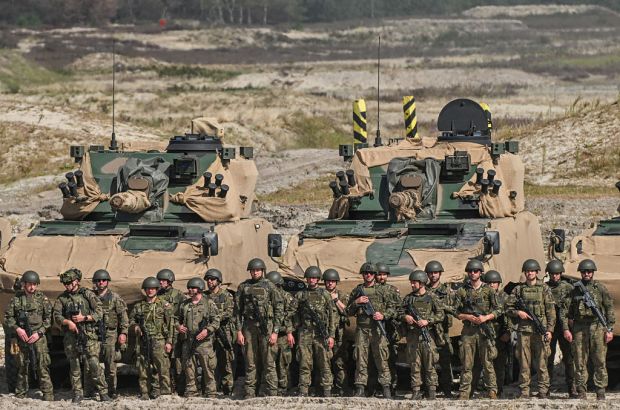
This is because the money generated by oil revenues has flowed not into infrastructure to boost productivity, but into tanks and missiles to be incinerated in Ukraine. State subsidies and soaring demand for arms have created a two-tier economy: defence and everything else. The former devours some 40 per cent of state expenditure, or about 8 per cent of GDP. Over the course of this year, only military-related sectors have registered an increase in output. Civilian industries, meanwhile, are struggling amid double-digit interest rates, acute labour shortages and spiralling costs.
Russian unemployment stands at an all-time low of 2.2 per cent, despite waves of redundancies in banks, IT firms, construction and retail. This is due to the defence sector’s insatiable appetite for workers, the army’s hunger for cannon fodder, and the authorities’ aversion to increased migration from Central Asia, Russia’s traditional pool of cheap labour.
Should the war in Ukraine end tomorrow, Russia’s defence sector would still continue to dominate the economy. The army has to replenish its depleted stocks, and the Kremlin dare not lay off millions of workers in one go, as happened in the calamitous 1990s. A ceasefire would liberate hundreds of thousands of soldiers, but employing them requires money for retraining, rehabilitation and social support. It would also necessitate vast expenditure on the reconstruction and fortification of any newly seized territories.
And yet, Moscow’s coffers are empty. The problem is not sanctions as such. Admittedly, those introduced by Donald Trump against Russia’s four largest oil producers in October have created disruption in exports and forced Russia to agree to steeper discounts when selling crude oil to China and India. Higher transport costs owing to restrictions on tankers and the financial burden of Ukrainian drone strikes on refineries are also eating into producers’ margins.
Oil producers are actually suffering more acutely from punitive domestic taxation and crippling borrowing costs. The quirk of the Russian tax system means that oil companies, not the state budget, is bearing the brunt of higher costs and bigger discounts. The state calculates its levies not on the actual price and volume of oil exported, but on the quantity produced and the global benchmark price. Small wonder then that state-controlled oil company Rosneft’s net profit plunged by three-quarters in the first nine months of the year, despite operating revenues falling by merely 17 per cent. This will eventually translate into declining oil production, but for now the government cannot relent – it desperately needs the revenue.
Other major enterprises are equally feeling the squeeze. Consider Russian Railways, the country’s largest employer. Economic malaise and tumbling prices for coal and other commodities mean diminished revenues, but it is extortionate interest rates that are inflicting the real damage on the company. The government is currently mulling over how to assist it but has no resources of its own and may prevail upon state-owned banks to intervene.
Yet the banks themselves are also struggling. They face a mounting share of non-performing loans, both personal and corporate, and must bolster their capital reserves to avert collapse. Lending has seized up owing to prohibitive interest rates, whilst deposits are surging for the same reason. Banks are therefore enduring dual pressure: they are collecting less interest income but must pay out considerably more.
Compounding these woes are fiscal headaches. Russia’s budgetary deficit is approaching 3 per cent – respectable by Western standards – but the government cannot tap into foreign markets to sell its debt and must trade exclusively with domestic banks. These institutions are demanding higher yields as supply swells and the central bank’s rate stands at 16.5 per cent. Consequently, the cost of servicing national debt is ballooning, and an ever-larger slice of new government borrowing is merely servicing existing obligations.
The problem for the government is that it cannot slash its expenditure: the military budget is non-negotiable, and civilian spending is already pared to the bone. There are no palatable options for the Kremlin. It cannot bank on productivity gains, given the dearth of investment and technological sanctions. It cannot depend on buoyant consumer demand, as households have grown more cautious amid elevated rates, persistent inflation and slowing wage growth. It cannot extract more from businesses and consumers, having already raised taxes for 2026 – the third year in a row – despite repeated assurances it wouldn’t do so. As such, the Kremlin is loath to tighten the screws further.
The sole remaining avenue for Russia is domestic borrowing. But this entails not merely higher budgetary costs: it would also asphyxiate corporate lending, as firms vie with the state for capital from the banks. This would either further depress expansion or stoke inflation.
Terminating the war in Ukraine and persuading the US and Europe to lift its sanctions, rejoining global financial markets, diversifying trade partners, redirecting resources away from the military, strengthening property rights – never Russia’s forte but now grievously weakened – would all ameliorate matters. Yet none of this can be achieved by a government of technocrats. The ultimate decision rests with one man alone: Vladimir Putin.
Apparently convinced of his imminent triumph in Ukraine and his people’s stoicism, Putin is refusing to blink. He may well be right to bank on the endurance of Russians. The economy, though strained, remains sufficiently resilient to limp along for a few years yet. The population, inured to hardship, will grimly shoulder the burden. Putin can afford to ignore the country’s accumulating structural problems, safe in the knowledge that both the economy and populace will hold together long enough for him to avoid a reckoning entirely. Like Leonid Brezhnev before him, Putin will bequeath the truly difficult task – mending a broken system – to whoever has the misfortune to succeed him.