As 2025 draws to a close, Australia faces a failure more profound than any single policy misstep. Our institutions are increasingly governed by ideology rather than evidence, and by narrative preservation rather than public protection. The consequences are measured in fear, rising household costs, and lives lost.
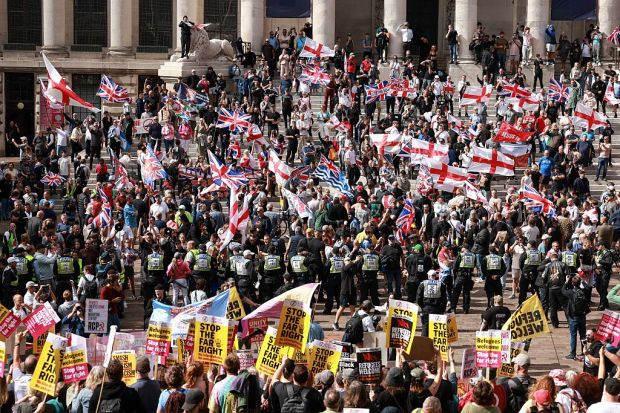
I was aboard a Dubai-Sydney flight on December 14 when news broke internationally of the Bondi Beach attack. BBC, CNN, and Al Jazeera reported what appeared evident: an Islamic terrorist attack targeting Jewish Australians celebrating Hanukkah. The attackers had reportedly declared allegiance to ISIS. Fifteen people were killed. Forty-two were injured. Families fled with children in terror.
When I landed, I encountered a different narrative. Domestic media, including the ABC, immediately softened the framing.
One reporter stated on air that the attack was ‘not religiously motivated’, despite the location, timing, targets, and the attackers’ own declarations. Public discussion quickly pivoted to gun control, despite Australia already having among the world’s strictest firearms laws.
International journalists identified the threat clearly. Australian institutions could not or would not. When protecting a preferred narrative takes precedence over confronting reality, even when citizens are harmed, that is institutional capture in its purest form.
The failure that culminated in Bondi is part of a broader pattern. According to the Executive Council of Australian Jewry, antisemitic incidents rose from 495 in 2023 to 2,062 in 2024 – the sharpest increase on record.
Yet official responses were cautious and qualified, shaped by geopolitical sensitivities rather than moral clarity. Euphemism replaced diagnosis.
Other democracies acted more decisively. The United States, France, Germany, and the European Union all implemented national antisemitism strategies between 2021 and 2023.
Australia appointed a Special Envoy only in 2024 after the crisis was established, who later criticised the inadequacy of the government response.
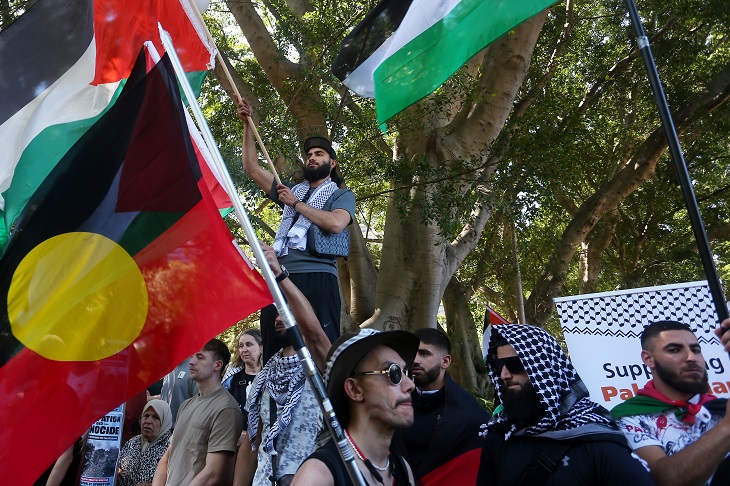
At the heart of this failure lies a broader dynamic: the convergence of activist causes into a single ideological bloc. Pro-Palestinian activism, LGBTQIA+ advocacy, climate change, opposition to nuclear energy, and Indigenous causes are no longer debated on their merits. Instead, they are bundled as components of a shared moral identity. Questioning one cause is treated as an attack on all of them.
Evidence becomes conditional. Facts are filtered through ideological coherence rather than empirical relevance. Concerns about antisemitism are minimised when they complicate geopolitical sympathies. Nuclear energy is rejected not on safety records but because it sits outside an approved narrative. Indigenous policy debates are framed symbolically, while questions of accountability are dismissed as moral transgressions.
This creates powerful institutional incentives. Media organisations, universities and bureaucracies learn that legitimacy flows from affirming the bundle, not interrogating its components. What emerges is not pluralism, but ideological lockstep and institutional blindness.
This tendency was laid bare in the Indigenous Voice referendum. Voters were told the proposal was a moral imperative rather than engaged in serious discussion about practical improvement. Legitimate questions about accountability and effectiveness were dismissed as bad faith.
Yet decades of evidence, including Productivity Commission reports, show that despite more than $30 billion annually in Indigenous-specific expenditure, outcomes in health, education, safety, and employment remain stubbornly poor.
The referendum failed not because Australians rejected reconciliation, but because many refused to endorse symbolic constitutional change absent clear evidence that it would improve lives. The cost was borne by the very communities the policy claimed to serve.
The same pathology defines energy policy and the pursuit of 100 per cent renewables by 2050. What should be technically rigorous has become a test of political loyalty. Engineering constraints are dismissed as pessimism. Economic trade-offs are reframed as moral failure.
The Australian Energy Market Operator reports renewable energy curtailment exceeding 8.5 per cent system-wide, well above the 5 per cent threshold considered manageable.
By 2050, AEMO projects roughly 20 per cent of renewable generation could be curtailed – equivalent to New South Wales’ entire current electricity consumption.
Wholesale electricity prices fell 27 per cent year-on-year in Q3 2025, yet household bills rose between 5 and 8 per cent, driven by network costs and transmission build-out.
Industrial users face eroding competitiveness and reliability risks. Even the Clean Energy Council acknowledges that meeting 2030 targets requires unprecedented transmission construction – despite regulatory delays, cost overruns and community opposition.
Still, the institutional response is reassurance rather than recalibration. Alternatives, particularly nuclear baseload generation, are treated not as engineering options but as ideological threats.
The parallels are uncomfortable but unavoidable. Jewish Australians were assured that security concerns were overstated until 15 people were murdered. Indigenous Australians were promised that symbolism would drive outcomes despite decades of contrary evidence. And Australians are repeatedly told that renewables are the cheapest form of energy, yet household electricity bills continue to rise, and industrial competitiveness continues to erode.
What links these failures is the elevation of narrative above truth. When naming problems complicates political frameworks, clarity is deferred. When data challenges consensus, it is sidelined. Yet democracies are not weakened by debate; they are weakened by denial.
As we enter 2026, we can choose a political culture grounded in evidence, expertise and course correction, or one that mistakes belief for wisdom. Nations do not fail because they lack ideals, but because they allow ideology to replace judgment. Wisdom, unlike ideology, puts citizens first.
Cristina Talacko is CEO of GLOW Strategies, an advisory firm focused on energy transition and supply chain resilience. She is a former member of the advisory board of Multicultural NSW and founder of the environmental charity Coalition for Conservation. The views expressed are her own.