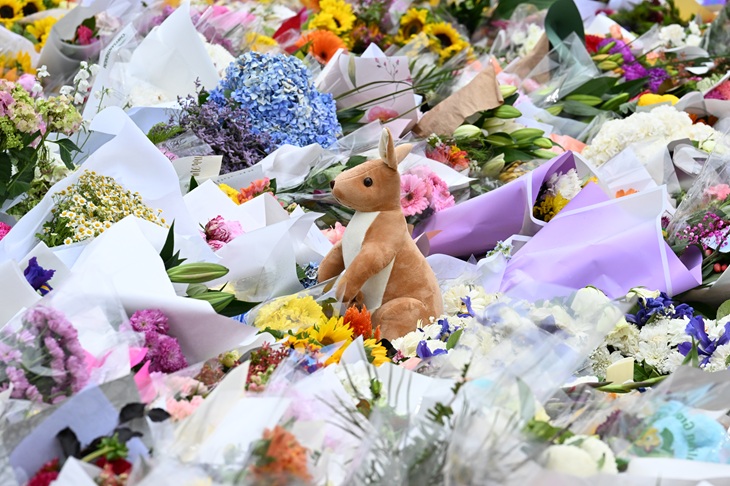
The massacre in Bondi Beach on a warm and pleasant Sunday night will certainly go down in history as one of Australia’s most evil events.
Bondi Beach is an iconic beach, frequented by many tourists and well known throughout the world. Many new Australians are drawn to Bondi because of its proximity to the city, relaxed lifestyle, vigorous café culture, and enticing walks. My late wife and I were among those who made this special place our first home after arriving in Australia. We rented an apartment on Tamarama beach, which overlooks the ocean and is adjacent to Bondi Beach, and the next year we managed to buy an apartment in Bondi just a few streets from the iconic beach. But now, the beach has lost its innocence and will, in perpetuity, be described as a place where unspeakable evil took place.
It would be easy to blame the migration and pro-Palestinian policies of the federal government for this monstrous event. The blame game could focus on the government’s response to antisemitism, for example its recognition of Palestine, and appeasement of its large voter base in Western Sydney. The government could be criticised for settling 3,000 Gazans in Australia and for allowing the return of ISIS members, even though it hypocritically claimed not to have assisted in their repatriation. Surely, a number of these arrivals, who come from the world’s trouble spots, are unable, or unwilling, to assimilate into this country. In this situation, it is no wonder that many commentators, especially right-of centre columnists, argue that only immigrants who respect Australian values should be allowed to settle here.
There are a few preliminary conclusions to be drawn from the Bondi Beach massacre. First, the governmental policy of multiculturalism has failed miserably. The implementation of this policy has promoted separateness rather than assimilation and integration. I have shared this conclusion since the publication of my book, Affirmative Action: The New Discrimination (The Centre for Independent Studies, 1985). It was a message which resulted in my excommunication from the Human Rights Commission which had commissioned my work. Second, the massacre reinforces the societal request to substantially overhaul Australia’s immigration program. This overhaul should not just focus on the number of migrants invited to join Australia, but also on their willingness to embrace Australian values of democracy, freedom of religion, and free speech.
Third, the Bondi Beach massacre reminds us of the need to effectively combat antisemitism. It is this third preliminary conclusion that causes anxiety and discomfort. Why?
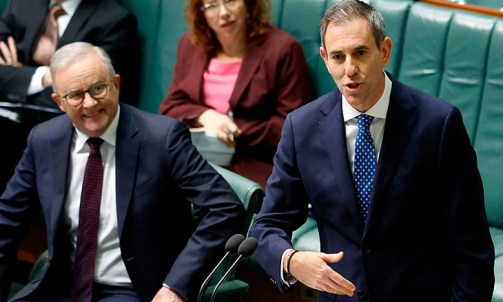
The Prime Minister, in his first comment on the massacre, indicated that he will ‘eradicate’ antisemitism. This verb – to eradicate – suggests that the government response to the massacre might well result in the adoption of new legislative and administrative controls. If so, this would present a serious problem involving governmental overreach, especially if politicians were to further tighten Australia’s hate speech laws. It would be an unwelcome and robotic response to a real problem. Let me explain why.
On February 6, 2025, the Federal Parliament approved the Criminal Code Amendment (Hate Crimes) Bill 2025. Many commentators see this law as an appropriate response to antisemitism in Australia. The antisemitic attacks include the January 21 arson attack and spray-painting of graffiti near a Jewish school and synagogue in Maroubra; attacks on the home of a Jewish individual, involving the destruction of cars with fire and antisemitic graffiti; and vandalism of two Sydney synagogues in one week. Most recently, we have seen an alleged antisemitic rant when it was reported that a woman on a Melbourne tram allegedly told a Jewish man and his two children ‘to go to the gas chambers’. The list of antisemitic occurrences is truly staggering.
Several states have passed laws in response to a rise in hate crimes against the Jewish community. In New South Wales, on February 21, 2025, the Parliament passed a package of tougher hate crime laws in response to the recent escalation of violent hate crimes. Both the federal laws and NSW laws aim ‘to eradicate’ hate crimes in Australia, particularly antisemitism, and purport to uphold human rights by shielding people from acts of intimidation and targeted violence.
On July 9, 2024, the Australian government appointed Jillian Segal AO as Special Envoy to Combat Antisemitism in Australia. In July 2025, the Special Envoy released ‘a policy-oriented framework for government and the Australian community’, which seeks to address the causes of antisemitism. The document asserts that extremist ideologies circulating on the internet are the main cause behind the recent rise in antisemitism. Although this claim is well-founded, the document, in proposing a solution which further restricts free speech, states:
‘The Envoy will monitor media organisations and encourage accurate, fair, and responsible reporting and assist them to meet their editorial standards … to avoid accepting false and distorted narratives.’
In section 3.6, entitled Digital governance and online regulation, the document goes on to explain that the Special Envoy will be working with the Australian government to establish effective and beneficial content moderation and have the regulatory framework provide protections to individuals and targeted groups in the online environment, and work with the eSafety Commissioner and relevant government departments and agencies, as well as the platforms, to ensure AI does not amplify antisemitic content.
But these hate speech laws, and the measures proposed by Segal’s report, although well-intentioned, have the capacity of further eroding free speech which is the most effective protection against antisemitism.
My argument relies on the fact that censorship is the instrument par excellence of every authoritarian regime. Furthermore, after all these years of suppression of truthful information, especially during the worst years of the so-called pandemic, I wonder about the government’s credibility in protecting Australians from misinformation and disinformation.
Hence, I am afraid that the Australian response to the Bondi Beach massacre will be yet another emasculation of free speech.
This would be most deplorable, precisely because free speech is the strongest and most effective means to prevent massacres that are nurtured by an insatiable desire to demonise a group of law-abiding and productive citizens. Free speech is the best weapon a society has to prevent a pogrom-like attack on the Jewish community because society’s voice of condemnation would sound stronger and louder than any ill-conceived laws or administrative action that limit or control free speech.
Free speech is a most important building block in a free society, and any attempt to suppress it – there are many examples of this in Australia – will encourage attacks against the Jewish community because the perpetrators expect their actions to be shrouded in mystery and obfuscation.
The Bondi Beach massacre certainly reminds us that most well-meaning people want the Australia of yesteryear back!