When the taps run dry in Tunbridge Wells you know something has gone very wrong in the heart of Albion. Some 24,000 residents had their water supply cut off for almost a week after South East Water found that water at the local treatment plant was contaminated with chemicals. Schools closed, businesses lost money and, although supplies have resumed, residents have been told to boil water.
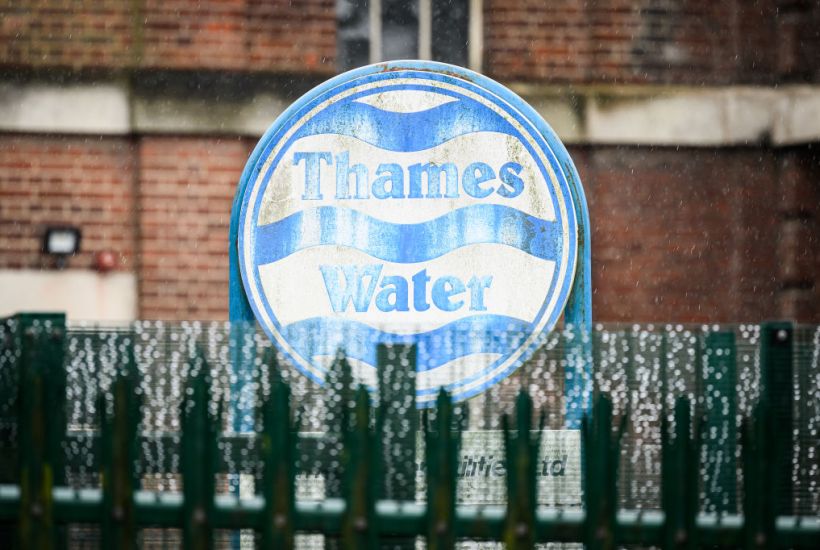
The fiasco is illustrative of our national water crisis. In my part of south London, the streets literally course with water flowing from burst pipes. As I predicted in a piece for The Spectator eighteen months ago, the situation for Thames Water customers has worsened. One recent leak was so bad that a basement flat was only saved from flooding when its occupants cleared the drains and someone brought a pump to divert the water away from the windows. The fire brigade came to stop the flood entering other flats. The week before, I missed the start of my choir performance because bus services were disrupted. The reason? The high street was closed due to yet another burst pipe.
Sometimes weeks go by before the familiar ‘road closed’ signs and plastic barricades are removed. A little while later, they are back again. One day, frustrated by the same section of a nearby road springing yet another leak, I had a chat with the workmen. They took my remark about ‘sticking plasters’ well, saying they had often told management that systematic replacement of the pipes was necessary.
The curious thing is the lack of reaction from local people. Each incident is treated as it’s an unfortunate one-off, with residents evincing dismay but little or no awareness of the reasons for the repeating pattern of leak-and-patch. Going about your day involves working around constant lane closures, queuing behind temporary traffic lights while the odd driver mounts the pavement. It reminds me of life in poor, troubled regions of the world where people endure endless chaos without any hope of change.
Meanwhile, local politicians seem powerless. Local councillor Ryan Thomson told me that Bromley Council has passed a unanimous motion condemning the situation. Are Thames Water high-ups quaking in their boots? On the contrary, they’re considering whether they can get away with giving senior managers retention payments of nearly £2.5 million. Thanks to the extra third customers now pay on their bills, the company is in profit again, with the latest half-yearly figures showing profits of £414 million. But with talks between creditors and Ofwat, the regulator, ongoing, there’s no resolution to the company’s ongoing debt crisis in sight. Government doesn’t want responsibility: as environment minister, local MP Steve Reed was ideally placed to tackle the problem. But he did little more than make statements and dismiss taking Thames Water back into public ownership as too costly.
Communities elsewhere seem less afflicted by passivity. In coordinated legal action against Thames Water, residents are filing statutory nuisance notices with their councils, demanding urgent action be taken about the dumping of sewage in the Thames. Nationally, cries for the renationalisation of the water industry are growing, notably by the campaign group We Own it.
But national government is the last place we should be looking for a solution to Britain’s water crisis. Since the privatisation of the sector in 1989, the disastrous combination of deteriorating infrastructure, declining services and rising prices has taken place under Conservative, Labour and coalition governments. Ensuring a safe, reliable water supply is a basic function of government. But it seems that even on this rainy island, ours can’t or won’t do it. Worse: the current government is planning to exacerbate the water crisis. Industry leaders are concerned that political aspirations to make the UK a ‘world leader’ in AI will demand unfeasible amounts of water to cool new data centres. To add insult to hosepipe ban, the government is even considering allowing water companies to charge heavy users higher tariffs.
The real lesson of the last thirty-five years is surely that large organisations – governments or corporations – can’t be trusted to manage the stuff of life.
When the taps run dry in Tunbridge Wells you know something is wrong in the heart of Albion
Local and regional communities, on the other hand, have a real interest in ensuring that taps flow and waterways are kept free of pollution. When the consequences of burst pipes or water stoppages are on or close to your doorstep, organisations are harder to corrupt and commercialise.
A starting point for a new ownership model comes from the old idea of the commons. As the author of this article argues, holding resources in common could be updated for contemporary public policy: ‘Water held in commons refers to water resources collectively managed and utilised by communities…A world rich in healthy commons would of necessity be one full of distributed, overlapping institutions of community governance. Cultivating these would be less politically rewarding than privatisation, which allows governments to trade responsibility for cash.’
There are signs this kind of thinking is making its tentative way into the frustration-fuelled debate about water. In October 2024, the Labour MP Clive Lewis introduced a private members bill aimed at overhauling the water system. While some measures, such as placing requirements on the secretary of state to meet new targets, sound centralised and open to the obfuscation that has stymied regulation, the idea of a citizens’ assembly on water ownership would at least open up a conversation about other ways of collecting and distributing a natural resource the country is rich in.
The idea is taken a step further in Yorkshire. The government should take the regional water company back into public ownership, argues John Hall, and then restructure it ‘in the public interest’: ‘Yorkshire Water should be rebuilt around community and public ownership…Yorkshire households (for a small investment) could take a real stake in their water company – not just as bill-payers but as owners with voting rights and a say in its future’.
Our ancestors got their water locally, from springs and wells, rivers and lakes. The Victorians put in sanitation systems before the age of the combustion engine. These days, we have not only the technology to create infrastructure at scale but experience of myriad forms of governance. It cannot be beyond the wit of modern Britons to secure a regular supply of clean water.