Just when you thought range anxiety, sabotaged charging stations, and distance-based road taxes were all you had to worry about when buying an EV … along comes the eSafety Commissioner.
Fresh from banning under 16s from social media (let’s see how well that works out on December 10), the eSafety Commissioner has called for a crackdown on ‘smart cars’.
The regulator, who urgently needs to be encased in a more firmly defined framework, has issued a warning that these digital vehicles could be ‘weaponsied in domestic and family violence cases’.
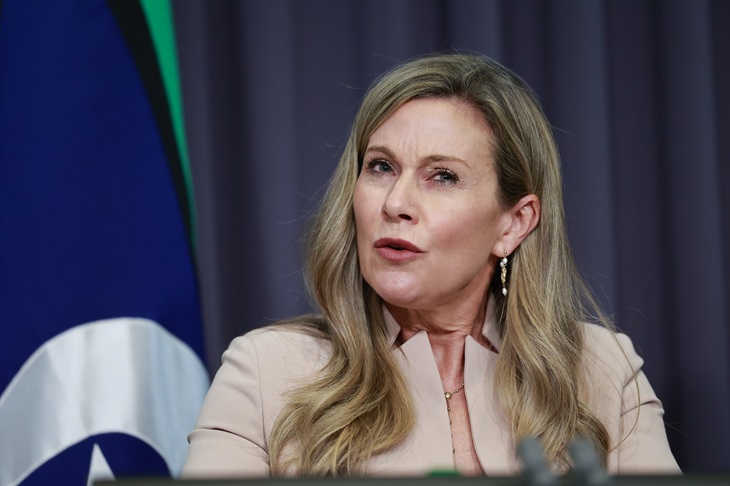
‘We’ve seen much more pernicious and creative misuses of technology, like using a cat feeder to surveil your former partner or even remotely turning up the thermostat or locking the refrigerator to control when your former partner can eat or not,’ said Julie Inman Grant, the eSafety Commissioner.
There are plenty of signs listed above that our civilisation has become over-reliant on unnecessary tech. Our slow march, you might say, toward tech dystopias warned about in 90s-era films.
If controlling an eFridge or eCatFeeder has become a problem, the answer would surely rest with pursuing the human perpetrator rather than over-regulating the items themselves. Technically, anything can be a weapon. We cannot go around endlessly wrapping our world in protective layers.
The eSafety Commissioner goes on to cite a ‘kill-switch’ scenario.
‘In this particular case a few years ago, a kill switch [in the car] would go off every time the woman went more than a kilometre beyond her home so she basically had this very small environment where she could drop her kids off at school, go to the grocery store, but couldn’t do much beyond that.’
Except … tell the police?
The idea that EVs can already be shut down remotely (for theft prevention, missed payments, emergencies, and software issues) is a bit of a concern.
What happens the next time our government declares a (non) emergency like Covid and decides to shut our cars down to keep us locked in specific areas? Or a climate emergency, for that matter. Could they enforce 15-minute cities with EVs or build your carbon footprint directly from your satnav?
Others have raised the alarm over national security. Many of our EVs are Chinese-made and, if conflict arises, third-party shutdowns could be used as a tool of war.
This is before we approach the problem of hacking and malicious interference. Your computer can be hacked, and so can your car.
Do we really want to add the potential for EV lockouts over domestic disputes without a conviction (as could potentially happen for carriage services)?
The law of unintended consequences means you have to be careful what you encourage government regulators to get involved in.
Look at the mess they have made of social media in the name of safety.
Platforms which once facilitated community speech have become vassals of propaganda for paranoid political parties who now seek to silence criticism of those policies. Government is giddy at the thought of Misinformation and Disinformation laws where its ministers define truth to suit themselves. Even notions of harm have been re-drafted to mean anything that hurts political and corporate agendas.
When people went to social media to talk about actual harms occurring during Covid, those same governments leant on Silicon Valley to erase their complaints. Forgive us if we have a rather low trust threshold when it comes to safety regulation.
Apparently there have been 400 calls for help and 20,000 requests for information on EV abuse. It is a small number when compared to both the number of EVs on the road and other issues such as machete crime in Victoria where cars are stolen by home intruders, often in their early teens.
Still, the EV market is set to grow (by force, if necessary), and this may be a signal to include their abuse in existing domestic violence legislation rather than seek further controls from the manufacturers.
We all understand the urge to ‘keep people safe’ but there is something inherently concerning about encouraging the government to get involved in the digital overrides of an electric vehicle.
Some of the worst digital policy started with the best of intentions, and I remain deeply suspicious.
Petrol and diesel cars have an inbuilt sense of freedom from the state.
A car that is monitored, tracked, controlled, and interfered with by third parties is just … creepy.
It wouldn’t matter if EVs were a choice undertaken freely but, as we have been reminded, the government is all-but mandating the transition to EVs through a series of incentives and industry demands. The only reason we aren’t hearing the Climate Change and Energy Minister, Chris Bowen, bang on about it is because the production cost has skyrocketed thanks to scarcity problems created by competition with solar panels, wind turbines, and batteries. Europe had to push their EV transition off into the distance, and so have we.
Well, sort of.
In the absence of high-quality European and American EVs, the Australian government has inadvertently encouraged the influx of Chinese alternatives through carbon credit schemes and other Net Zero policies.
And so future consumers are looking at a transport fleet made by our most dangerous geopolitical competitor.
In summary, regulating EVs feels like another case of ‘some predators exist therefore the whole customer base must be punished’. It is the same template used to dismantle online privacy (which kept people safe) and usher in an era of Digital ID, biometric data use, and excessive censorial behaviour in relation to political conversation and news items.
If we are going to see an eSafety crackdown, why not start by solving an older mystery about which companies are selling our phone numbers, addresses, and emails to third party retailers… Or bringing more online scammers to justice and tightening up the laws on banks to ensure they are liable for the losses and not the hoodwinked pensions.
How many companies have sold or bought illegal lists of user data?
How many tech companies have forced people to agree to updated terms and conditions that sacrifice private data for functionality of essential services?
Why is it that the technological harms that impact so many (and for so long) are left on a dusty shelf somewhere in government?