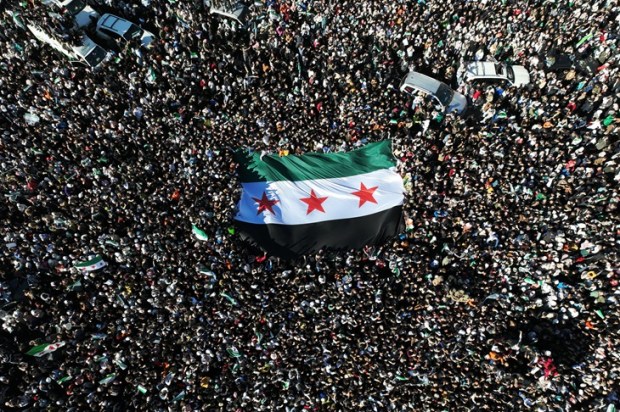

The international community – particularly leaders in the Middle East – are eager to see the developments and consequences of Sunni Islamist and former jihadist Ahmed al-Sharaa in his leadership of Syria.
From Iraq, these alliances bear deep implications. Meeting recently with President of Iraqi Kurdistan, Nechirvan Barzani, in the Kurdistan region of Iraq, I listened as Barzani offered his insights on what is to come from the new Syrian leadership.
‘Ahmed Al-Sharaa is the last chance for Syria,’ Barzani said.
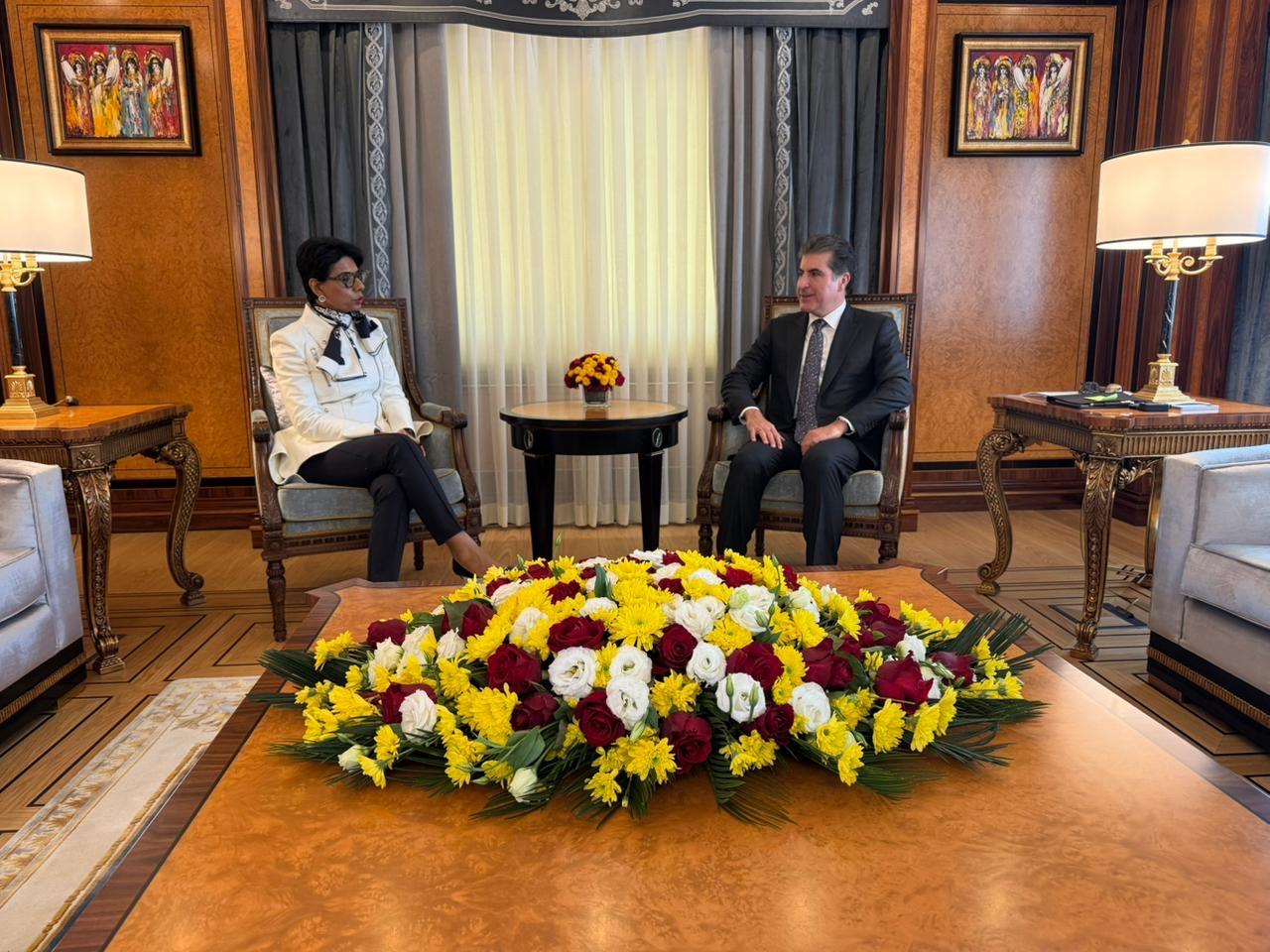
Image provided by author
President Donald Trump’s recent meeting at the White House with al-Sharaa, the first Syrian leader to meet an American president in Washington DC, preceded the highly controversial White House visit by Saudi Arabia’s Crown Prince Mohammed bin Salman Al Saud.
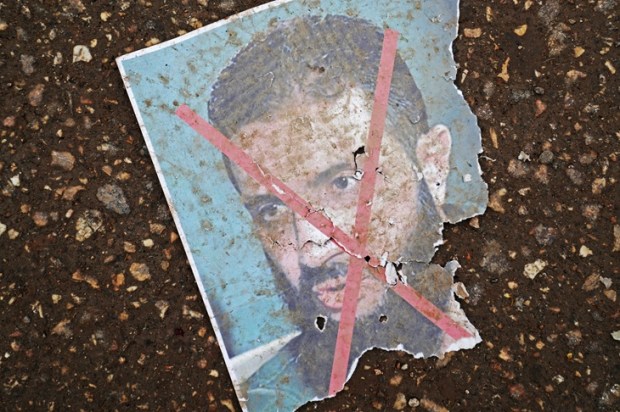
Syria seeks repeal of the Caesar Act this month. The US Act sanctions key individuals and state institutions supporting the (former) Bashar al-Assad regime’s war on Syrians. It was named after a courageous whistleblower who revealed photographic evidence of atrocities committed on Syrian civilians by the former regime.
The US Senate has already voted to repeal this Act, but the House needs to confirm the vote. Dissenting members of the House including Congressman Brian Mast (R-FL), Chair of the House Foreign Relations Committee, and Senator Lindsey Graham (R-SC) are opposed to the repeal.
Anticipating the imminent lifting of the Caesar sanctions, senior political operatives in both Iraq and Syria (on condition of anonymity) warned that al-Sharaa may be saying ‘whatever the world wants to hear’.
Once sanctions are lifted and the spigot of international finance and markets are wide open, these seasoned political elites say they suspect Syria’s al-Sharaa’s stance will harden, evoking his hardline violent Islamist roots.
‘Decentralisation of power is essential for Syria,’ Barzani said.
Syria’s intrinsic nature has always been pluralist: both religiously and ethnically diverse. Given the vulnerability of Syria’s minorities in the wake of recent genocidal attacks on the Alawites in the coastal region and the Druze in Syria’s Southwestern area, it is clear the US must support Syria – conditionally, Barzani said.
Barzani repeatedly emphasised inclusivity in the nascent Syria: Christian, Druze, Yazidis, Alawites Kurdish, Secular Sunni Arabs, and all other partners all must be fully represented in the new Syria.
Engaged partners from all faiths and backgrounds will make for a stable and unified Syria, Barzani said. This is unity that political, civilian, humanitarian, and military personnel expressed that Iraqi Kurdish, Syrian and Europeans want to see in a new, secure Syria.
Following the fall of Syrian President al-Assad in 2024, many of those Christian refugees have decided to return to Syria.
Yet plurality is not featured in al-Sharaa’s immediate circle of power. From al-Sharaa’s selection of his first cabinet and the early elections held in Syria in October 2025, al-Sharaa keeps his trusted distinctly Islamist elements close. Elections were also postponed in diverse provinces including Suweyda, home to the Druze in the Southeast, and Hasaka, and in the Northeast, home to the Syrian Kurds and secular Arabs and Christians.
Decentralisation of power in Syria provides a vital counterbalance to al-Sharaa’s Arab Islamist forces and Islamist ambitions. It ensures non-Arab partners in Syria have their own governing authorities. These authorities could be unified under a central government in Damascus and guarantee a secure Syria truly representing its polyethnic multireligious population, averting the risk of marginalisation, persecution, or ethnic cleansing.
Throughout Iraq, Barzani is recognised as an advocate for minority partners in his region and the wider Middle East.
Iraqi Kurdistan had been home to the largest and only growing Christian population in the Middle East during the three-year war against ISIS when Christians fled ISIS’s lethal persecution in Federal Iraq and Syria.
For the Kurdistan Regional Government in Iraq, the pressing concerns are the ongoing negotiations for the integration of the Syrian Democratic Forces into the Syrian National Army. Al-Sharaa, Turkey, and initially the United States reportedly all wanted the SDF [Kurdish Secular Arab and Minority Forces] to disarm and dissolve into the national army.
The Iraqi Kurdish Regional Government leadership sees this differently, emphasising the need to find a mechanism to implement the March 10 agreement. The United States is also developing similar nuance.
‘These troops have given extraordinary sacrifices. They cannot just give up arms, remove the uniform and be amalgamated individually without guarantees of integration,’ Barzani said.
The SDF lost over 11,000 lives and sustained 32,000 casualties fighting ISIS. Barzani explained the SDF also secures the Al Hol Camp for ISIS families as well as prisons holding over 10,000 ISIS male fighters. In Syria, ISIS remains a contemporary threat. The SDF states ISIS attacks have increased in 2025; estimates show 2,500 ISIS fighters still active in Syria.
In significant consensus, the international community including Gulf States, the EU, United States and US Nato ally, Turkey, all support al-Sharaa.
Many in the region report that al-Sharaa is Syria’s last chance to prevent another raging civil war – this time between Islamist jihadists and Syria’s vulnerable secular Arabs and ethnic and religious minorities.
It is evident that Iraqi Kurdistan’s civilian, political, military, humanitarian, and coalition partners are all extremely motivated to support US presence in Northeast Syria. Iraqi Kurdistan’s assets in Erbil are a natural hub and supply chain – both with the US base in Erbil and the deep trust and friendship between the United States CENTCOM and Iraqi Kurdistan’s military forces. This also aligns well with the Global Coalition against ISIS (based in Erbil) forming an additional natural point of collaboration.
‘When I met Ahmed Al Sharaa, we discussed the threat of ISIS and the value of joining the global coalition against ISIS,’ Barzani said.
But the extreme violence of HTS under al-Sharaa and his near-universal acceptance fail to diminish his violent Islamist credentials. However, if US al-Sharaa is shrewd and rational, US allyship, along with key regional players in the Middle Easte, the new president’s role as Syria’s leader has a chance to change not only his own credence, but Syria’s role in the world.
Qanta A. A. Ahmed MD is an author, Senior Fellow, Independent Women’s Forum and Life Member Council on Foreign Relations.