What does the growing support and recognition of International Men’s Day mean?
Last week in Adelaide I hosted my third International Men’s Day dinner – on the day itself, Wednesday, November 19 – and am rapt to report the event sold out, almost doubling in size from 2024.
What does it mean that the SA Premier accepted an invitation to attend this year’s event, alongside other Labor ministers and MPs, plus those who sit opposite them in the Liberal Party ranks?
What does it mean that this year’s IMD function welcomed people from a broad cross-section of our community: a disparate group of people who would rarely sit in the same room together, let alone share similar life priorities?
What does it mean that across the nation, the sniggers and snide remarks from the regular crowd about International Men’s Day are less prominent than in previous years? You know, the ‘every day is International Men’s Day’ trope…
For me, the answer might be found within a motion I moved in Parliament recently, which called for a focus on ‘men’s health, championing male role models, supporting gender equity, and recognising the positive values men bring to the world, their families, and communities’.
The motion also touched on the unique health challenges men face, plus those suicide statistics that speak for themselves.
And it ended by pointing out that ‘men deserve to be celebrated on International Men’s Day in the same vein as we celebrate and champion women on International Women’s Day’.
I hope and I believe all means those aspirations I outlined in that motion are, slowly, becoming apolitical – and are starting to resonate.
Clearly, the need to focus on the unique challenges faced by men – in particular their health – is hitting home.
The need to champion male role models, rather than unfairly taint all men for the behaviours of a tiny minority, is being recognised.
Tired clichés about male privilege are being challenged, and we’re slowly building a discussion around the needs of men and boys, including helping them when and where we should. This is a completely valid concept, and indeed a responsibility.
In addition to sobering statistics about suicides, violent deaths and the shorter life expectancy of Australian men, it’s worth noting that boys continue to underperform against girls at every stage of education, and that fathers in split families face more substantial barriers to being involved in their children’s lives.
It’s still unfashionable to highlight these facts, but maybe less so today than a few years ago.
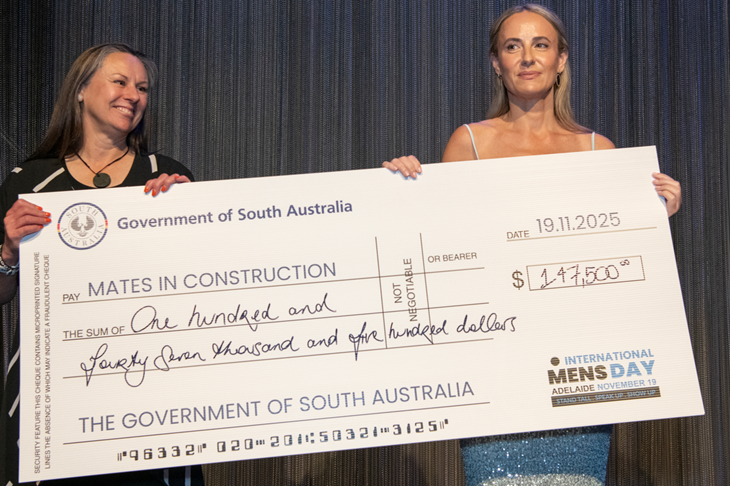
I must point out the chief charity to benefit from my International Men’s Day event this year was Mates in Construction, an independent charity that exists to reduce the high level of suicide in the Australian construction and allied industries. I’m proud to say $147,500 was raised for Mates on the night.
The event also include formal acknowledgment of the five winners of the inaugural SA Positive Role Model awards.
Founded and chaired by former Flinders University Dean of Research, Professor Raj Shekhawat, the awards aim to recognise SA men who are ‘making a meaningful difference, whether through small, quiet acts of kindness, or large, visible contributions across any sector’.
In addition to my IMD commitment and advocacy, during my parliamentary term, I’ve also managed to secure $200,000 for men’s health initiatives (including the Men’s Health Checklist and the Suicide Prevention Fellowship in Men’s Mental Health) and called for the establishment of an Office for Men to address men’s issues and promote equality.
I’ve been dubbed Australia’s unofficial ‘Minister for Men’ and it’s a badge I wear proudly. Change may be slow, but it’s definitely happening – and it’s gathering momentum.
Sarah Game is the founder of the Fair Go for Australians party, MLC, South Australia