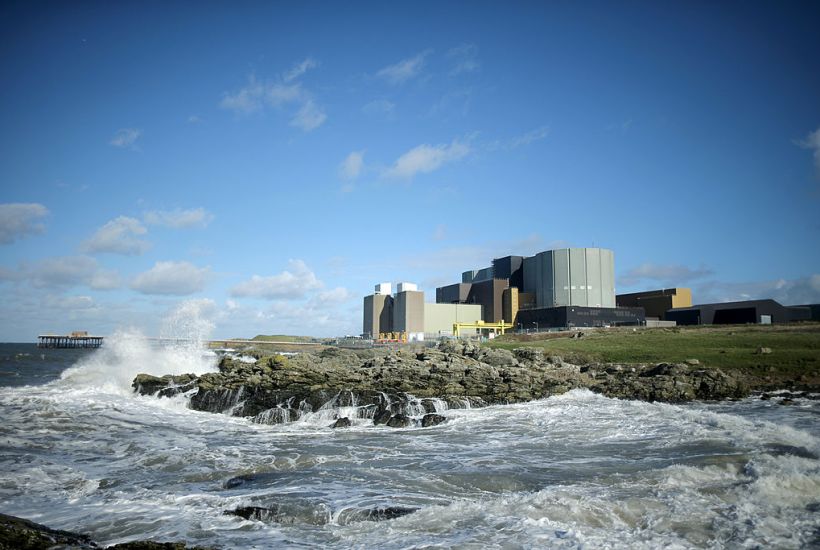
On the Isle of Anglesey in North Wales sits Wylfa nuclear power station. For 44 years, until its final reactor closed in December 2015, it provided over a thousand well-paid jobs and clean, reliable energy. At its peak, it generated almost half the electricity in Wales.
If there’s one thing the locals want more than a third Menai Crossing – the nearest A&E is on the mainland and only accessible via two beautiful, but fundamentally not fit for purpose, bridges built in the first half of the 19th century – it is for nuclear generation to return to the island. It’s not hard to see why: after the last reactor at Wylfa shut down, median full-time pay on the island fell by 14 per cent in just three years.
If the government is serious about kickstarting a new ‘golden age of nuclear’, they urgently need to bring the costs of building new nuclear power down
That’s one reason why today’s news that Wylfa has been chosen as the site for the UK’s first Small Modular Reactor (SMR) is so welcome. The government estimates the project will support around 3,000 jobs at its peak, bringing good local jobs back to an area crying out for them. However, I suspect if you ask most islanders about today’s news, they will have mixed-feelings.
Undoubtedly, they will be happy that there’s a substantial financial commitment to bring nuclear generation back.
Yet, there will also be some frustration that it is not a larger-scale ‘gigascale’ project. Trump’s ambassador to the UK, Warren Stephens, making a last-minute pitch for a bigger project, will cause some to wonder if this is a second-best option. When Britain Remade, the campaign I work for, visited Anglesey we found that locals weren’t picky. Even if a larger plant would be better for the island in theory, locals were sick of delays and just wanted to get on with it.
This is not the first time a government has attempted to bring new nuclear power generation back to Wylfa. Due to its geology, access to water and existing grid connections, it is the best site for new nuclear power in Europe. Yet as recently as 2020, a plan to build a new gigascale reactor at the site, Wylfa Newydd, collapsed. The £15 billion project was ultimately killed by financing problems, the root causes of which are a damning indictment of the British state.
When seeking planning consent for the site, the Planning Inspectorate recommended refusal in part because construction might disturb a colony of Arctic Terns and proving birds, who over their lives travel the equivalent of four trips to the moon and back. Proving they would return was a near-impossible task.
There were also concerns from the Inspectorate that an ‘influx of a large non-Welsh speaking workforce during the construction period’ would negatively affect Welsh language and culture. This is ironic because the real threat to Welsh on the island is an exodus of the young, driven out by high rents and low wages, with English second-home owners taking their place. The jobs Wylfa Newydd could have provided might have allowed them to stay.
Wylfa Newydd faced regulatory problems too. The ONR, Britain’s nuclear regulator, forced the project to redesign its filtration system to cut potential radiation exposure by the amount equivalent to eating just one banana. The result was additional cost and months of paperwork and meetings.
It’s examples like these that demonstrate how Britain has become the most expensive place on Earth to construct a nuclear power station. Hinkley Point C, currently under construction in Somerset, is forecast to cost around £46 billion: roughly six times what South Korea spends per kilowatt on nuclear power.
Today’s announcement is a statement of intent, but there’s a long way to go. If the government is serious about kickstarting a new ‘golden age of nuclear’, they urgently need to bring the costs of building new nuclear power down.
In fairness, the government seems to get this. In February, they announced a new taskforce to ‘examine all aspects of the regulation of civil and defence nuclear’. Its interim report, published in August, was punchy, arguing that nuclear regulation in Britain is not fit for purpose.
The report also called for approving fleets of identical plants to drive down costs. It’s therefore no surprise that their announcement on Wylfa was accompanied by the news that the government has tasked ‘Great British Energy – Nuclear’ with identifying suitable sites for other SMR projects. Unfortunately, they have been given the incredibly unambitious deadline of Autumn 2026 to do this by.
This is a shame, as Anglesey is not the only place calling out for certainty on new nuclear projects in their area. Nuclear communities like those surrounding Sellafield in Cumbria, Torness in East Lothian and Dungeness in Kent are also desperate for new projects in their areas to go ahead.
Unlike other critical national infrastructure that the government wants to build, like housing or grid connections, many of the benefits of nuclear generation are felt most strongly by the local communities directly affected by it. In looking for new sites the government is pushing at an open door but time is running out. While local support for new nuclear projects is real, it has a half-life. As those who remember the jobs and benefits previous nuclear projects brought are replaced by new arrivals to the area, the consensus in favour of nuclear in these places will fade.
If the government wants to cut bills and boost energy security, they need to make it quicker, easier, and cheaper to build nuclear power stations across the country. The new SMR at Wylfa must be the first step in rolling out a fleet of mini nuclear power stations, not the last.