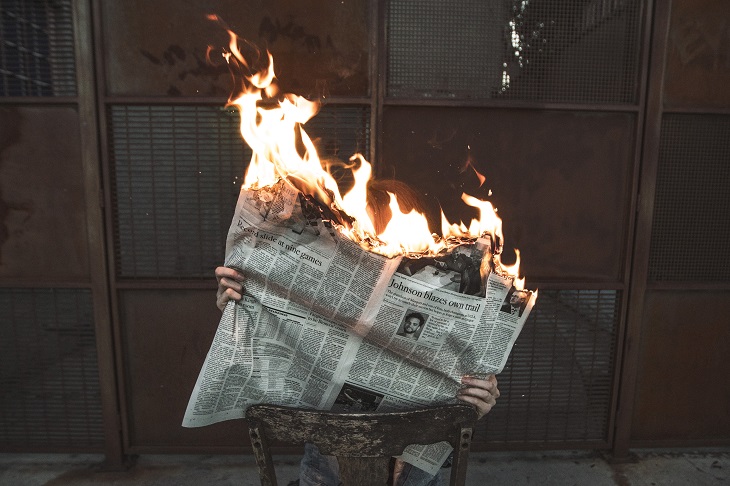
Public confidence in the media is now in free fall. Gallup’s latest survey shows that fewer than one in three Americans still believe the news is reported ‘fully, accurately, and fairly’. Australian figures are only marginally better, and Britain’s are worse. It is not just the tabloids that have lost credibility; the decline has engulfed the very institutions once trusted to define impartiality.
The Fourth Estate, long considered the independent pillar of democracy, has become a participant in politics rather than an observer of it. Journalism was meant to hold power to account, not to shape it. Yet much of the modern press now sees its role as moral instruction rather than reporting, guiding the public toward the ‘right’ opinions.
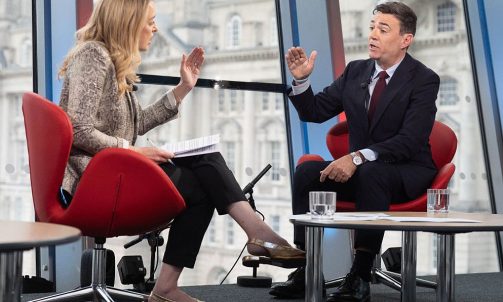
Two of the world’s best-known public broadcasters, the BBC and Australia’s ABC, stand at the centre of this crisis. Both were once admired for fairness and professionalism. Both now serve as symbols of a broader loss of neutrality.
The BBC’s coverage of Brexit and Donald Trump often read like advocacy, its tone confident, moral, and uniform. The ABC has drifted the same way, its news bulletins and current affairs panels now framed through a single progressive lens.
The problem is not malice; it is monoculture. Critics from inside both organisations have acknowledged that newsroom consensus has replaced curiosity. The BBC’s own editorial reviews have admitted a ‘groupthink’ problem. ABC insiders have described a culture in which dissent is quietly discouraged and ‘balance’ has become a dirty word. When everyone in the room thinks alike, neutrality feels like betrayal.
This is not an Australian or British anomaly. A survey of 39 major American newsrooms found that for every journalist identifying as conservative, more than ten identified as liberal or progressive. The imbalance does not guarantee dishonesty, but it all but guarantees homogeneity.
A profession that prides itself on diversity of background has forgotten diversity of thought.
The Fourth Estate’s strength has always been its independence. Edmund Burke used the phrase to describe the press as a power distinct from the others, free from the interests of the church, crown, and party. Its legitimacy depended on detachment. The journalist’s job was to ask, what happened, not what people should think about what happened.
That sense of detachment has been replaced by moral certainty. Newsrooms have become seminar rooms. Reporters no longer see themselves as chroniclers of events, but as actors in a moral drama, and the storylines are all the same: climate alarm, identity politics, and the constant policing of speech. The result is not enlightenment, it is fatigue. Audiences are tired of being lectured.
Rebalancing journalism will not come from another round of self-reflection or a new ‘trust project’. It begins with rediscovering curiosity before conviction, verification before virtue. Editors must actively recruit dissenters, not as token contrarians but as essential ballast. A newsroom without disagreement is not balanced; it is brittle.
Transparency must come next. Readers and viewers no longer accept the priestly command of ‘trust us’. They want to see how stories are built, which voices were included, and which were ignored. Publish corrections prominently. Label opinion pieces honestly. Disclose funding and affiliations. The public will forgive error, but not arrogance.
Journalism education must also change. Too many university programs teach the politics of grievance rather than the craft of inquiry. Students learn to ‘amplify marginalised voices’ and ‘speak truth to power,’ slogans that sound noble but assume knowledge of what the truth is and who the villains are. If the next generation is to regain credibility, it must study not just technology and narrative framing, but the intellectual lineage of the profession itself, from Burke and Scott to Orwell and Cronkite.
The business model needs courage as well. Outrage and moralising headlines deliver clicks, but they corrode authority. The quiet middle of the audience, people who think before they shout, still exists and hungers for sober, proportionate reporting. The growth of independent platforms, podcasts, and newsletters shows that the market for honest journalism remains strong.
Rebalancing journalism is not a left-right project, it is a truth project. The Fourth Estate’s authority comes from independence, not ideology. When journalists trade independence for belonging, they become what they were meant to resist, a branch of power.
The BBC and ABC can still recover their purpose. They must learn again to report, not instruct, to question, not correct. For decades, they were symbols of national cohesion, but trust will not return until they rediscover humility.
A century ago, CP Scott wrote that, ‘Comment is free, but facts are sacred.’ In an age of collapsing trust, that is not nostalgia; it is a survival plan. The future of the Fourth Estate depends on remembering which is which.