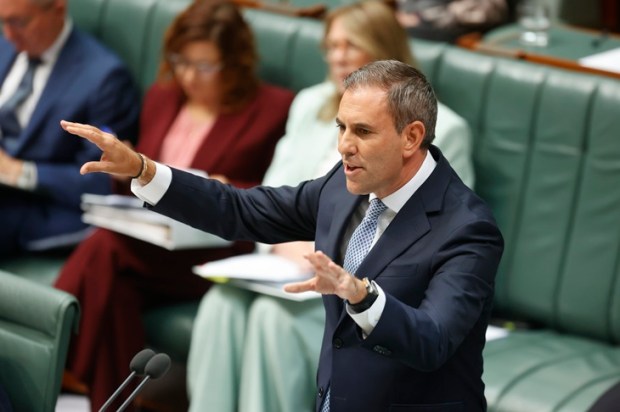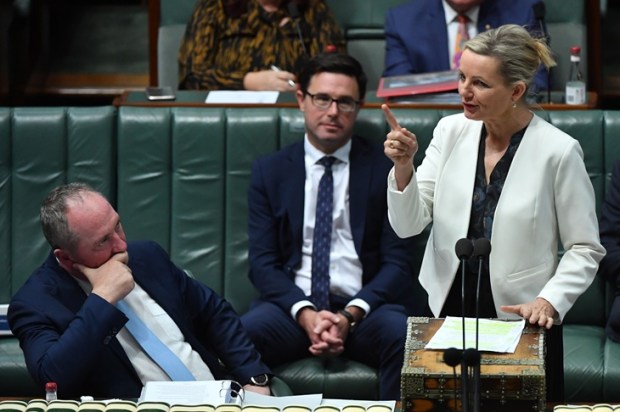

The Teals are learning a lesson from Australian political history. There’s no enduring electoral success for parties or groups positioning themselves to the left of the Liberals, even if they are well funded.
History is littered with well-intentioned ventures that tried and failed to carve out a viable space in that territory. The Australian Democrats, founded by ex-Liberal, Don Chipp, provide an important historical case study. And today, the so-called Teal independents offer a contemporary lesson, proving that even with deep pockets and initial momentum, a drift to the left leads to stagnation or worse.
Chipp, a former Liberal minister disillusioned with the major parties, broke away in 1977 to form the Australian Democrats. He won a Senate position at the 1977 election, and in 1980, his party’s memorable slogan became ‘keep the bastards honest’.
The Democrats began as a centrist outfit, appealing to voters tired of the Labor-Liberal duopoly but not ready for extremes. For a time, it worked, and they held the balance of power in the Senate through the 1980s and 1990s, influencing policy without ever threatening to govern.
But after Chipp retired in 1986, the party began its fateful shift to the left. Under leaders like Cheryl Kernot, who famously defected to Labor in 1997, and Natasha Stott Despoja, the Democrats embraced more progressive stances on issues like the environment and social policy, alienating their centrist base.
Internal chaos ensued, compounded by Meg Lees support for John Howard’s GST, which fractured the party further. By the early 2000s, membership plummeted, and electoral support evaporated. The Democrats lost their last Senate seats in 2007, and the party was officially deregistered in 2015. The slow death of the Democrats was complete.
The lesson? Veering left of the Liberals dilutes your appeal, invites infighting, and ultimately consigns you to irrelevance.
It appears that a contemporary case study is unfolding before our eyes. The Teals, so called because they originally purported to be Blue-Green Liberals, won traditionally safe Liberal seats in 2022.
Backed by extensive funding from groups like Climate 200, they raised millions and positioned themselves as moderate alternatives to a Coalition seen as drifting right. It was a clever play, exploiting the Liberals’ internal rifts and capturing seats like Kooyong, Curtin, and Wentworth.
But three years later, the Teals are showing signs of the same fatal flaw. Their leftward shift is eroding their edge. Initially marketed as pragmatic centrists, they’ve increasingly aligned with progressive causes, pushing hard on ambitious climate targets, social reforms, and critiques of conservative policies that echo Labor or the Greens more than the moderate Liberal tradition. This has left them vulnerable, especially as voters in affluent, traditionally blue-ribbon seats seek stability amid economic pressures.
Despite their funding war chest for the 2025 election, the Teals experienced no ‘sophomore surge’ and failed to expand beyond their 2022 gains. Outside of the ACT, the Teals are struggling to hold ground after Labor consolidated power with a commanding victory. They retained key seats, but with mixed results and no real growth, proving they’re no threat to become a sustained force.
Polling ahead of the vote showed support growing in some Coalition bases, but post-election analysis reveals a faltering momentum, with third-party attacks and voter fatigue chipping away at their novelty. Like the Democrats, the Teals’ leftward tilt has blurred their distinctiveness, turning them into just another voice in the progressive chorus rather than a genuine alternative.
Australian voters, it seems, crave a clear choice. Straddling or shifting left of the Liberals invites division and decline, as both the Democrats and Teals demonstrate.
Regrettably, the Liberals moving to the left of their traditional positions. Instead of trying to address the erroneous issues that birthed the Teals in the first place, they need to call out ‘climate action’ for the grifter’s paradise it has become. The Teals are becoming irrelevant because their issues are irrelevant. If only the Liberal Party could see it.
As for the Liberal Party, if they don’t learn that there’s no viable electoral real estate to their left, they’ll bleed even further to the right. They may not be on life support just yet, but anecdotally, the party is haemorrhaging donors, members, and supporters. It may already be too late.
The lesson we can take from the Democrats and the Teals is that history doesn’t lie. Indeed, history’s graveyard is littered with those who ignore it.
Dr Michael de Percy @FlaneurPolitiq is the Spectator Australia’s Canberra Press Gallery Correspondent. If you would like to support his writing, or read more of Michael, please visit his website.