Everyone has been preoccupied with television and the way in the wake of Covid we have seen the streamers (and YouTube) redefine the world. Before the pandemic some television had an automatic claim on everybody’s attention. The critic felt impelled to write about the new series of House of Cards with Kevin Spacey at his most sinister or the new batch of The Crown which Claire Foy had put her mark on with riveting regal splendour as well as Matt Smith as Prince Philip and Vanessa Kirby as Princess Margaret. These upper-level shows demanded detailed discussion in the analytical pages of the broadsheet newspapers just as the book pages a bit earlier made the literary critic read the new Harry Potter with a gun at his head – or Stephen Fry booming out.
The J.K. Rowling saga introduced a generation to the pleasures of reading. And this sense of higher forms of entertainment as necessary knowledge extended to the great Scandi crime serials like The Killing. All of which co-existed with a sense that we should honour Shakespeare and James Joyce and the Bible.
Now, however, we live in a world where upper-level television is so much ripe fruit in a Garden of Eden. The great shows – from Ricky Gervais on – are still there but the field is a compelling temptation. Think of Cate Blanchett and Tobi Smitt-McPhee in Disclaimer or the mesmerising quality of Baby Reindeer or Benedict Cumberbatch in Eric.
Think too of Adolescence and the way its brilliance preoccupied governments. It had such sweeping moral pertinence and it presented the spectacle of its horrors at an extraordinary level of art which made the Emmy to Owen Cooper absolutely appropriate.
Recently, we read a David Hare play The Moderate Soprano about the founding of the Glyndebourne opera house in the English countryside by an opera-loving Englishman who enlists the services of a group of German Jews.
Dame Jilly Cooper died the other week and the news of her death led to praise from Queen Camilla and from the British leader of the opposition Kemi Badenoch, both of whom seemed to have a healthy love of escapism. There was a TV streamer of Jilly Cooper’s Rivals with David Tennant as a very fruity villain and Alex Hassell as a nearly impossibly good-looking upper-class charmer – last glimpsed in 2015 as Prince Hal to the Falstaff of Antony Sher. If you turn to a later volume of the ongoing story, Score!, the Irish journalist (Aidan Turner) has written a biography of Yeats, and a production of Verdi’s Don Carlos is being mounted.
Jilly Cooper adored the opera and for anyone who wants to savour it that smouldering musical adaptation of Schiller’s neo-Shakespearean play is a delight. There is the darkness with streaks of flaming light, the great buddy aria between Carlos and Rodrigo, the glamour of Eboli, the melancholy of Philip II and the sinister and serpentine Grand Inquisitor. The Karajan studio version with José Carreras is startlingly dramatic.
Elijah Moshinsky directed a magnificent Don Carlos in 2015 and Opera Australia’s Melbourne season starts on 31 October with The Barber of Seville by the late wizard who would have made such an able head of the Opera.
In any case Jilly Cooper’s fictional dramatisation of a backstage world she is intoxicated by is an infectious delight. Meanwhile King Charles prays in the Sistine Chapel with the American-born Pope Leo XIV. The first English monarch to admit to a shared religious fealty since Henry VIII broke with Rome nearly five hundred years ago. We can only hope the presence of Michelangelo’s vision and the pope’s palpable goodness was a distraction from his much-favoured brother Andrew.
But the world is mediated to us through what we choose to watch, on whatever device. There are shows which are a delight however much they’re just entertainment. Is that true of The Twelve? Well, it’s hard to go past Sam Neill as a silk even though the first series with Kate Mulvany had the most winding and bewildering plot. If series two was not quite on par it did have the advantage of the formidably enchanting Frances O’Connor speaking the language of the law as if it were music, pillow talk notwithstanding. But series three was a real disappointment, despite the presence of actors like Sarah Pierce and William Zappa. Still, The Twelve tends to make us gulp down the individual episode rather than wait for them to build up.
That was true with bells on of Task (HBO Max) which is some kind of masterpiece. A group of guys in Halloween masks steal from drug dealers to get by. The head of this group, Tom Pelphrey is pledged to family: he’s a mensch and an actor of extraordinary power, capable of encompassing every conceivable mood and contradiction of subtlety.
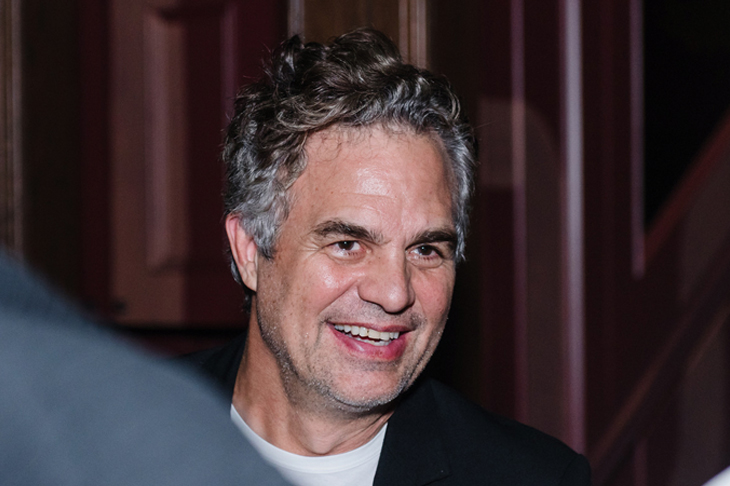
The setting is upstate New York, drenched in greenery, drenched in sorrow. At its centre is Mark Ruffalo, FBI agent and one-time priest, who hits the bottle and who for the longest time has not spoken to his jailed son who has killed his mother.
Task has an unearthly quality even though it encompasses breakneck action and extreme violence. It is in fact a weird kind of morality play in which the logic edges towards a nearly impossible contrition. Mark Ruffalo is clearly the actor who made that extraordinary film You Can Count on Me with Laura Linney that indicated he was an artist to place with Brando and De Niro, a ranking that was reinforced by his performance in Margaret.
There is a little boy who is looked after by a range of characters including Ruffalo and he is the subject of a difficult decision taken late. But Task is almost a romance in the Shakespearean sense. It is an absolutely compelling thriller about the difficulty of kindness and the power of grace.
But it’s too easy to say that Task has inconsistencies, it certainly does, but it is also a precipitous dramatisation of the necessity of love. It should be watched in the longest stretches of time you can manage. It is magnificently acted and directed and it has a fought-for wisdom which is uncanny in its power even if you quarrel with its contour.
It will bear comparison with any of the great television this year has brought and it testifies to an implicit parsing of the American Dream that is full of hope.
Got something to add? Join the discussion and comment below.
You might disagree with half of it, but you’ll enjoy reading all of it. Try your first month for free, then just $2 a week for the remainder of your first year.