Every few years, Australian politicians rediscover ‘tax reform’. It is a comforting phrase, soothing to voters and headline writers alike. ‘Reform’ sounds constructive: modern, even virtuous. Who could be against making things fairer, simpler, more efficient? Yet in practice, ‘tax reform’ in Australia has become little more than a euphemism for ‘tax increase’. Behind the rhetoric of sustainability, fairness and ‘intergenerational equity’ lies the simple truth that the Commonwealth government is already collecting record levels of revenue and desperately wants more.
The Budget Papers confirm that the Commonwealth’s revenues are at record highs, and measured as a share of GDP, the federal tax take is at its highest level in modern Australian history. Despite this, the public narrative from Canberra is that there is a ‘revenue problem’, that spending is sacrosanct, and that more tax must be levied to fund essential services, fix housing affordability, or balance intergenerational books. But when you are already at record highs, ‘reform’ cannot plausibly mean anything but taking a larger slice of the national pie.
Nowhere is this creeping fiscal avarice more visible than in the government’s posture toward superannuation. Once sold to Australians as a compact between generations, superannuation has become too large and too tempting for Treasury to resist. With near $4 trillion under management, superannuation represents a mountain of private capital whose very existence frustrates a political class and bureaucracy habituated to spending other people’s money.
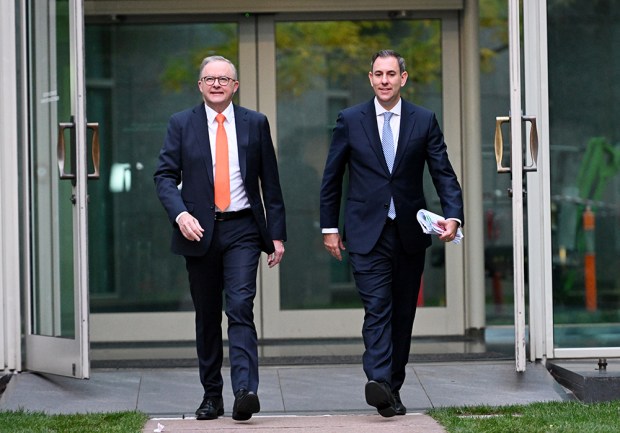
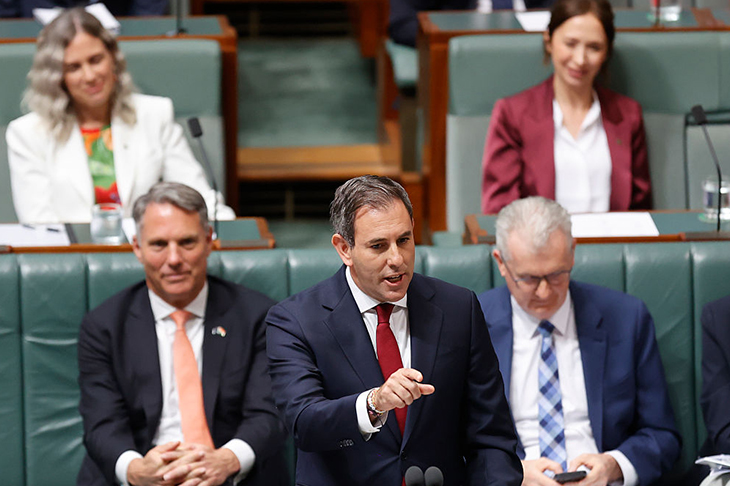
Earlier this week, Treasurer Chalmers staged what he presented as a modest backdown on his egregious proposal to tax so-called high balance superannuation balances. In reality, it was merely a tactical retreat, a lost skirmish in a much longer campaign. The direction of travel remains unmistakable: towards greater taxation of superannuation, and ultimately towards something far more radical, a de facto nationalisation of retirement savings, as Argentina demonstrated so disastrously in 2008.
That year, facing fiscal strain and the collapse of confidence in government bonds, the Peronist Argentinian government of Cristina Fernández de Kirchner confiscated the assets of private pension funds, essentially their version of superannuation, and folded them into the state’s coffers. It was justified, as such seizures always are, on grounds of equity, security, and public good. In practice, it destroyed investor confidence, gutted private retirement savings, and cemented Argentina’s reputation for economic mismanagement.
Australia is not Argentina. Yet. But the dynamic of an ever-growing government demanding an ever-growing share of the economic pie bears an uncomfortable resemblance.
Every time someone in government speaks about ‘closing loopholes’ or ‘improving fairness’ in superannuation, what they mean is expanding their take of other people’s savings. They are unsatisfied with the tax already levied when the money goes in (contributions tax), with the earnings taxed while invested (albeit at a concessional rate), and with the GST that bites when the money is finally spent. The hunger is insatiable. Every dollar quarantined in superannuation is, to government, a dollar not fully taxed.
Treasury officials and their political overlords like to frame their ambitions in the moral language of ‘intergenerational equity’. It sounds noble. Who does not care about fairness between young and old? But in practice, it has become the slogan under which the state advances a sustained assault on private wealth. One might charitably call it ‘Robin Hood economics’, except Robin Hood at least had the decency to steal from tax collectors rather than become one.
The logic runs like this: older Australians have accumulated too much wealth, younger Australians are struggling to enter the housing market, and therefore the government must ‘rebalance’ the system. That the economic issues faced by younger Australians are a consequence of high income taxes, inefficient government, and inordinate government spending is never considered. Under this framing, a lifetime of saving and prudence becomes evidence of inequity.
The government also likes to engage in rhetorical subterfuge by seeking to convince the public that superannuation concessions are a form of spending rather than foregone revenue. Thus, the debate is no longer about respecting private property; it is about whether the ‘spending’ is justified. It is a clever trick that converts private money into a public resource by semantic sleight of hand.
As superannuation funds grow, so also does the political pressure to redirect them toward ‘nation-building projects’ or ‘social investments’. Treasury whispers that such funds could help with housing affordability, climate transition, or infrastructure shortfalls. But the line between encouragement and compulsion is perilously thin. Today it is incentives for super funds to invest in affordable housing; tomorrow it is mandated asset allocations, and eventually, as Argentina proved, the state simply takes control outright.
The truth is that Australia’s problem is not too little tax but too much government. The Commonwealth spends more than ever, on more programs, with greater inefficiency, and with less restraint. Every time the political class hits a fiscal wall of its own making, it searches for new ‘reforms’ to plug the gap. And because superannuation is vast, visible, and vulnerable, it is the perfect target.
History offers a blunt warning. Argentina’s confiscation of pension assets was not born of malice but of desperation and rationalisation. Governments rarely admit to seizing wealth; they simply redefine ownership. Australia’s policymakers, convinced of their own benevolence, might follow a more genteel path – higher taxes, capped balances, tighter withdrawal rules – but the result is the same: an erosion of individual control in favour of bureaucratic command.
Tax reform should mean simplifying and lightening the load on citizens, not deepening their dependency on an ever-hungrier state. Yet Australia’s political vocabulary has inverted that meaning. Every new tax is sold as fairness, every expansion of government power as reform. Australians should resist this trickery before it becomes economic tragedy.
The lesson from history is unambiguous: governments that treat private wealth as public property eventually run out of both. Argentina’s pensioners learned this the hard way.
Australians still have time to avoid the same fate but only if they recognise that a government already collecting record revenue does not need reform. It needs restraint. And if politicians cannot muster that on their own, perhaps it is time voters provided some encouragement at the ballot box.
Got something to add? Join the discussion and comment below.
Dimitri Burshtein is a Senior Director at Eminence Advisory. Peter Swan AO is professor of finance at the UNSW-Sydney Business School.
You might disagree with half of it, but you’ll enjoy reading all of it. Try your first month for free, then just $2 a week for the remainder of your first year.