Proven by the 60/40 vote against the Indigenous Voice to Parliament, and the thousands recently marching around the nation proudly displaying the Australian flag, it’s obvious more and more people are fed up with Woke ideology undermining and belittling the nation’s British, Irish, Scottish, Welsh, and European heritage.
After being told again and again the First Fleet was an invasion leading to genocide, that the only true Australians are Aboriginal and Torres Strait Islander people, and that everyone else is a foreigner with no right to live here, the silent majority is saying enough is enough.
Especially in rural and regional Australia, unlike the nation’s cities dominated by Woke ideology preaching black-armband history and climate change alarmism, millions of Australians argue there is much to be proud and that it’s time to reclaim the past and the nation’s patrimony.
The history of the Riverina illustrates why there is much to celebrate. While Dark Emu mistakenly argues Aborigines cultivated the land by planting seeds, irrigating and harvesting crops, early explorers found the land uncultivated and unsettled.
As written by Patrick J Donohue in his book Squatting Runs of Wynyard County, soon after Charles Stuart traced the course of the Murrumbidgee River reports written at the time ‘revealed a continent of boundless rivers, valleys and plains, all seemingly unoccupied to their European eyes’.
Such was the fertility and promising nature of the land Donohue writes:
‘Men keen to secure the best country on which to depasture their growing herds and flocks, began to occupy the country without the legal requirement to do so.’
Despite the best efforts of Governor Darling, beginning in the late 1820s, squatters began to illegally occupy Crown Land and to develop a pastoral industry involving cattle and sheep that ensured the fledging colony’s prosperity and growth.
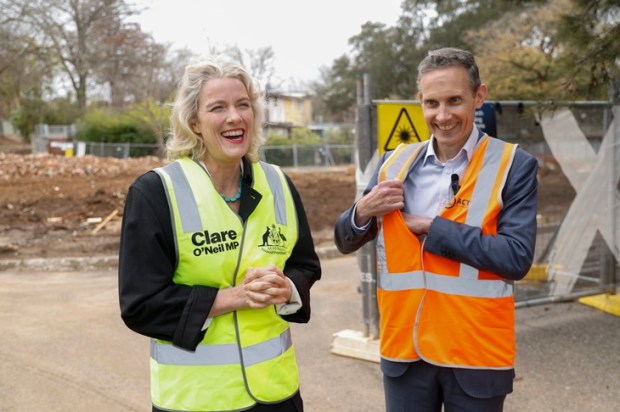
While Prime Minister Albanese’s speech given at the 2025 Bush Summit given in Wagga Wagga was poorly received by the local citizens, he was right to describe the city as having a ‘history of ambition and bold vision’.
Due to the hard work, perseverance, and success of early squatters and pastoralists beginning in the early 1830s including George Macleay, George Best, Charles Tompson, and John Donnelly the city of Wagga, proclaimed in 1849, became the centre of an ever-expanding and prosperous pastoral and agricultural industry.
As argued in the Australian Men of Mark published in 1888:
‘The Australian colonies will always owe a debt to the enterprising men who, in the face of the initial difficulties of such a gigantic and almost creative undertaking, first developed their resources to opening up the lands.’
While acknowledging those responsible for the colony’s prosperity and success is now considered politically incorrect, Men of Mark argues ‘it should not be forgotten to whom they (unborn generations) owe the fact that the space they will require lies ready for them’.
John Donnelly, for example, after travelling from Kings County in Ireland, settled in Gundaroo and then Borambola near the current city of Wagga. Such was Donnelly’s success the family eventually owned 1 million acres and John Donnelly donated 3,000 pounds to the Presentation Sisters.
The Borambola homestead still stands and the Mt Erin Convent, built on the land Donnelly donated, is now a boarding school. George Best, an ex-convict, also became a successful pastoralist and is the person responsible for the city’s name.
Due to the tenacity and courage of early explorers including Hamilton Hume, William Hovell, and Charles Stuart and the pastoralists who settled and cultivated the land beginning in the 1830s, Wagga is now a thriving regional hub vital to the nation’s health and prosperity.
Edmund Burke, the author of Reflections on the Revolution in France, argues the relationship between citizens and the society in which they live involves a partnership ‘between those who are living, those who are dead, and those who are yet to be born’.
Burke also argues, ‘People will not look forward to posterity, who never look backward to their ancestors.’ For far too long what the historian Geoffrey Blainey describes as a black armband view of history has dominated the school curriculum.
While the national curriculum prioritises Indigenous culture, history, and spirituality the nation’s British, Irish, Scottish, Welsh, and European heritage is belittled. After 12 years of schooling students leave school with a one-sided and jaundiced view of the nation’s past.
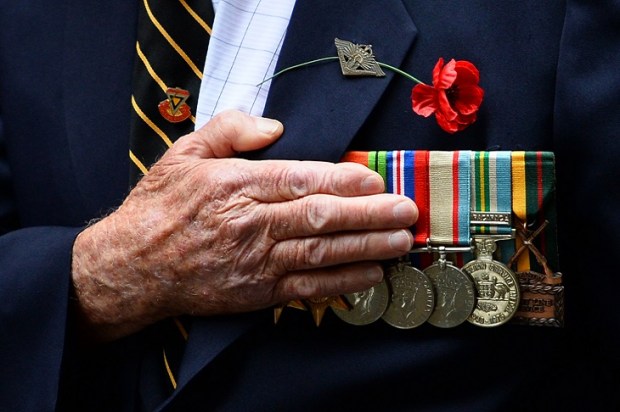
As more and more Australians are realising, it’s wrong for Woke activists to laud and prioritise Indigenous history and culture while belittling and ignoring Australia’s mainstream culture. It’s time to acknowledge and celebrate those responsible for creating such a free and prosperous nation. Let’s all salute the flag.
Dr Kevin Donnelly recently visited Wagga to talk at the Edmund Burke Society of the Riverina. Kevin is the author of Wake Up To Woke: It’s Time, Australia.