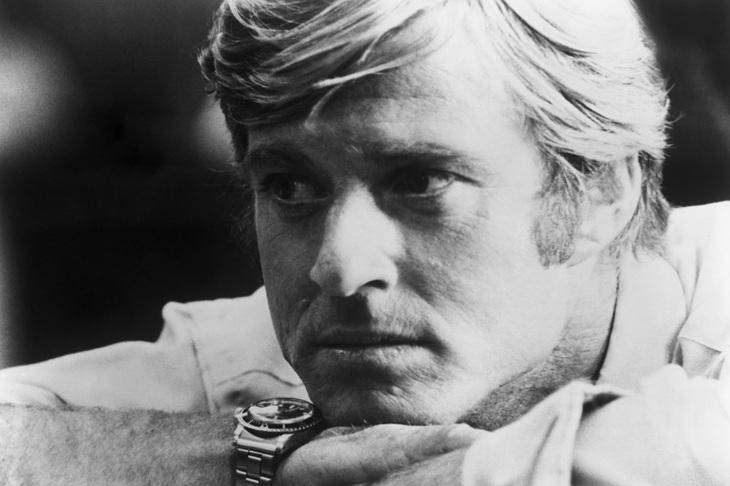
This week, Robert Redford, that golden-haired icon of American cinema, quietly slipped away at age 89, the same age my grandfather passed a few years ago.
Redford passed peacefully at his Sundance retreat in the Utah mountains. The man who embodied the rugged individualism of the West, played the heist, and soared through the skies on screen, now rests among the peaks he so fiercely protected. It’s a fitting end for a life that was anything but ordinary, a life that provided the soundtrack and scenery to my coming of age.
Born Charles Robert Redford Jr in 1936 in Santa Monica, he rose from a troubled youth – expelled from university, drifting through Europe as an aspiring painter – to become the epitome of cinematic charisma. But it wasn’t just his looks, and his charisma was never the in-your-face kind we witness these days. His was a quiet intensity, an understated gravitas that made him more than a star.
For me, growing up in the shadow of the silver screen during the 1970s and 80s, Redford’s films were more than entertainment. They were lessons in humility, heroism, intrigue, and the human spirit. Take The Sting (1973) (with that other great, Paul Newman), where Redford’s Johnny Hooker conned his way through Depression-era Chicago with a wink and a poker face.
I was fortunate that my parents took us to the drive-in frequently and I saw movies that today’s nanny state would have seen my parents arrested for child abuse. It’s stupid really, because seeing the movies of the early 1970s taught me that wit could trump brute force, that a well-laid plan could outfox the fat cats, that people weren’t always nice. And sometimes you can be old and great. These lessons served me well in the cutthroat worlds I have navigated since my youth.
Redford’s characters were all proper Spartans, calm under pressure and content with letting the results speak for themselves. Compare Redford’s portrayals with the cartoon characters of the movie 300 where they were all yelling and prancing about with their abs exposed. Neither Redford nor real Spartans would ever have behaved so crassly.
Then there was The Great Waldo Pepper (1975), Redford’s barnstorming classic about a daredevil aviator chasing glory in the skies after the Great War. As a boy dreaming of adventure beyond classroom drudgery, I saw in Waldo’s reckless defiance a mirror to my own youthful rebellions. Again, it wasn’t a screaming nutjob, but a steady hand pushing the limits.
Redford didn’t just play the part, he inhabited it, reminding us that sometimes, to touch the heavens, you have to risk the fall.
There were a few standout movies for me.
A Bridge Too Far (1977), that epic war saga where Redford’s Major Julian Cook led the charge across the Rhine in a doomed Allied push. Amid the star-studded cast, including Connery, Caine, Hopkins, and one of my most favourite actors and authors Dirk Bogarde, Redford stood out as the embodiment of stoic resolve, paddling through hellfire with a grim set jaw.
It echoed the sacrifices of a generation, and for a young Australian like me, it bridged the gap between history books and calm and heartfelt heroism.
Later came The Natural (1984), with Redford as Roy Hobbs, the baseball phenomenon felled by fate yet rising like a phoenix with that legendary home run. Mythic, and capturing the American dream’s fragility and triumph, I cling with some leftover hope that there is still some fight in this rapidly ageing dog!
And Out of Africa (1985), where Redford’s Denys Finch Hatton romanced Meryl Streep’s Karen Blixen under the Kenyan skies. Romantic and melancholic, it stirred in me a wanderlust for far-flung horizons, all wrapped in Redford’s effortless charm. When reading Karen Blixen’s book years later, it was impossible to imagine the character as anyone but Redford.
Beyond the screen, Redford founded the Sundance Institute in 1981, nurturing voices from Quentin Tarantino to Chloé Zhao. I didn’t care for his off-screen environmental antics, but I never wanted him to be political. Yet I don’t recall a particularly bad movie that came from his Sundance stable.
Redford faced tragedies that nobody would wish on their enemies. He lost his infant son Scott in 1959, and his son James to cancer in 2020. He leaves behind his wife Sibylle Szaggars, daughters Shauna and Amy, and a world I believe is brighter for his light.
So, farewell, Robert Redford. In the words of Waldo Pepper himself, ‘The last best place is in the sky.’ May you soar there along with my memories of your gentlemanly on-screen exploits. The next time raindrops keep falling on my head, I will remember you and my grandfather and hope that I shall live so long.
Dr Michael de Percy @FlaneurPolitiq is the Spectator Australia’s Canberra Press Gallery Correspondent. If you would like to support his writing, or read more of Michael, please visit his website