It is to Anglo-Irish statesman Edmund Burke that we attribute the saying:
‘Those that fail to learn from history are doomed to repeat it.’
In September 1985, John Howard replaced Andrew Peacock as leader of the Liberal Party. As Gerard Henderson recounts in his book, Santamaria: A Most Unusual Man, in his weekly column in the Australian at the time, BA Santamaria wrote his hope that Howard would set himself against the ‘trendiness that recent leaders have substituted for traditional values … the trendyism which has transformed the Liberal Party into a vague, bloodless, and ineffective replica of Labor’.
He could have been writing that today.
As the last federal election clearly demonstrated, being a vague, bloodless replica of the Labor Party is not a winning philosophy.
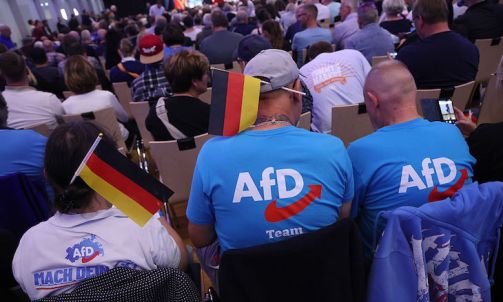
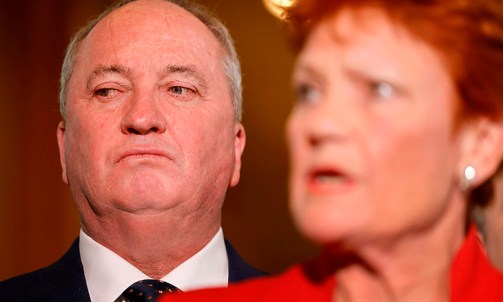
The Liberals did not bleed votes to the left, but to One Nation, which received one million primary votes in the House of Representatives.
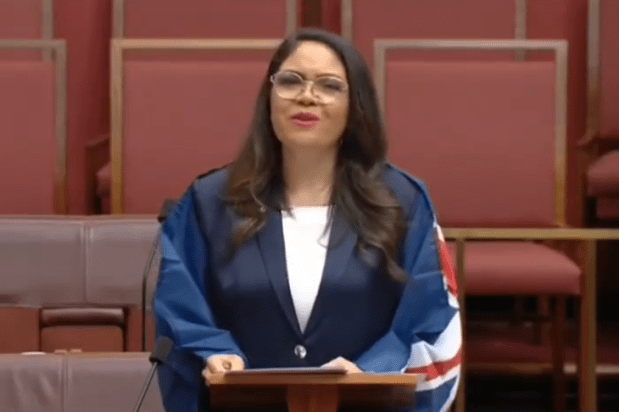
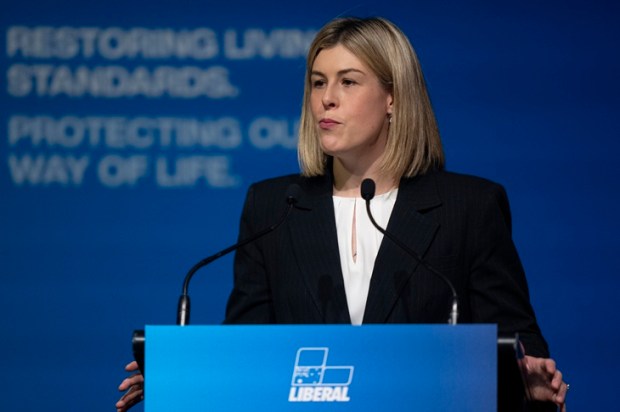
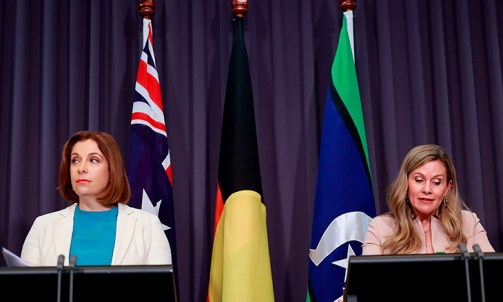
The events of the last week, culminating in Senator Jacinta Nampijinpa Price’s sacking from the shadow ministry, could have a silver lining in that they may just finally see the Liberals have the policy debates that will see them adopt the opposite positions of the Albanese government.
Senator Price, now with the freedom that being a backbencher allows, will contribute undoubtedly in no small way to these debates.
The role of an opposition is to represent alternative views to the voters with policy differentiation, so they can see the opposition as a viable government in waiting.
If voters no longer believe there is a contest of ideas, their disengagement will only grow.
Hence, despite Albanese Labor government presiding over fiscal recklessness – debt will exceed $1 trillion for the first time within months; an ideological obsession with weather-dependent energy has condemned businesses, industry, and households to crippling costs and unreliable supplies; a record immigration rate that has added to pressures on housing, infrastructure, and services, not to mention social cohesion; among other things, it has a large majority in the Parliament and is flying high in the polls.
Adopting the opposite of these positions by the Liberal Party will mean dispensing with the ‘moderate’ and ‘small-l liberal’ approach – that is, the Labor-lite approach.
In other words, it will have to engage in the contest of ideas, not a popularity contest.
The ‘moderates’, of which Sussan Ley is a member, will argue that Labor, the Greens, and the Teals won the last election because they supported Net Zero, so the Liberals should too. This overlooks the crucial fact that the Coalition also took Net Zero to the election, thereby providing no alternative to the electorate.
In 1989, the Liberals replaced Howard with Andrew Peacock, thinking Peacock was ‘more popular’ than Howard – and they still lost.
Once John Howard returned to the Liberal leadership in 1995, his deputy, Peter Costello, stated that just because some commentators were advising you what to do does not mean that they would vote for you.
The are wise words that the Liberals would be advised to heed. The ABC and its ever-diminishing viewing and listening share are all too ready to dispense ‘free advice to the Liberals’ on what to do.
And with the ‘moderates’ all too willing to take that advice, the Liberals move further toward irrelevance.
The path to electoral success for the Coalition depends on good policy strongly proclaimed. How else could Howard and Costello have convinced the electorate that the once toxic GST, which was rejected by the voters in 1993, was necessary for Australia only five short years afterwards?
Ergo, unless, for example, the Coalition makes the arguments against Net Zero in a strong and consistent manner, explaining the costs, practical impossibility and lack of environmental benefit, it cannot expect the electorate to come with it.
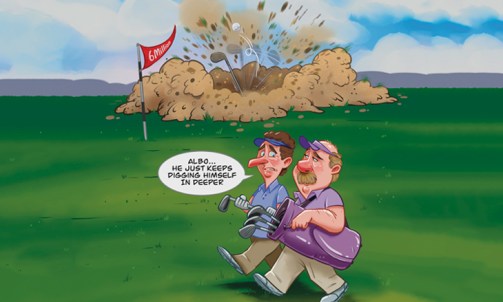
While the Liberals are focused on internal personality clashes while trying to work out who is ‘more trendy’ or ‘more popular’, that is, a vague, bloodless and ineffective replica of Labor, they don’t have the awareness to nail the government on so many contentious issues, thus abdicating their duty as an effective opposition, which, at this time in domestic and international uncertainty, is arguably more necessary than ever.