Former American Supreme Court Chief Justice John Marshall once wrote that, ‘The power to tax involves the power to destroy.’ Nowhere is this more obvious than in Australia’s tobacco policy, where successive Commonwealth governments have squandered a multi-billion-dollar revenue stream, enriched organised crime, and punished addicts all while congratulating themselves on their brilliance. It is public policy vandalism disguised as virtue.
The arithmetic tells the story. Tobacco excise revenue peaked at $16.3 billion in 2020. Then came the plunge: $14.2 billion in 2021, $12.6 billion in 2022, and this year, a projected $7 billion. And this collapse occurred not during population decline, but amid one of the fastest periods of population growth in decades. Only in Canberra could this puzzle seem unfathomable.
The explanation is painfully simple. By ignoring the reality of the Laffer curve effect, Canberra convinced itself that ever-higher excise rates would mean ever-higher revenue. It is economic illiteracy dressed up as policy. The fiasco is a textbook demonstration of the Laffer curve in action: raise rates beyond a certain point and revenue doesn’t rise – it implodes. Government thought it was squeezing smokers; in truth, it squeezed the legal market out of existence. The result was a windfall for organised crime, which now pockets the margin, while Treasury bleeds and the deficit balloons.
A packet of cigarettes now carries $30 in tax. That decision handed the market to criminal gangs running a booming black trade. In most cities, ask a corner shop for ‘the cheap ones’ and you’ll be shown a list offering a pack for $13 to $18 – about a third of the legal price. Real brands, such as Manchester, come in normal packaging – just without the Treasury tithe or the horrendous imagery.
Tobacco excise is among the most regressive taxes imaginable. It doesn’t gently nudge people to quit; it hammers the addicted poor while leaving wealthier professionals free to moralise about public health. The policy has not only failed in its stated aim, but it has also turbocharged organised crime and made smoking both cheaper and more dangerous for those least able to bear the cost.
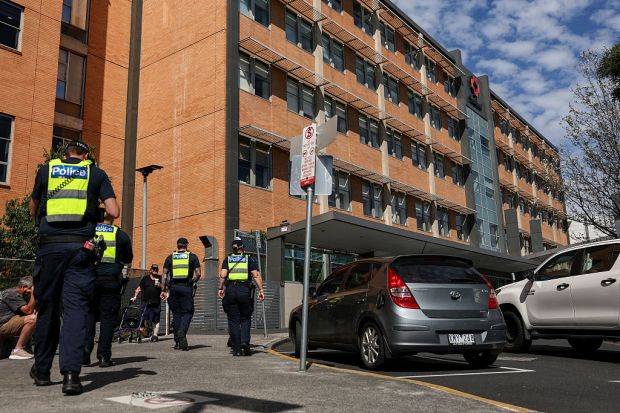
This isn’t a victimless problem. In Victoria, more than one hundred shops have been fire-bombed in the past year as gangs fight for control of territory. Authorities estimate there are around 1,000 outlets across the state selling illegal tobacco and vapes.
Australia has imported the worst of Prohibition-era America, except instead of mobsters in pinstripes brandishing Tommy guns, we have suburban standover men torching corner stores and worse. Gangland murders are a regular occurrence in Sydney.
The Australian Criminal Intelligence Commission and Australian Border Force warn that the illicit tobacco market is a ‘low-risk, high-reward’ revenue stream for organised crime, with proceeds capable of financing broader criminal enterprises from drug trafficking to terrorism. Just this month, Asio revealed that Iran’s Islamic Revolutionary Guard Corps orchestrated antisemitic arson attacks in Melbourne and Sydney through local intermediaries. One alleged facilitator was Kazem Hamad, a former tobacco smuggler now in Dubai.
A tax designed to promote ‘public health’ has not only funded fire-bombings and turf wars, but potentially even foreign-backed subversion on Australian soil.
And what is the official response to this predictable disaster? To double down. The 2024 budget announced another three years of five-per-cent annual excise hikes, supposedly to raise $3.3 billion. That’s right: after watching revenue collapse because the tax was too high, government’s solution was to make it higher still. If the definition of insanity is doing the same thing while expecting a different result, our fiscal guardians need urgent psychiatric care.
But tobacco tax isn’t just bungled health and tax policy. It highlights the deeper rot in Australia’s broken fiscal federalism. Once, excises were set by the states, and competition restrained excess. If Queensland hiked taxes too high, smokers could simply cross into New South Wales. That changed under the Howard government, when excise was centralised in Canberra. Coupled with the GST, the Commonwealth now collects more than 82 per cent of all tax revenue in Australia, leaving the states as supplicants with begging bowls. The feds gorge on revenue, while the states bear the costs – gang violence, unproductive policing and clogged courts.
The same Commonwealth to State/Territory policy asymmetry is visible elsewhere. Record immigration delivers the Commonwealth a flood of income tax while states are left scrambling to fund schools, hospitals and infrastructure. Tobacco is simply the most spectacular illustration. It should give pause before any further effort to neuter state taxing powers, whether through abolishing payroll tax or swapping stamp duty for a Commonwealth-administered land tax.
The truth is obvious: the only way to undercut the black market is to cut the tax – as happened when Prohibition was repealed in the US. NSW Premier Chris Minns suggested as much, arguing for a reduction to starve gangs of profit. Canberra dismissed the idea instantly – not because it was wrong, but because it meant admitting failure, something no federal treasurer seems capable of doing.
This is what happens when governments chase optics over outcomes. A regressive tax is pushed beyond sustainability, collapsing its own revenue base, fuelling organised crime, enriching international syndicates, and shifting costs onto the states. Instead of admitting error, Canberra doubles down.
Treasury could cut excise tomorrow and watch revenue rebound. The move could even be spun politically: a ‘targeted anti-crime initiative’ to protect small business and reduce community harm. Wrap it in the usual sanctimony about ‘community safety’ and no one would blink. But to cut a tax is anathematic to Canberra. If they cut tobacco excise, God forbid, they might be asked to cut other taxes too.
Canberra has turned Justice Marshall’s dictum into farce. The power to tax has not destroyed tobacco use, but it has destroyed lawful trade, public revenue and community safety. A tax intended to save lives now bankrolls arsonists and international syndicates. The lesson is obvious and urgent: when policy collides with reality, it is reality that wins. The only question is how long our political and policy leaders will go on pretending otherwise, and how much more revenue they are prepared to burn while subsidising organised crime before admitting they were wrong.
Got something to add? Join the discussion and comment below.
Dimitri Burshtein is a principal at Eminence Advisory. Peter Swan AO is professor of finance at the UNSW-Sydney Business School.
You might disagree with half of it, but you’ll enjoy reading all of it. Try your first month for free, then just $2 a week for the remainder of your first year.