Last month I convened what I dubbed a real productivity roundtable alongside the government’s fake attempt. After our summit, I reflected that I should have called it a ‘True Blue’ summit because like John Williamson’s eponymous song we gave it to Australians ‘straight’ and did so ‘face to face’.
Unlike the government’s secret discussions with the nation’s elite, our discussions were broadcast online and on TV. Almost 100,000 people have watched the replay that is available on YouTube.
The government’s hand-picked group, representing the big banks, big businesses and big unions, have led Australians to suffer the worst decline in living standards in the developed world. They have ‘sold us out like sponge cake’.
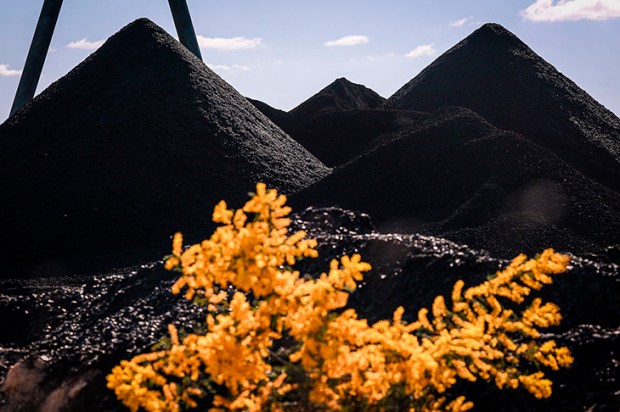
A royal commission found our banks were forging pensioners’ signatures and charging fees to dead people. Their response has been to appoint themselves our moral guardians and capriciously deny finance to all sorts of legal businesses from coal mining, gas production and even farming all in the name of being ‘ethical’.
The Treasury advised Josh Frydenberg to spend more money at the end of Covid to get unemployment to four per cent. Since Covid, federal government spending has increased by $30,000 per Australian household. Yet the principal authors of this economic catastrophe are now advising us on ‘budget sustainability’.
The Reserve Bank missed the post-Covid inflation breakout and thousands of Australians suffered after believing their advice that interest rates would stay low.
The Productivity Commission first recommended the now out-of-control National Disability Insurance Scheme. They said it would cost $14 billion annually. This year the NDIS will cost $50 billion.
The government’s economic roundtable has been like asking the builders of the Titanic to design the next QEII.
What has leaked from their discussions demonstrates that no lessons have been learned.
The Productivity Commission recommends a carbon tax as the answer. But they admit that going green comes at the cost of a ‘premium’. So their argument for a new tax is not that it will lead to a renewed increase in living standards. Instead, a carbon tax would lower our living standards by less than the morass of climate regulations and charges that have become bigger than the private jets that transport attendees to a climate conference.
Should we really accept that the best Australia can hope for is a less bad economic decline?
Meanwhile, the elected government seems convinced that bearing these costs is worth it because they alone can stop bushfires, floods and cyclones. This is understandable because the Prime Minister seems convinced that he can deliver Middle East peace so changing the temperature of the globe should be a doddle in comparison.
To add to the measures that extend further than our reach, the unproductive productivity summit wasted hours talking about artificial intelligence. Whatever the merits of AI, I am not confident that Jim Chalmers has the power to hasten its development. No business needs a government department to help them contract with Microsoft to use Copilot.
In any case, I remain a sceptic. A report out last month from MIT found that American businesses have spent over $35 billion adopting AI and 95 per cent of businesses have nothing to show for it. We could find that AI ends up harming productivity if, as is the normal practice, massive IT spends based on the latest fad end up providing paltry returns.
This was a major point made at the True Blue productivity summit. We have forgotten the lesson that it’s the quality of investment, not the size of the investment, that matters for the betterment of people’s lives. Too many politicians are convinced that investing, say, $14 billion in hydrogen is a benefit in and of itself. If those investments do not generate returns – like hydrogen has not – then they are not only a waste, they impose a burden on future generations to pay back this wasteful spending.
Such basic economic truths are lost in the grammatical gymnastics that now substitute for economic analysis. When they say that renewable energy is the cheapest form of power what they actually mean is that we forecast that it will be in 2030.
Modern-day energy economists sound like a shape-shifting Bill Clinton, ‘it depends on what the meaning of the word “is” is’. For them ‘is’ means something that will happen in five years time.
No wonder such woolly analysis is leading to such woolly results. As the former chairman of the Productivity Commission said at our summit, ‘Abundant low-cost energy has traditionally played an important role in offsetting the detrimental impact on industry performance of Australia’s rigid, high-cost labour market.’ In simple terms if we want high wages we must have cheap energy.
As Aidan Morrison, an energy analyst a the Centre of Independent Studies, told our room, the costs of renewable energy with firming look like approaching $200 per megawatt hour. That is about four times what wholesale electricity cost before we started force-feeding renewable electricity into our grid.
Earlier in the week the CEO of BlueScope steel, Mark Vassella, had said that Australia’s electricity costs are three to four times what they pay in the United States.
Over at the fake productivity summit there was not even a mention of energy prices in the productivity paper prepared for the talks. The biggest decline in productivity in any sector of our economy over the past two decades has been in electricity, gas, water and waste services. The government is waving the white flag on energy policy and asking us just to suck up some of the highest power prices in the world.
But Australians should not have to cop mediocrity. Our land is one of ‘plains extended’. Australia should be a land of plenty. But as the former assistant secretary of the Treasury, David Pearl, said, ‘You ration emissions, you ration growth’.
Australia can return to an era of economic vitality. We just have to make the tough, hard decisions to make the use of our resources and get rid of net zero.
We are the lucky country but in the long run we have to make our own luck.
We should dream of greatness and not settle for the dormant idea of net zero.
Got something to add? Join the discussion and comment below.
You might disagree with half of it, but you’ll enjoy reading all of it. Try your first month for free, then just $2 a week for the remainder of your first year.