Of all the chemical additives commonly found in the human diet – Fluoride is currently one of the most polarising, misunderstood, and controversial.
Depending on dosage, fluoride intake has both positive and negative impacts on our health. Depending on location, water fluoridation is either mandated or banned by either federal, state, or local government. And depending on who you talk to, fluoride should be added or removed from our drinking water supply. Depending on what you read, fluoridated water is ‘one of the ten greatest public health achievements’ of the 20th Century, or ‘industrial waste’ allegedly associated with arthritis, bone fractures, IQ loss, neurodevelopmental disorders, and thyroid disease.
Considered a preventative medicine, fluoride’s primary purpose is to reduce tooth decay and disease (known as the dental term ‘caries’) within a country, state, or regional population.
Most of us have a limited understanding of the reason behind water fluoridation, and if asked, would respond with something like: ‘It’s good for me teef!’ [insert toothy grin]. Many support this form of ‘mass preventative medication’, while some have dived down the bottomless fluoride rabbit-hole, finding a myriad of claims, concerns, and questionable theories. Many more are impartial, or don’t care – we simply drink up, and ‘take our medicine’.
So, What is Fluoride?
A naturally occurring mineral found practically everywhere (soil, rocks, food, plants, animals, rivers, oceans, air), fluoride can be found naturally at varying levels, present in the drinking water supply for communities who rely on bores and wells. It has also been intentionally added (most commonly in the form of sodium fluoride (NaF) or hydrofluorosilicic acid) to municipal drinking water supplies all over the world. This is called ‘water fluoridation’ and occurs naturally in water sources or is added artificially to municipal water supplies.
While there is no direct official threshold of fluoride content in water at which it can be defined as ‘fluoridated’ – the World Health Organisation’s (WHO) 2022 Fact Sheet on Fluoride states that the minimum concentration required to provide protection is approximately 0.5mg/L, and that ‘the protective effects of fluoride increase with concentration up to about 2 mg/L’.
Water Fluoridation Globally
Water fluoridation was first conducted as a study for the first time in history in 1945, Michigan, USA. Australia followed suit by 1953, starting with Beaconsfield Tasmania, then Yass, NSW in 1956. Since then, most major Australian cities have had fluoridated water since the 1970s.
Surprisingly, fluoridated water is available (from both naturally occurring and artificially fluoridated sources) for approximately 425 million people worldwide – only 5.18 per cent of global population. Although fluoridated water is available to such a small number of the global population, 89 per cent of Australians have access to fluoridated water, 56 per cent in New Zealand, 63 per cent in the USA, and only 10 per cent in the UK.
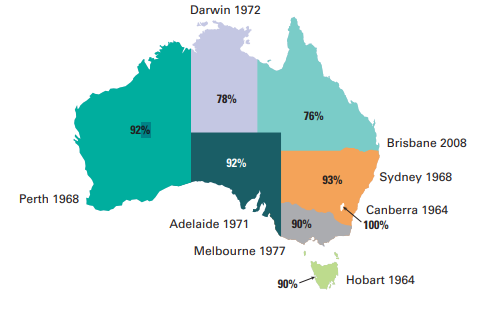
Percentage of Australian population with access to fluoridated water as at February 2017 – NHMRC Q&A Report, 2017
Isn’t Fluoridated Water Good for Us?
Fluoride has both good and bad effects on our bodies, but the margin for error between is slim.
The Good
According to the National Health and Medical Research Council (NHMRC) – Fluoride reduces dental decay by 26-44 per cent in children and 27 per cent in adults. Fluoride delays demineralisation and enhances remineralisation of the enamel on our teeth. Fluoridated water stays good for us, so long as its concentration is below threshold range of 1.5mg/L. This is good news, particularly as the most recent data shows Australia spent $11.1 billion on dental services in 2021-22.
The Not So Good
Water with fluoride levels above the 1.5mg/L threshold are suspected to pose several concerns to many, including dental and skeletal fluorosis, increased risk of bone fractures, plus negative effects on the thyroid system and reproductive system. The main issue is exceeding recommended daily intakes of fluoride, which differs between age brackets.
The WHO’s 2022 Fact Sheet on Fluoride states: ‘Fluoride can also have an adverse effect on tooth enamel and may give rise to mild dental fluorosis (prevalence: 12-33 per cent) at drinking-water concentrations between 0.9 and 1.2 mg/l depending on drinking water intake and exposure to fluoride from other sources.’ Which may be mildly concerning to some, given the 1.5mg/L recommendation from the WHO, and current concentrations in Australian water supplies.
More recently, the US government’s National Toxicology Program (NTP) conducted a study and concluded that water with fluoride levels >1.5mg/L has been potentially associated with a lower IQ in children. This was used in the class action lawsuit against the US Environmental Protection Agency (EPA), more on this later.
Lawsuits from Both Ends of the Spectrum
Quite ironically in 2024, fluoride was the subject of two major class-action lawsuits in the USA.
One lawsuit was against the EPA for adding fluoride to the water supply (the court handed down a decision in late 2024 that the EPA must provide a regulatory response to the ‘unreasonable risk’ associated with harms from fluoridated water).
The other lawsuit was against the City of Buffalo, New York for failing to add fluoride (the claim was that the City violated its citizens constitutional rights to a healthy environment by ‘depriving Buffalo’s residents of therapeutic fluoridated drinking water’.
Isn’t Water Fluoridation Recommended by Everyone?
Water fluoridation is recommended by the WHO, NHMRC, Australian Medical Association (AMA), and the Australian Dental Association (ADA). The US Centre of Disease Control (CDC) currently supports water fluoridation in their health policy, however recent announcements suggest this will likely be paused while investigations into safety are conducted with the EPA and the Department of Human Health Services (HHS).
Fluoride Legislation – A Confusing Mix of Governments, Mandates, and Prohibitions
Water fluoridation is mandatory at a nationwide level in Ireland. In New Zealand, nationwide water fluoridation is not mandatory, but may be required if directed by the federal Health Minister.
Countries such as Australia, the UK, and the USA either mandate or ban fluoride through State Legislation, depending on the state.
Take Queensland, for example, whose public health policy on the matter has been dubbed a ‘political headache’. The QLD government, via the Water Fluoridation Act 2008 Section 7 (1) and (3) – delegated decision-making power to Local Governments (LGAs), giving them the ability to add or forgo water fluoridation. As of Feb 2025, QLD Health data shows that while 72 per cent of the QLD population receive fluoridated drinking water, a staggering 53 out of 75 local government areas (LGAs) do not.
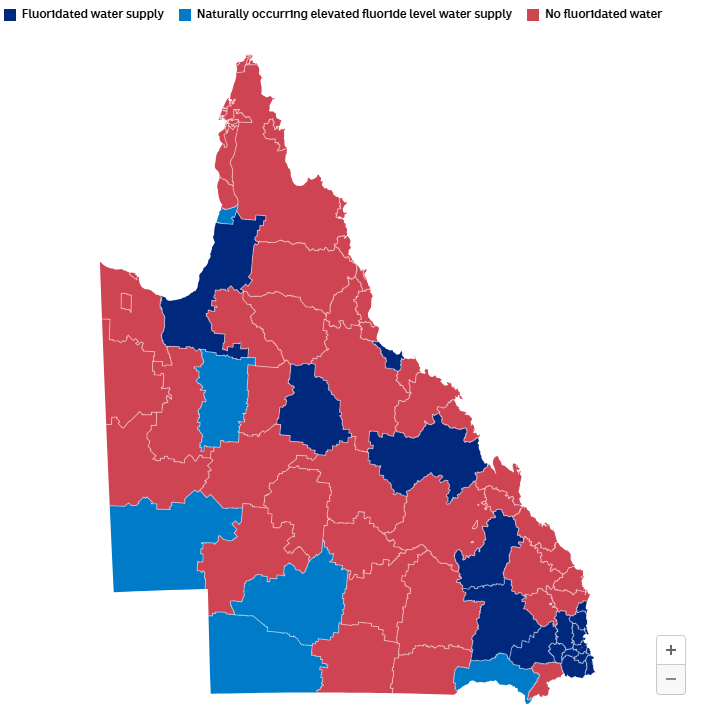
Article, ABC News, 2023 – “Over 90 per cent of Australians have fluoridated water, but the public health policy has become a political headache in Queensland”.
Meanwhile in the USA, water fluoridation is now prohibited in the states of Florida and Utah, and the US Health Secretary has announced plans to direct the Centre for Disease Control (CDC) to cease recommending water fluoridation. It is thought that this bill will prompt other US states, and potentially other water utilities around the world to follow suit.
A 2018 report from Dublin City University found that other countries, such as Finland, Germany, the Netherlands, and Switzerland previously practised water fluoridation, but later ceased the activity. The same report showed that many other countries including Austria, Denmark, France, Greece, Italy, and Norway have never practised water fluoridation to begin with. In the report, each country gave various reasons, the most common being that alternative sources of fluoride are readily available elsewhere, and concerns over violation of personal rights. Health concerns over fluoride were the least reported reason.
Water fluoridation is determined by various acts and regulations in each Australian State (except South Australia, which has no such act!). Each policy is set out in the table below from the Australian Drinking Water Guidelines (2011)
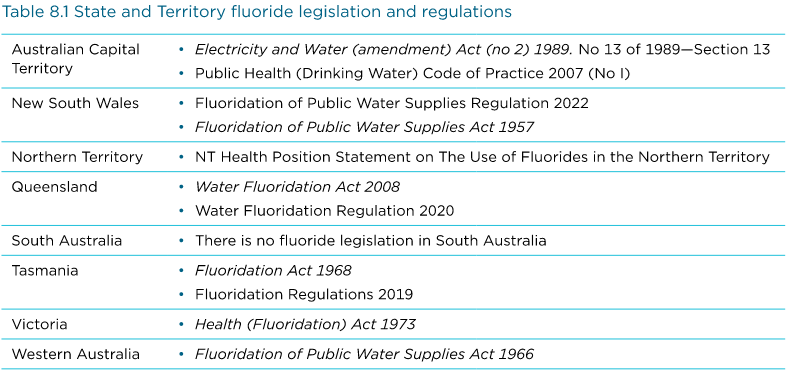
Fluoride Legislation in Australian states and Territories – Australian Drinking Water Guidelines, 2011
Recommended Daily Intake for Fluoride
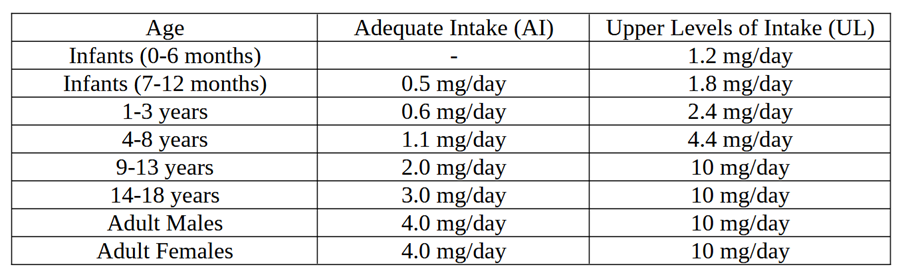
According to Dietary Intake Guidelines from the NHMRC, the recommended adequate intake (AI – A medical term for adequate intake per day) and upper level of intake (UL – A medical term describing the highest daily level of nutrient intake before the risk of adverse health effects increases) is as follows:
Recommendations for Fluoridated Water
The World Health Organisation (WHO) and Australian Drinking Water Guidelines (ADWG) advise that drinking water should not contain fluoride exceeding 1.5mg/L, with the ADWG further recommending dosage between 0.6 – 1.1mg/L The lower dosage in this range applies to areas with a hotter climate, which would naturally have a higher average consumption of water.
Fluoride in Our Diet
Fluoride is ingested from food, water, fluoridated and unfluoridated water, fluoridated toothpaste, and some supplements. In food, higher concentrations are found in ultra-processed foods, fruit juice, chicken, and rice. The highest levels of fluoride are found in non-herbal tea (standard black or green tea – tea plants absorb high levels of fluoride and other toxins from soil).
Am I getting too much fluoride?
Realistically, as an adult – no. Using the NHMRC recommended intake limits for an adult of 4mg/day AI,10mg/day UL, and average fluoride levels in Sydney of 1mg/L as of 26.8.2025 – it is feasible that the average adult exceeds the recommended adequate intake (AI) levels, while falling safely beneath the upper levels (UL) of intake. This is of course dependent on body weight, type of toothpaste used, diet, water intake, and so on.
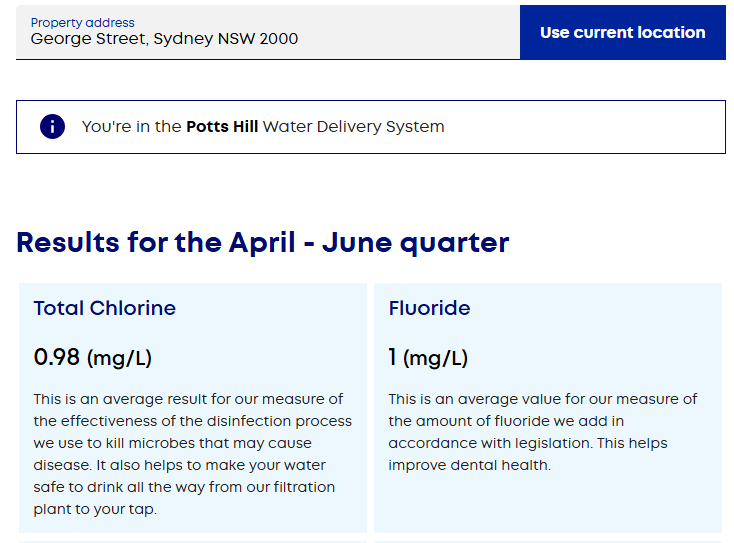
Figure: Sydney Water Analysis, George St Sydney (taken 26.8.2025)
Am I getting too much fluoride?
Regarding children, the answer is a little less than certain. For example, using the NHMRC recommended intake limits for a child of 1.1mg/day AI, 4.4mg/day UL – it is probable that the average 8-year-old exceeds the recommended adequate intake (AI) levels, and possible they exceed upper levels (UL) of intake. Particularly if the child is active and drinks a lot of water, uses fluoridated toothpaste, eats foods that contain higher levels of fluoride, and has an inclination for tea (for sophisticated children).
How Can I Add Fluoride to My Diet?
If you live in an area with unfluoridated water, or no mains-supplied water (bore water, rainwater, etc) it is possible to add fluoride in several ways.
- Use fluoridated toothpaste
- Eat foods with higher levels of fluoride. In some parts of the world, fluoride is added to table salt (Switzerland) and milk (Thailand, Chile). This is not the case in Australia, so drink lots of standard black or green tea!
Fluoride Supplements and Additives
Fluoride tablets and supplements are no longer recommended or readily available in Australia as an alternative. Should only be used after professional medical advice.
Fluoride tablets for water tanks are not recommended as it can be difficult to maintain safe dosage.
How Can I Remove Fluoride from My Diet?
You can lower your fluoride intake by using a low, or non-fluoridated toothpaste (this is recommended for children). Substituting standard black or green tea for herbal tea is another way to reduce dietary fluoride intake.
Water Filters
It should be noted that not all filters remove fluoride from tap water. The most effective way to remove fluoride from drinking water is by reverse osmosis, distillation, or activated alumina. There are many under-sink and whole-of-house filters currently on the market, that reduce or remove fluoride, but be aware of which ones to buy.
What Should I Make From All of This?
It is becoming increasingly difficult to navigate the online world of opposing information regarding controversial topics such as fluoridated water. So, to take a balanced approach, I suggest the following as food for thought.
Refocus the Debate
The debate should not necessarily be centred on whether fluoride provides dental health benefits – it does. Rather, the question should be asked whether fluoridated water still provides as much benefit in modern society, Fluoridated water was exceedingly beneficial in earlier societies before there was access to dental care, dental hygiene education, and fluoridated toothpaste. Today;
- Access to dental care is seemingly abundant (The Australian Institute of Health and Welfare (AIHW) most recently estimate that there are 26,200 registered dental practitioners in Australia in 2022). For lower socioeconomic localities and communities, a more targeted investment in providing access to dental care may be more suitable.
- Access to dental hygiene education is abundant, with vast amounts of resources and material provided by NHMRC, ADA, State and Territory Health Departments (such as NSW Health),
- The modern diet has more fluoride in it, and the modern dental care routine includes using fluoridated toothpaste (for adults).
What About the Children?
As the professional health community recommends much lower adequate intake (AI) and upper intake (UI) levels, are we overexposing children to fluoride by adding it to our water. Particularly in light of the recent claims from the National Toxicology Program (NTP) regarding IQ and fluoridated water in excess of 1.5mg/L.
Shouldn’t the Dental Health Outcomes be Easily Verifiable by Country?
For countries who currently do not fluoridate their drinking water, shouldn’t their dental health outcomes be far worse than those whose countries do?
Do Austrians, Germans, the French, Italians, the Swiss, and the British… (oh wait, never mind the Brits…) have much poorer dental outcomes than Australians?
Are We Getting Enough Fluoride Elsewhere?
The NHMRC recommends adequate intake (AI) for fluoride at 4mg/day. Are we getting this elsewhere? In our diet and toothpaste? Do we need fluoridated water to achieve this?
Ethical Considerations
Does fluoridated water pose ethical concerns? As fluoridated water is considered a form of preventative medicine – is this medicating a population without consent? What considerations are made for those who do not wish to receive fluoridated water? Would an ‘opt-in’ model be more appropriate? To forgo the fluoridation of water, and allow citizens to increase fluoride in their diet, or dental hygiene routine? A case may be made for providing water fluoridation programs to remote, disadvantaged or lower socio-economic LGAs and communities. An alternative to this could be providing increased funding for dental hygiene education programs, or subsidised dental care access without perceived ethical consent violations.
Thought Experiment
As a thought experiment – imagine that the federal, state, or local government commissioned a study and concluded that its citizens were deficient in a vitamin like Calcium, particularly within disadvantaged and remote communities. A bill to add calcium chloride (CaCl₂) or calcium carbonate (CaCO₃) to municipal water supplies was debated and passed, resulting in an amendment to the relevant water act.
What might public discourse look like? Would the general population accept this? Can calcium be found elsewhere in the diet? Are there harmful effects from overexposure to this vitamin? What is the risk/reward ration of benefits vs. harms? To children have the same calcium deficiencies? Is calcium beneficial to children also?
This is interesting to thoughtfully consider in the same way regarding fluoride.
Conclusion
The debate is fierce. Opposing information is everywhere. There is more need than ever for objective, unbiased research and dialogue from our media outlets, medical establishment, and government.
Until that happens, drink up, stay hydrated, and take good care of your teeth.
This article is opinion, not health advice.