With Russian drone and missile attacks assaulting Ukrainian cities, and Ukrainian civilian casualties at their highest levels since the beginning of the full-scale invasion, it should be asked: How much more can Ukrainians endure?
Put another way, will they be able to cope with nearly ceaseless night-time bombings of their homes or will they fold to the mass-scale psychological terror that Putin is attempting to exert on them? Will they fight or will they flight?
In addressing these questions, the current stark picture first needs to be looked at.
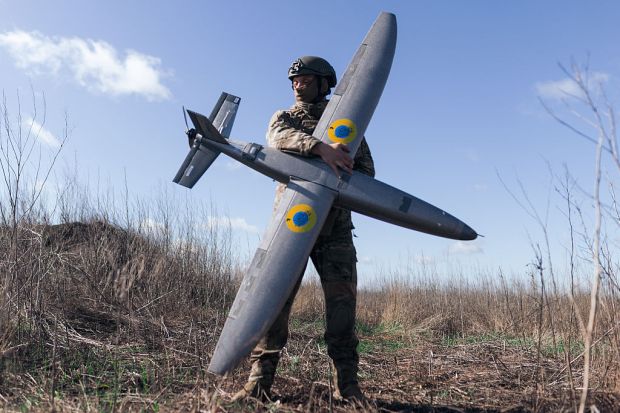
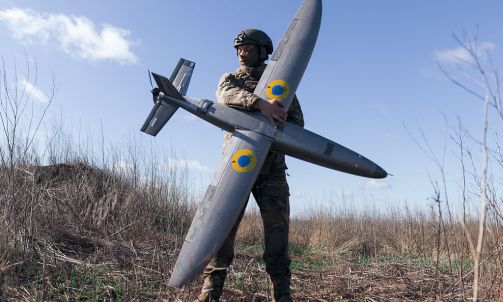
In June, according to the Institute for the Study of War (ISW), Putin and his henchmen fired a record number of drones and missiles at Kyiv, Kharkiv, and other Ukrainian cities. On July 8, Russian forces launched 728 drones and 13 missiles against Ukraine in one night – the largest single assault to date.
This increased intensity of airborne attacks resulted in a monthly record in June of 232 Ukrainians killed and 1,343 injured, including children, according to the United Nations. It represents a significant ramp-up in violence following three and a half years of aggression which is clearly aimed at eliminating Ukraine’s independent statehood and its distinct national identity.
In the face of the Kremlin’s unilateral onslaught – fuelled by neo-imperial and Mafia ambitions – Ukrainians have quite obviously and almost universally experienced some form of war trauma. What is surprising and counter-intuitive, however, is that independent psycho-social research by international experts shows that the proportion of Ukrainians experiencing post-traumatic stress – around 20 per cent – is actually lower than what would normally be expected in wartime. Indeed, the notion of Ukrainian courage in the face of adversity appears to be more than hype – it’s backed by the objective data.
In considering whether Ukrainians’ endurance and stamina will continue under the now increased pressure, several aspects are noteworthy.
There is in the first instance the way by which humans typically experience trauma at the psychological and neurological levels. What generally happens is that, under stressful conditions such as consistent lack of sleep and continuous exposure to explosions if not the direct experience of death and destruction themselves, our executive functioning – controlled by the brain’s prefrontal cortex (PFC) – is first impacted. Our capacity to process information, register stimuli, and subsequently make considered decisions becomes affected. For example, our ability to concentrate, weigh up options, and control impulses is decreased. There’s simply no doubt that this is currently happening to literally millions of sleep-deprived and violence-exposed Ukrainians.
When the top-down functioning of the PFC is impaired, our emotional and habitual responses – controlled by the brain’s amygdala – increase and, and with them, our freeze/fight/flight response come into play. In other words, under threat and risk, we become less rational and more emotional and more subject to all the vagaries of emotions associated with war like anxiousness, fear, sadness, and grief. Again, millions of Ukrainians are, as a result of Putin’s ramp-up, subject to this phenomenon.
And that’s where we need to consider that Ukrainians – in particular – should not be considered simply a sum-total of their psychological effects and neurological make-ups. They are not on autopilot.
I suggest that there are two aspects that need to be considered. First, since the outset of the war, Ukrainians have collectively rejected the narrative of victimhood. I vividly recall refugee women and children crossing the border into Poland – all of them were impeccably dressed after arduous journeys, and all of them were polite and in no way desperate as international charities sought to give them goods. They refused to be cast as somehow downtrodden or without agency, as some in the West might do.
Indeed, after experiencing long and very interrupted nights of air raid sirens and bombing, Ukrainians almost ubiquitously go to their jobs in the mornings and get on with their lives. Virtually no businesses – be they corporations or corner cafes – are shutting up shop. Many Ukrainians talk about ‘adapted life’ or enforced normalcy as a conscience part of their resistance to Russia.
Significantly, because we are social creatures, such an adopted norm is self-perpetuating and it helps to positively regulate emotional disturbance. In fact, it aligns with the most recent psychological thinking that holds, while our emotions may be ‘automatically’ triggered, we can influence or control their ‘trajectory’ through intentionality and interventions.
In the case of Ukrainians, steadfastly maintaining their daily routines and rituals appears to central to both their survival and sanity. Additionally, over the course of the war, discussion of mental health aspects has been completely destigmatised and a wide range of support services are now in place and helping millions. In sum, rather than succumbing to fight or flight, Ukrainians are supporting and mirroring each other in consciously facing and managing their situation, as trying as it is.
In doing so, Ukrainians have a huge advantage over some other societies and cultures. They have a distinct formative factor in their national psyche. Namely, prior to the full-scale invasion, they have experienced and overcome nearly unprecedented levels of trauma. Fundamentally, at a deep cultural and psychological level and as a result of their turbulent history and consistently awful neighbour, Ukrainians understand what it is to suffer, to survive and to continue to aspire.
Very often, when Western commentators comment on Ukrainians’ ‘resilience’, they don’t sufficiently account for the fact that Ukrainians have been prepared for this war by: hundreds of years of Russian colonialism and occupation; the horror of the Holodomor; the mass slaughter of the second world war; Soviet-era repression of their human and national rights, and; Russia’s initial incursions into the Donbas and Crimea. Strength is not innate – it’s a learned attribute and Ukrainians have it in spades.
When Putin started his ‘three-day special military operation’ in 2022, it was off the back of an assumption that Ukrainians were somehow sympathetic to being taken over by the Kremlin. It was a massive failure of intelligence – in every sense of the word – and has now cost his nation hundreds of thousands of dead soldiers. Now, he believes that by massively increasing his aerial onslaught on Ukrainians, he will somehow break them and enable the achievement of his hegemonic goals.
However, if we consider that Ukrainians are taking positive collective psychological action and that their emotional DNA knows how to abide the harshest types of aggression and brutality, it is very likely that Russia’s dictator will be shown to be wrong again.