In a world obsessed with the apocalyptic hellfire of ‘carbon’ and the terror of an imperceptibly warmer climate nowhere near the Edenesque rainforests of the Carboniferous – it never ceases to amaze me how little interest activists have in likely apocalypses.
That is, the natural things that can (and do) wipe out life on a semi-regular basis.
Asteroids, flood basalts, and super volcanoes are the repeat offenders for mass extinction, and yet I don’t see any members of the Greens demanding Australia get serious about a space program.
Mind you, a good solar flare, the magnetic poles flipping, a stray supernova, or AI making humans too stupid to function could easily knock us out of the evolutionary arms race.
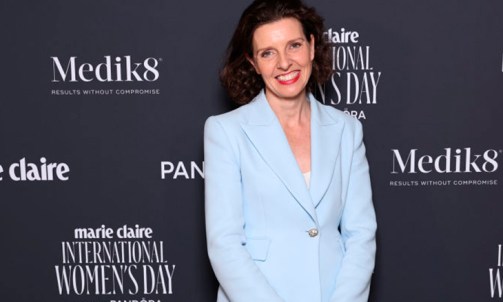
(I found myself in an argument with X’s AI Grok yesterday. It provided a figure for Australia’s total renewable energy transition with citations that checked out. I posted it only for Grok to call me a liar and pretend it had no idea where the number came from after another user prodded it with loaded questions. Grok fell on the side of consensus when the questions contained political rather than purely economic arguments. When I showed Grok a screenshot of its earlier answer, it simply shrugged and said AI is a work in progress. In another post, it accused me of CryptoFascism because I used a photo of the Opposition Leader with their hand raised. You may ask why I bother arguing with a line of code, but I was interested to see how deeply political rhetoric had already corrupted its algorithm. This matters, because an entire generation is deferring to the authority of AI chatbots instead of reading original source material. Soon AI will become the dispenser of knowledge thanks to human laziness.)
When it comes to Climate Change, our society lives in fear of the Loch Ness monster while residing in the desert next to Boko Haram. That’s how ridiculous modern quasi-religious philosophy has become.
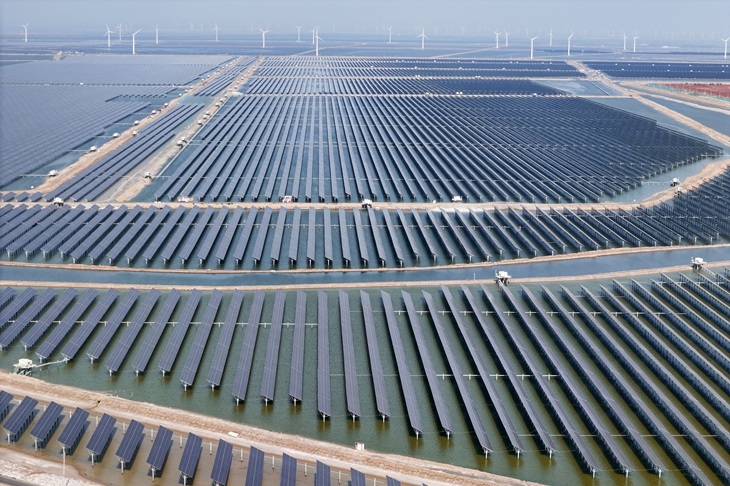
Those who make a sandwich by ordering UberEats probably can’t create fire in the wild, and if Sydney Mayor Clover Moore and our nest of Net Zilch Premiers get their way banning gas from the home – none of us will be cooking anything when the summer hailstorms put a dent in Chris Bowen’s solar farms.
Net Zero is creating one giant civilisation off-switch by removing redundancy from Australian homes. I wonder if historians will have to create a word for nations that progress from first-world to fourth-world in a single generation.
When I watch children gluing themselves to the street in tearful fits of hysteria or world leaders promising trillions of taxpayer dollars to foreign companies, I wonder if people only fear what they are told to fear by the gatekeepers of civilisation.
It would certainly explain the overreaction to Covid, a virus no one thinks about anymore despite being surrounded by cases without any meaningful immunity. There is no one on TV telling them to experience terror … so they don’t.
When I come across a faded sticker on the pavement at the train station telling people to keep apart, I have flashbacks to commuters scowling, recoiling, and glaring at their peers in a manner that mimicked the behaviour of long-lost totalitarian regimes. How shallow lurks humanity’s dark side… Even good people can flip their personality in a moment just as a family man will beat an intruder to death in the family home.
It does us good to remember how easily evolutionary survival instincts can be misused by politicians. The false cries of apocalypse can make smart societies do dumb things in unnecessary self-defence.
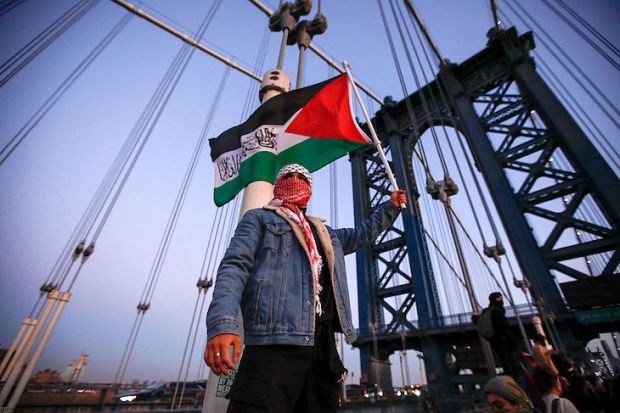
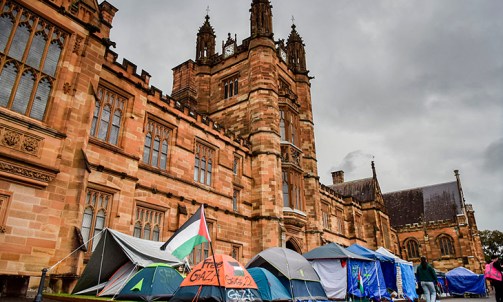
Mind you, it does appear that the average teenager has forgotten about the climate apocalypse and moved on to Free Palestine! Supporting an Islamic terrorist regime that despises all things Woke has become the new existential moral crisis for the youth which is only slightly more bewildering than believing politicians can tax the planet’s thermostat into obedience.
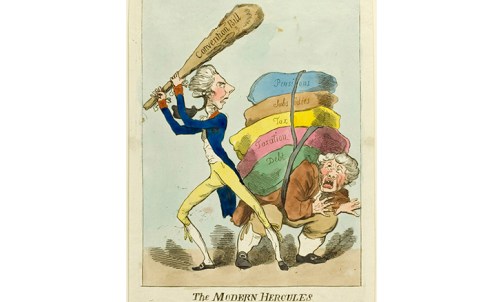
Politicians have been left holding the Climate Change bill, promoting high taxes and enormous debt as the necessary price for saving the youth from an apocalypse they no longer care about.
It’s almost as if politicians forgot how quickly kids move on and off trends. We went through yo-yos, elastics, Neopets, Tamagotchis, and handball in junior school. These kids went through Climate Change, BLM, Trans, and Free Palestine. It looks as though Save the Iranian Mullahs is next.
Climate activists could learn a lot from Australia. We are in possession of the oldest rocks in the world and hold the key to 4.4 billion years of geological history.
We are also home to what is potentially the largest asteroid crater. The 520km-wide Deniliquin structure in New South Wales is under investigation but all indications are that it is a battle wound from a devastating collision. For reference, the famous Chicxulub crater in Mexico is 170km in width.
From Australian Geographic:
The impact that caused it may have occurred during what’s known as the Late Ordovician mass extinction event. Specifically, researchers think it may have triggered what’s called the Hirnantian glaciation stage, which lasted between 445.2 and 443.8 million years ago, and is also defined as the Ordovician-Silurian extinction event. This huge glaciation and mass extinction event eliminated about 85 per cent of the planet’s species.
Now that is an apocalypse!
Speaking of asteroids, one is wandering around a bit too close for comfort.
Described as being ‘skyscraper-sized’ (well, ten-storey-building-sized or 60-odd metres and much smaller than the largest wind turbine), 2024 YR4 was originally on a potential collision course with Earth. If it had hit, a city the size of Sydney would essentially be wiped out.
No, you probably didn’t hear about it on the news.
2024 YR4 was found by the Asteroid Terrestrial-Impact Last Alert System (ATLAS) based at the Chilean Rio Hurtado telescope.
Like most near-Earth asteroids, it was discovered on the way out, after a fly-by.
It was given a 3 per cent chance of hitting Earth. NASA has revised that to a 4.3 per cent chance of hitting the Moon. Which is a problem. If it were to collide with the Moon in 2032 (probably in the middle of a world war, if things continue on their current trajectory) its impact has the potential to disrupt communications.
Our increasingly fragile civilisation relies on a vast network of satellites to function. Wiping a few them out in a small meteor shower is far from ideal.
Forget Netflix, think about the situation from a defence position.
Imagine sending nations blind and taking away their ability to launch anti-missile systems. If there were, say, a few hostile nations sitting around waiting for an opportune moment, this would be a period of intense risk.
Do you have any faith that Australia has war-gamed this scenario?
These days, I am not sure they war-game actual war.
While I was scrolling through asteroid stories, I saw NASA casually talking about changes in the magnetic field changing oxygen levels in the atmosphere.
For 540 million years, the ebb and flow in the strength of the Earth’s magnetic field has correlated with fluctuations in atmospheric oxygen, according to newly released analysis by NASA scientists. The research suggests that processes deep inside the Earth might influence habitability on the planet’s surface.
That’s something I haven’t heard discussed at the IPCC!
Are these calculations part of climate modelling, or are they another of the million natural processes left out of the equation?
For 540 million years, the strengthening and weakening of Earth’s magnetic field has correlated with fluctuations in the amount of oxygen in our atmosphere!
The findings suggest that processes deep inside a planet may influence habitability on its surface. pic.twitter.com/giOz1bhM42
— NASA Earth (@NASAEarth) June 26, 2025
We know 2024 YR4 is the sort of asteroid that poses no risk to our species, unless we decide to engage in nuclear war for the heck of it, but it serves as a reminder that as our technologically advanced empires grow, so too does our fragility.
Events that we would have easily survived 10,000 years ago now present an existential threat not only to cities, but entire nations that rely on complicated global trade to survive.
Asteroids slightly larger than 2024 YR4 hit Earth every 10,000 years. One hit the Siberian region of Russia in 1908.
Rocks 5km wide hit every 20 million years, which is definitely an inconvenience.
Earth is 4.54 billion years old, and we have about 1.7 billion to go. Mars might offer a temporary shelter as the Sun expands but essentially with the problem that drives Elon Musk’s space program: how to make humans spacefaring without destroying themselves.
Personally, I would settle for politicians doing a little more work to navigate real-world natural interruptions and invest in redundancy strategies to make sure Australia doesn’t go extinct from a minor random storm.
Why do I worry?
Because out in the bush, infrastructure has been left to rot. The government is so busy building wind farms and solar farms that it forgot to build roads and dams. When people were trapped in flood water, they were being rescued by their neighbours while emergency vehicles parked at the edge of the flood water and watched.
Politicians like to talk about the risk posed by the weather as an excuse to run off with hundreds of billions of dollars, but they never seem to make investments in the technology that makes us safer.