The house was awash with the Russians this week – first because someone was reading George Saunders’ A Swim in the Pond in the Rain. In this book, the author of Lincoln in the Bardo concentrates on the great Russians of the nineteenth century – Chekhov and Turgenev, Tolstoy and Gogol – to show what fiction can do to the imagination when it’s taken slowly.
We know in our souls that the great Russians dwarf everything that comes after them. Even Doctor Leavis, who was inclined to sound as if he thought God’s native language was English had written about Anna Karenina. And Tolstoy does have Anna say in English: ‘The zest is gone.’
And then we stumbled on Gorky Park. It was astonishing what a winner this 1983 film was, set during the latter days of the Soviet Empire. It’s directed by Michael Apted, who is most famous for the 7Up series of docs that present how people develop over the years. Gorky Park could hardly be more different.
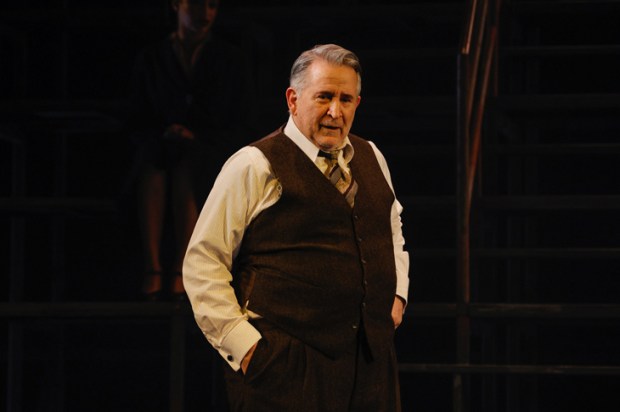
It is sumptuously well-made as well as beautifully acted. The script is by Dennis Potter some time before his auteur days with The Singing Detective – and it is brilliantly taut and classical. William Hurt plays a good Russian policeman, Arkady Renko, who wants to solve the mystery of how several people have not only been killed but have had their faced sliced off. Hurt puts the case to his superior, Ian Bannen, and enlists the aid of a medical wizard (Ian McDiarmid) who knows how to reconstitute the mutilated faces.
The trick with the casting of Gorky Park is that the Russians are played by British actors and the crowning triumph of this method is that William Hurt has an impeccable English accent (which no doubt reflects his breadth of experience as a classical actor). The technique works brilliantly and blends effortlessly with the Americans in the cast who retain their national identities. A youngish Brian Dennehy wants to avenge his brother. And the great Lee Marvin plays an American captain of industry – a man who trades in the pelts of sables – with vast, understated guile. The sables (from which the flashiest Russian fur hats are made) have a crucial role in the story as well as a poignant one as we see them bounding through the snow.
Joanna Pacula also gives a stunning performance – vibrant, rugged, and complexly contradictory. The sexual tension between her and Hurt has an unpredictable power that makes most contemporary equivalents look conventional.
Gorky Park is a lost landmark from a period of history that seems remote and glamourous, as well as a heartfelt representation of grief and grievance. It’s a great pity that the Apted-Potter-Hurt team didn’t make films of the rest of the Martin Cruz Smith books with Arkady Renko moving through recent Russian history. His latest, Hotel Ukraine, is out in September.
We’re told that Putin likes Dostoyevsky. How does this tally with Edmund Wilson saying The Possessed prefigured the demonic side of the Bolsheviks? Lenin famously told Gorky: ‘I know nothing that is greater than [Beethoven’s] Appassionata. I would like to listen to it every day. [But] I can’t listen to music very often… I want to say sweet, silly things, and pat the little heads of people who, living in a filthy hell, can create such beauty. These days, one can’t pat anyone on the head… you have to beat people’s little heads, beat mercilessly…’.
Gorky Park is a marvellously modulated vision with great gulfs of pessimism but also gorgeous vistas in a world of ice and enchantment.
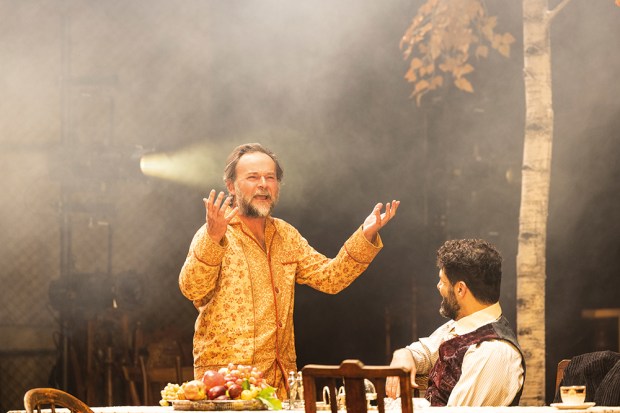
Tom Stoppard wrote a trilogy of plays, The Coast of Utopia (2002), about the nineteenth-century Russians waiting for a new dawn. It centres on Herzen (Stephen Dillane in the first London production), who said – prophesying Stalin – ‘Genghis Khan will come again armed with the telegraph.’
In a world of bewilderment, it’s great to hear reports that the ravishing Bernadette Robinson, who can channel any voice that has ever cut the air, received a standing ovation for her show Divas at Her Majesty’s Theatre in Adelaide last week. Bernadette has received accolades from Emma Thompson and Helena Bonham-Carter. Barry Humphries knew she was a treasure. We should write musicals that are worthy of her vast vocal and dramatic talents, which contains multitudes, not just a fabulous power of mimicry.
Last week saw the death of a man of great style, grace, and kindness, Fraser Stark. He was a former Foxtel executive (and one-time supernumerary for Opera Australia) who moved to Melbourne to create and launch a new digital concert hall for the MSO. It’s typical that he spent the last day of his life watching the Tony Awards with his husband, Michael Edwards, and their cats. Their 2022 black-tie wedding in a ballroom atop Sydney’s Queen Victoria Building saw Stark perform a duet of Tell Him with celebrant Marnie McQueen who then seconded David Campbell – a guest – to join her in Moon River for the couple’s first waltz: all this with the late, lamented Brian Walsh presiding. Our deepest condolences go out to Michael, the young man who did everything in his formidable power to ensure Fraser’s last years were his best. Fraser Stark was a fellow of infinite jest and fancy. Ave atque vale.
Then, on YouTube, there was Helen Mirren doing Strindberg’s Miss Julie. She captures the ecstasy of self-destruction in this great play, which is like an extroverted suicide note reconfigured as a deadly fascination with the music of cruelty. Helen Mirren’s Julie is perhaps as great as we will ever see, and Donal McCann is very fine as the man-servant who can kill a bird with his hands.
In 1991, Ingmar Bergman directed Lena Olin in this shattering masterpiece at BAM in Brooklyn. Olin appears in the second season of Nine Perfect Strangers, but she deserved a better vehicle. The streamer had powerful and vivid things, but the tripped-out psychedelia made Olin and Mark Strong look like they were confronting more than they’d bargained for.
Simon Callow, the original Mozart in the Peter Hall/Paul Scofield Amadeus, has given a brilliant account of Avner Dorman’s Wahn-fried, the opera about the towering figure of Wagner, who used Jewish conductors but was also revered like a sacred text by Hitler. It’s been done at the Long Branch Festival in Britain, and we should do it here.
Got something to add? Join the discussion and comment below.
You might disagree with half of it, but you’ll enjoy reading all of it. Try your first month for free, then just $2 a week for the remainder of your first year.