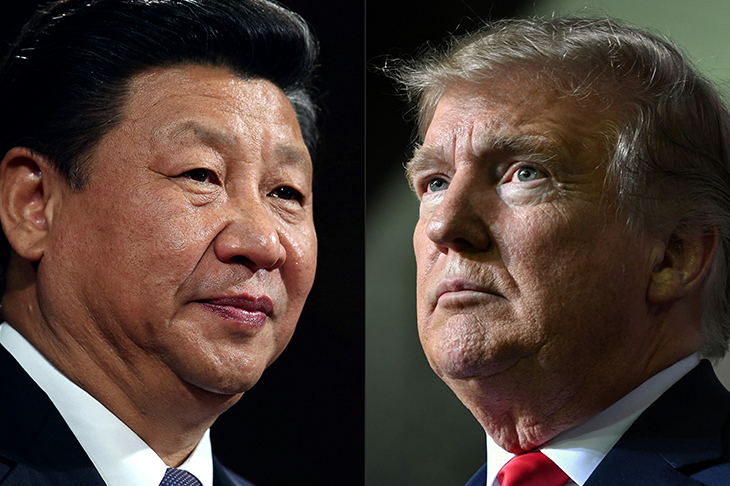
China’s Ambassador to Australia, Xiao Qian, opined in the Australian recently that if the world didn’t punish the United States for its actions, we would all revert to the ‘law of the jungle… where the strong prey on the weak, and all countries will become victims’.
The ambassador was referring to President Trump’s imposition of punitive trade tariffs. Given China’s escalating social unrest, structural economic problems and bank failures, President Xi Jinping and his acolytes must be thinking that the timing of these tariffs could further erode the CCP’s authority.
Of course Ambassador Qian conveniently forgets Beijing imposed similar trade sanctions on Australia for daring to call for an inquiry into the origins of Covid-19. And he ignores the unannounced, intimidating preying of gun-firing Chinese warships, circumnavigating the continent.
The truth is Beijing is an old hand when it comes to the rule of the jungle. It is in constant breach of the World Trade Organisation Protocols of Accession and trades on the United Nations’ acceptance that it is still a ‘developing’ country. That China is the world’s second-largest economy, funds the word’s second-most powerful military and is ruled by a president who boasts he has ended extreme poverty, matters little.
Brazenly, Beijing clings to its self-declared ‘developing’ status, arrogantly claiming the preferential treatment it enjoys is a ‘fundamental right’ which benefits other developing countries ‘because the current international power system is unfair’. That may sound noble, but in reality it allows Beijing to reject the rule of law and prey on the weak.
Take modern slavery. Both Amnesty International and African Resources Watch confirm that cobalt bought from illegal mines in the Democratic Republic of Congo where children as young as six are enslaved. The cobalt goes mainly to Chinese companies like mineral giant Zhejiang Huayou Cobalt, where it ends up in Chinese batteries used in smartphones, tablets, laptops and electric vehicles. Uighur forced-labour camps provide much of the workforce.
Beijing also engages in greenwashing illegally logged timber. This is mainly sourced from natural forests in Africa, Asia and the Pacific and is used in the manufacture of furniture and other timber products.
Yet despite well-documented human rights and trade rule violations, the world continues to buy Chinese illegally manufactured products.
Not even Beijing’s slap in the world’s face on emissions reduction draws condemnation. This, despite China increasing its CO2 emissions by 90 per cent since 2015 and contributing 30 per cent of all man-made emissions.
Perhaps President Xi’s Belt and Road Initiative which has financially colonised much of the South Pacific, central Europe, central Asia and Africa explains this. It buys China influence within the United Nations and its agencies, like, for example, China being elected six times to the UN Human Rights Council notwithstanding its appalling human rights record.
Also assisting, has been the West’s delusion that trade and geopolitical cooperation would lead to China’s democratisation. President Xi has interpreted this naivety as weakness. An old-fashioned Marxist-Leninist, he believes that empowerment of individuals is a ‘bourgeois fallacy’ and, that free speech, equality under the law and other human rights, need to be ‘controlled’ or ‘delayed’. Indeed, short of outright war, his intention is to destroy the West.
Which means, rather than blame China, the West should be examining its own record. Like weakening its economies with gormless purchases of renewable energy bought from the emitter-in-chief. How it has diverted critical defence spending to productivity-draining government PC policies and programmes. And how it has encouraged economically costly and socially divisive welfare-dependent, mass migration. With policy focuses like these, it’s no wonder the once-powerful EU has become diminished politically and economically.
The West should also reflect on how its political, economic and cultural elite have colluded at the now-disgraced annual Davos World Economic Forum to champion the Great Reset and its deceptively called ‘stakeholder capitalism’. In reality it is a totalitarian movement modelled after China. It even contemplates connecting human brains directly to the cloud so leaders can ‘data mine’ people’s thoughts.
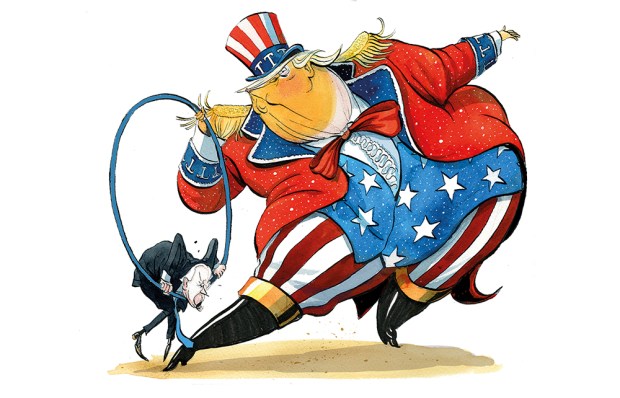
It has taken US President Donald Trump to call out this civilisational folly. He rails against misplaced priorities and the presumption which has left military alliances, like Nato, dangerously dependent on America.
Predictably the Western media sides with anyone but Trump. He’s blamed for the left’s victories in the Australian and Canadian elections, even though both defeated conservative leaders distanced themselves from the President.
Despite his free-market, smaller-government agenda, President Trump confronts widespread snobbery, derision and hostility for daring to defy the ruling Obama/Democrat establishment and for calling out the free-loading of America’s allies and their abuse of WTO protocols.
Unfazed by the criticism, Mr Trump seeks to restore American exceptionalism by pushing back on net zero, DEI in the workplace, transgenderism and illegal immigration. He has set in train policies to encourage greater social mobility and freedom of speech, and to improve productivity by reducing regulatory frictions, and shrinking the size of government.
Trump’s withdrawal from the Paris Accord and his ‘Drill, baby, drill’ mantra have already caused investors to re-evaluate their ESG mandates.
Incredibly, since Trump’s tariffs, everyone is now a champion of ‘free trade’, overlooking the non-tariff barriers, subsidised manufacture, green tape and other impediments to free trade they have long condoned.
It’s true, some Trump judgements are flawed and his claims often exaggerated. However, his tariff announcements have delivered a profound shock, not only to Beijing and its supporters in Moscow, Tehran, Islamabad and Ankara, but also to Western democracies like Australia.
Indeed Trump has delivered a reality check to a West cynically gaming internationally accepted rules while ignoring the fragility of their defence, economic and social arrangements. It now knows there’s no such thing as a free lunch.
The Western political and cultural establishments may loath him, but Donald Trump is the first US president in decades to seriously defend Western values and threaten Beijing’s Marxist progress. It truly is a civilisational moment.
Got something to add? Join the discussion and comment below.
You might disagree with half of it, but you’ll enjoy reading all of it. Try your first month for free, then just $2 a week for the remainder of your first year.