The Gaza war that began on 7 October 2023 was suspended with a 42-day ceasefire on 19 January 2025. Hamas’s October surprise resulted in the worst loss of lives of Jews in one attack since the Holocaust, almost equalling in scale, adjusting for respective populations, the loss of American soldiers in the entire Vietnam war. Israel’s scorched-earth military retaliation led to its longest war since its creation as a homeland for the Jews in 1948. The war plunged the Middle East into crisis and destabilised many Western countries’ politics and social cohesion. Looking at the enormous gap between the goals sought, the means used and the results obtained, it is hard to avoid the conclusion that neither side won and everyone lost.
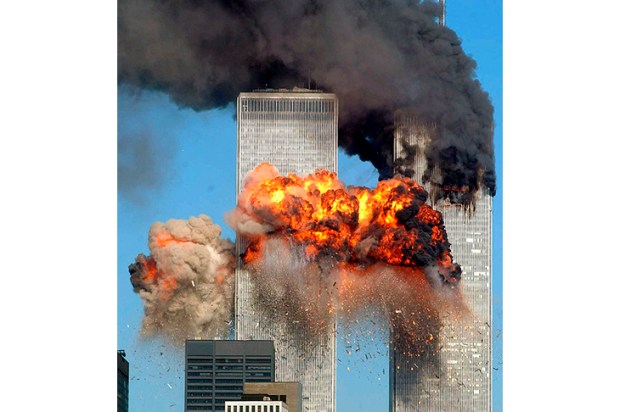
The scale, savagery and brutality of Hamas’s assault on southern Israel caught Israeli military and political leaders literally napping. More than 1,200 Israelis were killed and 251 hostages were taken to Gaza. Hamas won the ensuing propaganda war. Israel was subjected to unprecedented and sustained international censure in the UN Security Council, General Assembly, Human Rights Council, World Court and International Criminal Court. It’s also been heavily criticised in many previously supportive Western capitals, streets and campuses including in Australia.
Yet, the new strategic balance sees the Israeli centre emerging much stronger amidst the ruins of the anti-Israel axis. Hamas and Hezbollah have been decimated as fighting forces, with military commanders and leaders decapitated with targeted assassinations and improvised explosive devices placed in pagers and walkie-talkies. Prime Minister Benjamin Netanyahu said Israel’s ‘blows inflicted on Iran and Hezbollah’ also helped to topple the Assad regime in Syria. However, post-Assad Syria is highly combustible, a tattered patchwork quilt of different sects with a blood-soaked history of feuding. The rebels are diverse in tribe, race and religion and backed by different foreign actors with their own agendas. The experiences of Afghanistan, Iraq and Libya after their humanitarian liberations into freedom and democracy in the 2001-to-2011 decade should give Panglossian optimists on a ‘new Syria’ a reality check. The chances are that après victory will come the deluge of warring factions and Syria descends into another failed state. Iran has been humiliated, its aura of invincibility lost and its entire strategy of bleeding Israel to death through proxies destroyed. With all proxy assets dismantled and subdued and notwithstanding the threats of diplomatic and economic sanctions, Iran will emerge more motivated than before to acquire nuclear weapons. Against that, Iran and Hamas must now factor in the unpredictable toughness of Trump when provoked.
The military outcome is thus a complete reset of the local balance of power to Israel’s advantage. Hamas launched the attacks of 7 October unilaterally, hoping to draw fraternal groups into the war. Only Hezbollah half did so, firing rockets but not committing ground troops. The second strategic miscalculation by Hamas was to underestimate Israel’s will and determination to destroy Hamas and Hezbollah as security threats. International calls for immediate and unconditional ceasefire and urgings not to go into Rafah proved counterproductive. Given the monstrous scale of 10/7, to Israelis the calls for ceasefire separated true from fair-weather friends for two reasons. For one, Western youth and countries, under the impact of changing electoral demographics with mass influxes of Muslims, were deserting Israel and softening on fighting antisemitism in their own populations. Antisemitism has become structurally embedded in Western societies through the rise of critical race theory and intersectionality which imposes a binary divide between oppressors and oppressed and lumps Jews among the front rank of oppressors. The intergenerational shift in sentiments to increased hostility towards Jews drove home the realisation that time is against Israel.
Military gains notwithstanding, however, Hamas stays in power as the de facto governing authority of Gaza. The ceasefire deal snatches political defeat from the jaws of military triumphs for Israel. In an interview with the New York Times magazine on 4 January, Secretary of State Antony Blinken admitted that, ‘whenever there has been public daylight between the United States and Israel and the perception that pressure was growing on Israel… Hamas has pulled back from agreeing to a ceasefire and the release of hostages’. The hostages-prisoners swap and continued Hamas hold on Gaza will have several deleterious consequences. It condemns Palestinians to ongoing autocratic, corrupt and self-serving rule by Hamas which will continue to marinate the population in Jew hatred. The demonstrable lack of tough love on the part of Western governments in demanding urgent ceasefires instead of encouraging Israel to finish the job of defenestrating Hamas from Gaza is compounded with massive international aid for Gaza reconstruction. Having successfully displaced responsibility for all lives lost in the war to Israel, Hamas is once again shielded also from the economic consequences of initiating war. It will replenish its depleted coffers by siphoning off humanitarian aid to rebuild its military, tunnels and terror infrastructure.
Worse, by validating Hamas’s evil tactic of taking hostages as bargaining leverage, it guarantees repeats of ceasefire violations and hostage taking. The historical record is clear. Israel has shifted over the decades from refusing to negotiate with terrorists holding Israeli hostages as an unbreakable principle, to exchanging bodies for bodies, exchanging like-for-like numbers of hostages for prisoners, refusing to release murderers, to abandoning all these red lines. In 2011, for example, Israel secured the release of one Israeli soldier-hostage in return for over 1,000 Palestinian prisoners, including Yahya Sinwar who masterminded the attacks of 7 October 2023. In phase one of the deal, 33 Israeli hostages are to be released over six weeks in exchange for 1,900 Palestinians. What does this tell us about the relative value placed by Hamas on Palestinian and Israeli lives? Unsurprisingly, the policy of incentivising and rewarding hostage taking ignites subsequent waves of terror. How many of those released will join the ‘resistance’ to plan, prepare for and engage in future strikes into Israel?
Israel’s military position vis-à-vis Hamas, Hezbollah and Iran would be vastly weaker today if it had heeded urgings-cum-demands for ‘ceasefire now’. The lack of strategic clarity and moral courage by Western governments, whose motto of ‘no price is too high for peace’ is the driving force of appeasement historically, has ensured another round of suspended hostilities in the endlessly repeating cycles of Israeli-Palestinian wars. As a historical footnote, had Western calls for restraint over finishing the job in 1971 and 2009 been heeded, Bangladesh would still be a Pakistani colony today and Sri Lanka’s deadly civil war would be ongoing. Of course the return of hostages is cause for joy and celebration. But a high price has been paid all round for a return to what in essence is an armed truce and a political stalemate. The two-state ‘solution’, enthusiastically embraced by Anthony Albanese and Penny Wong, is a conceit of the liberal internationalist imagination unanchored in local geopolitical realities.
Got something to add? Join the discussion and comment below.
You might disagree with half of it, but you’ll enjoy reading all of it. Try your first month for free, then just $2 a week for the remainder of your first year.