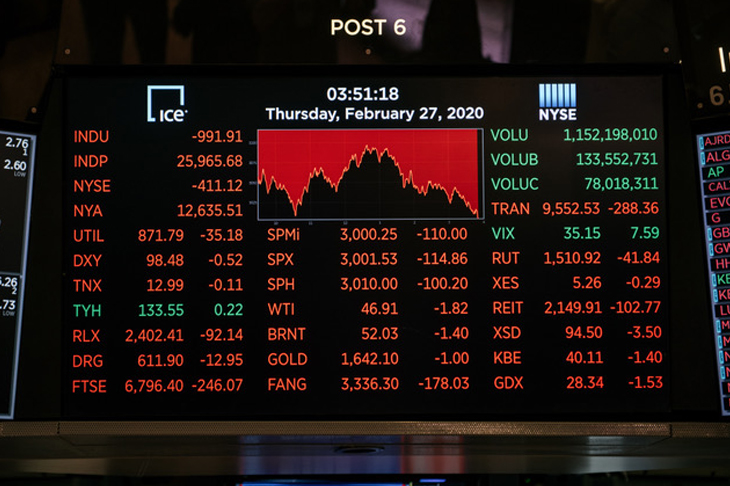
In August 1998, Russia devalued the rouble, failed to make repayments on local-currency debt and imposed a three-month halt on repaying some foreign debt. The default, coming about one year after the Asia financial crisis erupted, rattled investors.
Panic surged when US hedge fund Long-Term Capital Management tottered due to bets gone wrong. To avert the hurried sale of the firm’s investments, 14 banks and brokers invested US$3.6 billion to stabilise the firm and thus calm financial markets (and their businesses). An economist at Pacific Investment Management described the near-collapse of asset prices as a ‘Minsky moment’.
The term hails the work of US economist Hyman Minsky (1919-1996) who warned excessive borrowing fuels financial instability. Minsky highlighted how asset prices are vulnerable to shocks after a prolonged period of stability and prosperity prompts investors to take risks akin to ‘speculative and Ponzi finance’.
That’s a fair description of what’s been happening lately on asset markets in an ever-more indebted world. The euphoria has created numerous trip wires that could, like a Minsky moment, batter stocks and other risky assets. Here are some triggers in no particular order.
One is that record-setting stocks are bubbles on valuation measures, especially pivotal US stocks, which, after 15 years of outperforming, now comprise 67 per cent of global market capitalisation compared with 52 per cent in 2014.
On cyclically adjusted price to earnings, the US bourse is more overvalued than at any time since 1881, except for the dot-com bubble of 2000. The S&P 500’s price-to-book ratio is close to its record peak of 5.5 set in 2000. The S&P 500’s price-to-earnings ratio forward estimate is trading about 1.5 times its historical average. The US market capitalisation has reached a record 208 per cent of US GDP, alarm levels for the so-called Buffett Indicator. It’s the same elsewhere. The more stretched the valuations – read as the more investors are in the same optimistic mindset – the more likely it is that a correction becomes a plunge.
Another risk is that the enthusiasm around artificial intelligence, which has driven US valuations to euphoric levels, could fade if investors judge they have overestimated AI’s adoption, usefulness and money-making potential. For context, buzz around the latest technology is a common trigger for crashes – 1929 and 2000 are but two examples. In today’s case, the AI excitement has propelled seven technology stocks to a dot-com-crash-like 33 per cent of the S&P 500 Index, which was designed to represent the US economy.
A third risk is inflation that, while it has cooled from pandemic peaks, is stuck above central-bank targets giving them limited ability to cut rates. Higher-than-expected inflation boosts bond yields, reducing the value today of future profits, which means valuations must fall, and could prompt central-bank rate increases that would devastate stocks.
A fourth risk encompasses the policies of US President-elect Donald Trump, even if expectations he will lower taxes and slash regulations have propelled stocks since his election victory. Of most concern is that Trump’s desire to ‘have a say’ in setting interest rates threatens the Fed’s inflation-fighting independence. Trump’s plan to impose tariffs would add to inflation, damage trading partners and could spark enough retaliation to upend the global trading system. His mass-deportation plan would boost wages and hurt industries reliant on illegals. His financial deregulation risks undoing protections against systemic crises. Trump’s conversion to crypto has created a US$2 trillion bitcoin bubble that could cause trouble if it bursts.
Another worry is that Trump’s tax-and-spend plans will widen Washington’s budget deficit that is already at 7 per cent of GDP. Trump would heighten the menace posed by Washington’s debt, which is already at 122 per cent of GDP. Expect more showdowns in Washington over raising the debt ceiling.
A fifth risk is that any downbeat reports on the US economy could ruin optimistic earnings forecasts, especially when the rest of the world is struggling.
A sixth danger is any tightening of Japan’s monetary policy could prompt the Japanese to repatriate enough of the US$4 trillion they hold in foreign investments to shake asset markets. Note how the Bank of Japan’s unexpected rate increase in July shook asset markets.
A seventh detonator is how China’s five-year-old property crash is hobbling the world’s second-biggest economy. Trump’s tariffs would only worsen China’s torment that seems unresponsive to stimulus.
Then there’s the risk of a renewed crisis in the indebted eurozone. France is politically paralysed over attempts to rein in government overspending. Germany’s government has collapsed amid recession strains. Investors must ponder what fate lies ahead for the euro.
A ninth risk is that global commercial property succumbs to the drop in demand for office space due to people working from home. In the US, more than US$320 billion in securitised commercial real-estate loans needs to be refinanced at higher rates by the end of next year – mid-sized US banks are the most at risk.
The rise in private assets, especially private credit, forms a tenth menace because these debt-laced investments are often dependent on twitchy short-term debt and are beyond regulatory scrutiny.
An 11th risk is many emerging markets are troubled.
Geopolitical risks, to group them as a 12th threat, abound. The Ukraine war is again riling energy markets. China is hectoring Taiwan. Beijing and Washington are feuding. US rivals want to ‘de-dollarise’ to escape the reach of US financial sanctions.
Add on unexpected events, perhaps terrorism-related. Factor in hidden time bombs to be exposed by any upheaval. Allow for how heightened uncertainty – much of it Trump-driven – leads to financial instability by magnifying volatility and curbing economic growth. So much could soon go wrong for stocks. The damage is likely to reach beyond stocks because any of these triggers will detonate others.
Sure, sure, on any day, someone can list multiple threats to stocks. True, but it’s their lofty valuations that amplify today’s risks. True too that overvalued stocks can always become more expensive. But not forever. Trump could ditch any policies that threaten stocks. But he can’t abandon every promise that endangers shares. He could reach an unexpected deal with China that boosts stocks. If things go awry, investors are confident central banks will stabilise asset markets as they have done over the past 35 years.
But’s that why investors take the risks that trigger Minsky moments. The optimism on stock markets could soon disappear.
Got something to add? Join the discussion and comment below.
You might disagree with half of it, but you’ll enjoy reading all of it. Try your first month for free, then just $2 a week for the remainder of your first year.