For too long, big government and big business have existed in a cosseted, co-dependent bubble, blithely ignorant and dismissive of the opinions and desires of mainstream Australians.
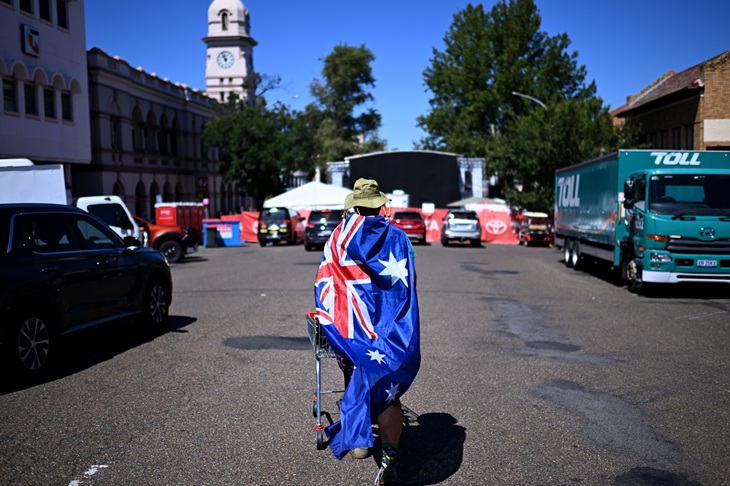
That bubble burst earlier this year after Woolworths scored a massive own goal in announcing it would not stock Australia Day merchandise on its shelves. According to its statement at the time, this was due to ‘declining demand’, but also, more importantly, because it believed there had been a ‘broader discussion about January 26 and what it means to different parts of the community’.
The supermarket giant found out the hard way that the great majority of Australians are proud of their country, and they certainly are not fooled by virtue signalling. Indeed, research from the Institute of Public Affairs found that only 22 per cent of Australians believed Woolworths’ move was based purely on commercial factors.
This brush with reality, and the early departure of its CEO, has led to a welcome re-evaluation of affairs by Woolworths. The supermarket will now stock the Australian flag in the lead-up to the Olympic Games.
Despite this belated about-face, the whole sorry incident highlights a much broader problem in Australian society. For some time the gap has been widening between mainstream Australians and the elite circle of business leaders, academics, journalists, and politicians in charge of our key institutions. The latter wield immense cultural and political power and have long been engaged in a concerted effort to divide our nation and undermine its culture and history.
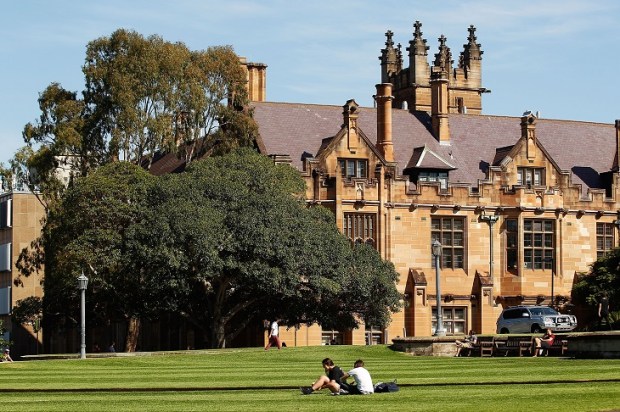
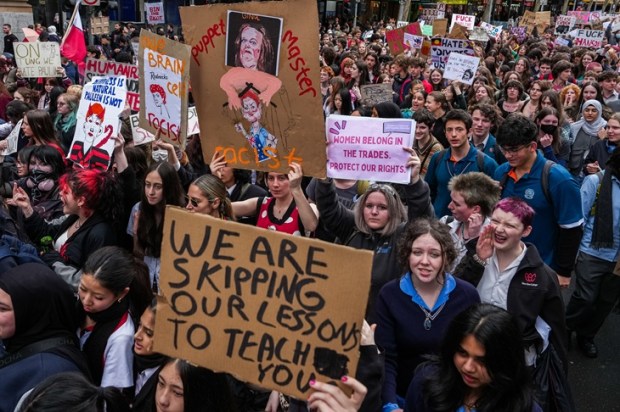
Schools and universities teach students a one-sided version of our history which emphasises ‘colonial oppression and dispossession’ and sidelines those values that define the Australian way of life: freedom, democracy, tolerance, and egalitarianism. This sort of messaging is designed to make Australians feel guilty and shy away from a sense of national pride and patriotism.
Take the Victorian Certificate of Education’s Australian History subject. Over the past eight years, the number of students studying our country’s history in their final years of school has more than halved, from 1,245 in 2014 to 478 in 2022.
One need only turn to the syllabus to find out why.
One theme is titled ‘power and resistance’ and focuses on activist issues, including women’s equality, demands for LGBTIQA+ rights, and Indigenous treaty debates. It describes the colonisation of Australia as ‘a complex story of the exercise of power and resistance to authority’, which appears to promote a Marxist view of history as a power struggle based on group identities. Another theme, ‘creating a nation’, covers ‘competing perspectives on race, immigration, and citizenship, including the White Australia policy and land rights for Aboriginal and Torres Strait Islander people’. The obsession with race and colonialism within this syllabus subjects students to a one-sided narrative of Australian history, one which has little to do with facts and everything to do with politics.
It is a negative narrative, predictably reinforced by the media, politicians, and corporations. And it has serious political ramifications. The ‘Yes’ campaign for the Voice to Parliament received almost universal support from big business and big government, based upon a highly emotive account of settler-Indigenous relations. Voice advocates employed rhetoric that emphasised the oppressive impact of ‘colonisation’ and argued that Indigenous people had been ‘excluded from the political process’.
This contrasts strongly with the view of most Australians. The latest Institute of Public Affairs’ Australia Day survey found 87 per cent of Australians are proud to be Australian, while just four per cent are not. Almost 70 per cent agreed that Australia has a history to be proud of, while only 15 per cent disagreed.
Two things seem true. First, Australian history has been hijacked by activists who promote a negative view of Australia in order to support specific political outcomes and, second, business often feels the need to virtue signal about purely political issues to support their commercial ends. This indicates the relationship between big government and big business has become uncomfortably close – to the point where the interests of everyday Australians are deliberately excluded.
However, the recent decision by Woolworths suggests big business will listen to ordinary Australians if they stand up for what they believe in. The narrative of ‘historical oppression’, constructed and supported by the nation’s big corporatons and politicians is, when actually tested, paper thin. As the intersection of the commercial and political spheres becomes increasingly blurry – and antagonistic to the Australian way of life – it will be up to mainstream Australians to protect our national legacy.
Brianna McKee is a Research Fellow and National Manager for Generation Liberty at the Institute of Public Affairs.
Getty Images